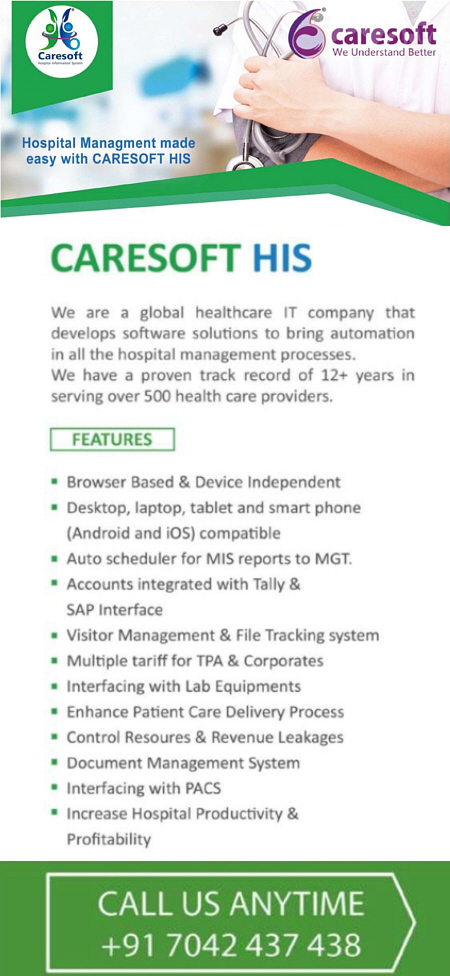
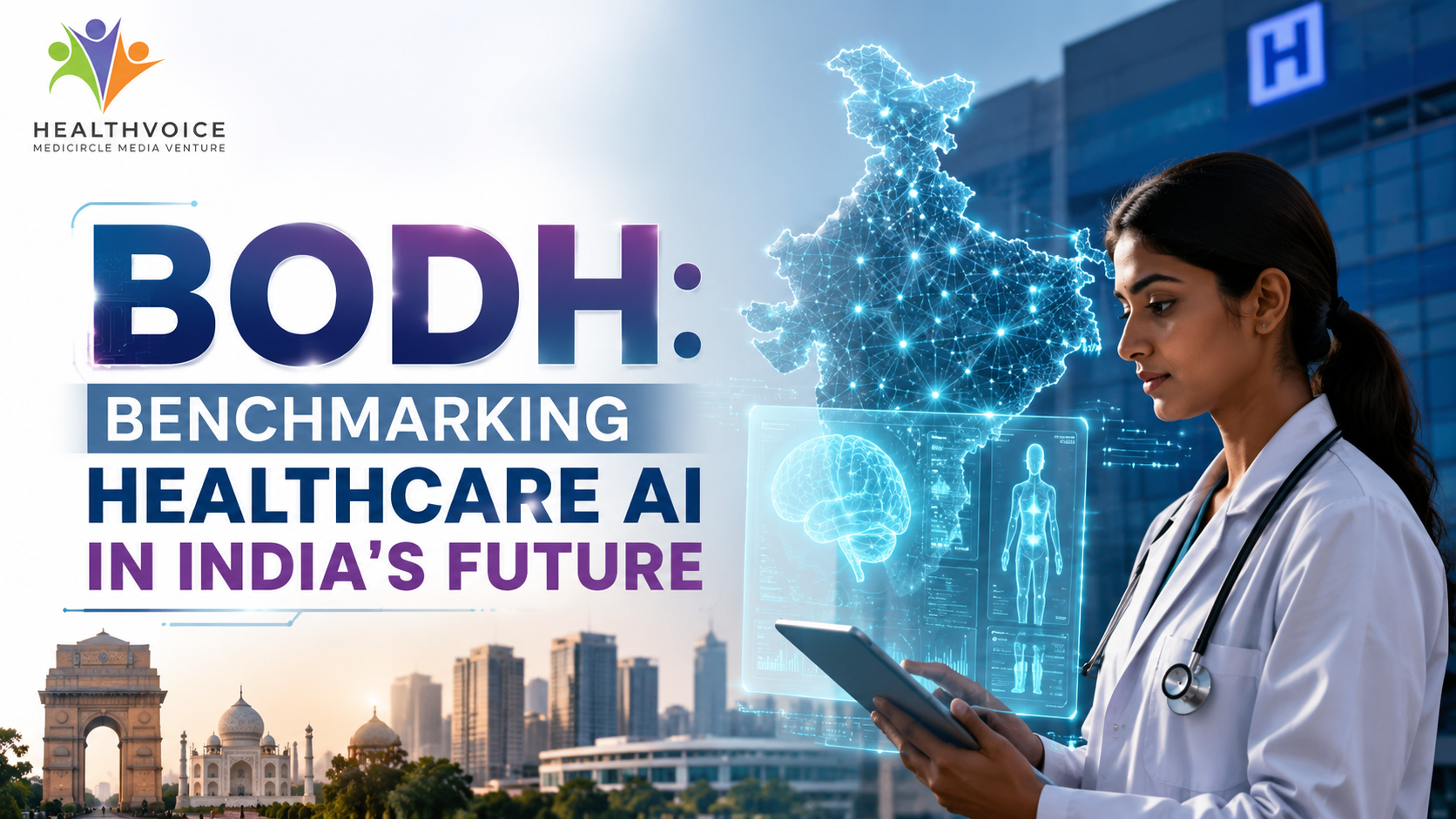
BODH and the Future of Benchmarking Healthcare AI in India
BODH addresses the urgent need for India-specific healthcare AI benchmarking standards, ensuring clinical tools are safe, validated, and trustworthy for India's diverse patient population.
Introduction
Artificial intelligence is no longer a distant promise in Indian healthcare. It is actively being used to read radiology images, screen for diabetic retinopathy, predict sepsis risk in ICUs, and support clinical decision-making across hundreds of hospitals. Yet, for all this momentum, a critical question has remained largely unanswered: how does anyone know whether a healthcare AI tool actually works, and works safely, for Indian patients?
That is the question BODH is designed to address. Short for Biomedical Ontologies and Data Harmonization, BODH is an initiative that aims to create standardized benchmarking frameworks for evaluating artificial intelligence and machine learning tools used in Indian healthcare settings. It is not a product to be purchased or an app to be downloaded. It is infrastructure, the kind that determines whether the AI tools doctors rely upon can be trusted at all.
For doctors, hospital administrators, healthtech companies, and policymakers, understanding what BODH represents and why it matters is becoming an essential part of navigating the future of medicine in India.
Understanding the Benchmarking Gap in Healthcare AI
Before exploring what BODH brings to the table, it is important to understand why benchmarking healthcare AI is so difficult in the first place.
An AI model trained predominantly on data from Western populations may perform well in American or European clinical environments. However, when deployed in India, that same model may encounter patients with significantly different genetic profiles, disease presentations, dietary backgrounds, and comorbidity patterns. A chest X-ray AI trained on data from patients in the United States may not account for the prevalence of tuberculosis or the specific radiological patterns of lung disease common among Indian patients.
This is not a hypothetical concern. Studies have documented meaningful performance gaps when AI models are applied across different demographic and geographic contexts. Without a structured benchmarking mechanism, hospitals and clinicians have no reliable way to assess whether an AI tool they are considering for adoption is genuinely effective for their patient population.
India's healthcare AI landscape has grown rapidly, driven by both domestic startups and large global technology companies. The country's massive and diverse patient population makes it an attractive market for AI deployment. But that same diversity, across language, geography, ethnicity, diet, and disease burden, makes it one of the most demanding environments for AI to perform reliably.
What BODH Aims to Establish
BODH, as conceptualized within India's digital health ecosystem, works toward creating structured evaluation standards that AI-driven healthcare tools must meet before being considered trustworthy for clinical deployment. The initiative intersects with India's broader digital health goals under the Ayushman Bharat Digital Mission (ABDM) and the National Health Policy framework.
The core functions that BODH-type benchmarking frameworks address include:
- Defining minimum performance thresholds for AI tools in specific clinical domains such as diagnostics, drug discovery, pathology, and patient monitoring.
- Creating standardized datasets drawn from Indian patient populations to be used as evaluation benchmarks.
- Establishing transparency requirements so that clinicians and institutions understand how an AI model was trained, what data it used, and where its limitations lie.
- Enabling ongoing post-deployment monitoring to ensure that AI tools continue to perform as expected over time and across different clinical settings.
For India specifically, establishing these standards is not just a regulatory exercise. It is a matter of patient safety, healthcare equity, and the long-term credibility of the country's digital health ambitions.
Why Doctors and Medical Associations Must Lead This Conversation
One of the most important dimensions of BODH and healthcare AI benchmarking is who drives the standard-setting process. In many countries, AI regulation has been primarily shaped by technology developers, regulatory bodies, and policymakers. The clinical community has often been a secondary voice in conversations that will ultimately determine what tools doctors use in their daily practice.
This is a gap that India's medical community has the opportunity to close. Medical associations, clinical specialists, and hospital networks carry the real-world insight necessary to define what good AI performance actually looks like. A benchmark created without meaningful clinical input may set thresholds that look impressive in a laboratory but fail to translate into genuine utility at the bedside.
Doctors need to ask pointed questions about any AI tool being introduced to their institutions. What patient population was this model trained on? Has it been independently validated on Indian patient data? What happens when it encounters edge cases or rare conditions? Who is accountable when the tool produces an incorrect output?
These are not technical questions. They are clinical and ethical questions that only the medical community is positioned to anchor in patient-centered terms.
Platforms like HealthVoice play a meaningful role here by creating space for doctors and medical associations to engage with precisely these conversations. When clinical experts can share their perspectives on digital health policy, discuss the practical challenges of AI adoption, and advocate for standards that protect their patients, the entire healthcare ecosystem benefits.
The Regulatory Landscape Supporting Healthcare AI Benchmarking
India's regulatory environment around healthcare AI is still maturing, but meaningful foundations have been laid. The Central Drugs Standard Control Organisation (CDSCO) has begun working on guidelines for Software as a Medical Device (SaMD), which directly covers AI-powered diagnostic and clinical tools. The Bureau of Indian Standards (BIS) has engaged with AI quality frameworks. NITI Aayog has published principles for responsible AI that include healthcare as a priority domain.
ABDM is creating the interoperability infrastructure, through Health ID, the Health Facility Registry, and the Health Claims Data Exchange, that will eventually enable the kind of large-scale, diverse, Indian patient data needed to build meaningful benchmarks.
What BODH and similar initiatives must align with is a clear regulatory pathway. An AI tool that passes benchmarking evaluation should have a recognized route to clinical deployment, with appropriate labeling of its intended use, its validated population, and its known limitations. Without this pathway, even the most robust benchmarking framework risks becoming a compliance checkbox rather than a genuine safety standard.
Challenges in Building Trustworthy Healthcare AI for India
Benchmarking healthcare AI in India is a deeply complex undertaking. Several significant challenges must be honestly acknowledged.
Data availability and diversity: Building representative Indian benchmark datasets requires collecting clinical data across regions, languages, socioeconomic groups, and healthcare settings. This demands large-scale coordination across public and private health institutions, and careful attention to data privacy under the Digital Personal Data Protection Act, 2023.
Institutional readiness: Many Indian hospitals, particularly in Tier 2 and Tier 3 cities, are still building their digital infrastructure. Benchmarking frameworks designed primarily around large urban tertiary care centers may not reflect the realities of community health centers or district hospitals where AI tools could have a transformative impact.
Explainability and clinical trust: Doctors are more likely to trust and appropriately use AI tools when they can understand the reasoning behind an output. Black-box AI systems, which deliver a result without any interpretable explanation, create legitimate clinical hesitation. Benchmarking standards should include explainability requirements as a core criterion.
Commercial pressures: The healthcare AI market in India is competitive and moving fast. There is commercial pressure to deploy quickly. Robust benchmarking takes time and resources, and without strong regulatory backing, it risks being treated as optional.
These challenges do not diminish the importance of the initiative. They underscore why structured, institutionally supported benchmarking frameworks like BODH are necessary rather than optional.
The Road Ahead: Building a Trustworthy AI Ecosystem in Indian Healthcare
The future of healthcare AI in India will be shaped by the decisions made in the next three to five years. Countries that establish credible benchmarking infrastructure early will create conditions where AI tools genuinely improve patient outcomes, reduce diagnostic errors, and make healthcare more accessible. Countries that do not will face a proliferation of unvalidated tools that erode clinical trust and, ultimately, patient safety.
India has a genuine opportunity to lead in this space. The country has the patient diversity, the technical talent, the policy ambition, and the clinical expertise needed to build AI benchmarking frameworks that could serve not only Indian healthcare but also inform global standards for low- and middle-income country contexts.
Realizing this opportunity requires sustained collaboration between the medical community, technology developers, regulatory bodies, academic institutions, and patient advocacy groups. It requires that doctors and medical associations claim their seat at the table in every conversation about how AI tools are evaluated, approved, and deployed.
HealthVoice is committed to amplifying the voices of doctors and healthcare communities as these conversations unfold. Medical leaders who engage with the policy dimensions of digital health, who share their clinical perspectives on AI adoption challenges, and who advocate for patient-centered benchmarking standards are performing a form of leadership that goes beyond the clinic. They are shaping the conditions under which the next generation of Indian medicine will be practiced.
Conclusion
BODH represents something genuinely important: the recognition that deploying AI in healthcare without rigorous, India-specific benchmarking is a risk no responsible healthcare system should accept. As artificial intelligence becomes more deeply embedded in clinical workflows, the standards that determine which tools can be trusted will become as consequential as the tools themselves.
For India's doctors, medical associations, hospitals, and policymakers, the message is clear. Benchmarking healthcare AI is not a technical afterthought. It is a patient safety imperative, a professional responsibility, and a defining challenge for Indian medicine in the digital age.
Frequently Asked Questions
Q1: What is BODH in the context of healthcare AI in India?
BODH refers to an initiative focused on creating standardized benchmarking frameworks for evaluating artificial intelligence tools used in Indian healthcare. It aims to ensure that AI products meet defined performance and safety standards before being trusted in clinical settings.
Q2: Why is benchmarking healthcare AI specifically important for India?
India's patient population is highly diverse in terms of genetics, disease patterns, diet, and geography. AI tools trained on non-Indian data may not perform reliably for Indian patients. Benchmarking using Indian clinical data helps identify these gaps before deployment causes harm.
Q3: How does BODH relate to existing Indian digital health initiatives like ABDM?
BODH-type benchmarking aligns with the broader goals of the Ayushman Bharat Digital Mission by supporting the creation of trustworthy, interoperable digital health infrastructure. ABDM's data frameworks can provide the foundation needed to build representative Indian benchmark datasets.
Q4: What role should doctors play in healthcare AI benchmarking?
Doctors are essential to defining what clinically meaningful AI performance looks like. Medical associations and clinical specialists must participate in setting benchmarking criteria, validating AI outputs in real-world settings, and advocating for standards that prioritize patient safety over commercial speed.
Q5: What are the biggest risks of deploying healthcare AI without proper benchmarking in India?
Without benchmarking, AI tools may produce inaccurate diagnoses, miss conditions prevalent in Indian populations, or perform inconsistently across different hospital settings. This can lead to patient harm, erosion of clinical trust, and regulatory and legal liabilities for healthcare institutions.
Resources
- Ayushman Bharat Digital Mission (ABDM): India's national digital health initiative providing policy and infrastructure context for healthcare AI.
- NITI Aayog Responsible AI for All Report: Foundational framework for responsible AI development and deployment in India including healthcare.
- Central Drugs Standard Control Organisation (CDSCO): Regulatory body overseeing guidelines for Software as a Medical Device in India.
- World Health Organization (WHO): Ethics and Governance of Artificial Intelligence for Health: Global guidance on safe and ethical AI deployment in clinical environments.
- Digital Personal Data Protection Act, 2023, Government of India: Legal framework governing the collection and use of patient data relevant to AI benchmarking.
Interlinking Keywords:
healthcare AI benchmarking, Ayushman Bharat Digital Mission, Software as a Medical Device, responsible AI in India, clinical AI validation, digital health policy India, ABDM interoperability
Last reviewed by:
HealthVoice Editorial and Medical Content Team on August 31, 2026.
Disclaimer:
This article is intended for informational and educational purposes only. It does not constitute medical advice, clinical guidance, or regulatory opinion. Readers are encouraged to consult qualified medical professionals and refer to official regulatory sources for decisions related to healthcare AI adoption and policy.
 Team Healthvoice
#HealthcareAIBenchmarking #ResponsibleAIIndia