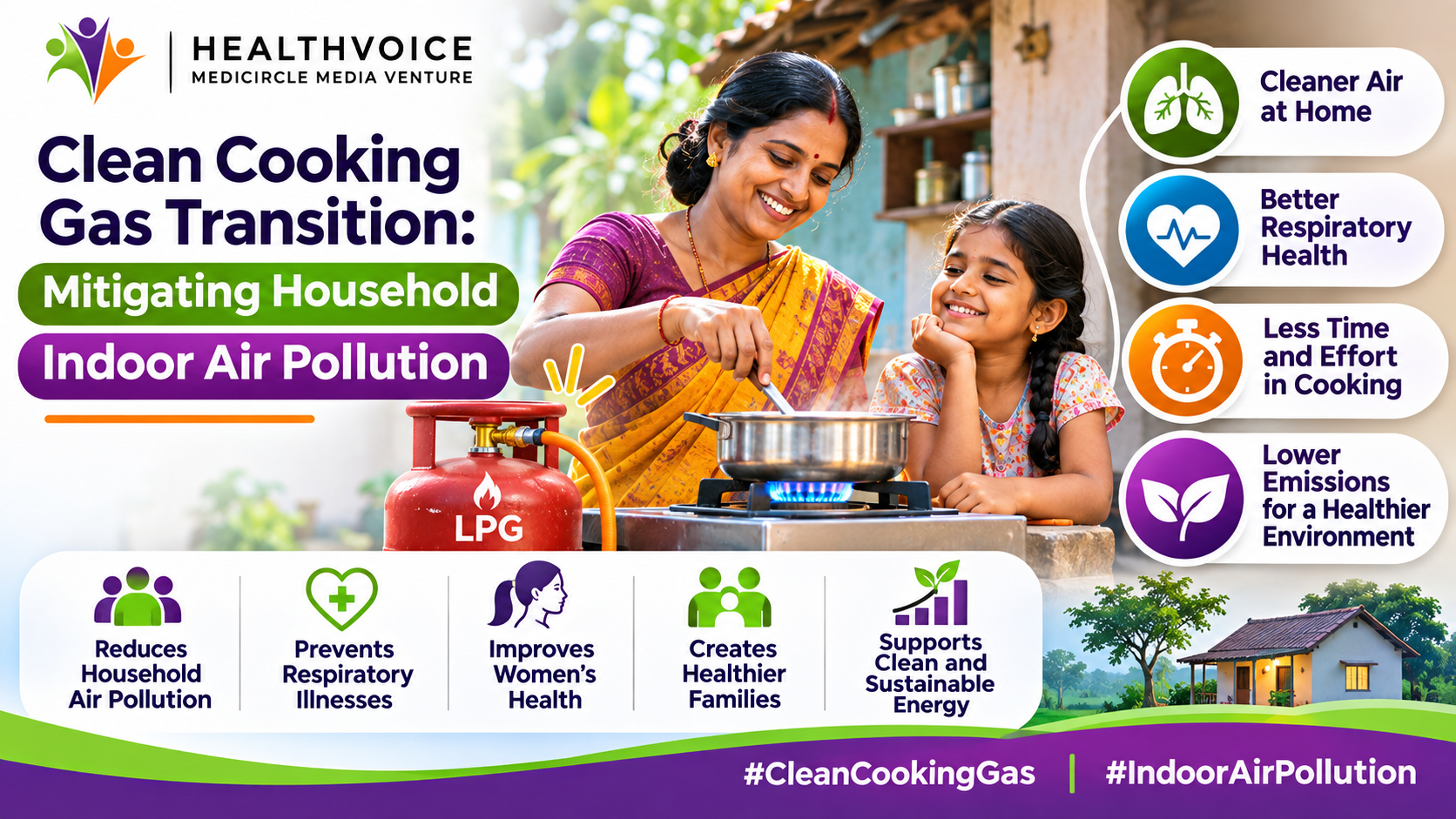
Clean Cooking Gas Transition: Mitigating Household Indoor Air Pollution
Transitioning to clean cooking gas helps reduce household indoor air pollution, lowering respiratory health risks and creating healthier living conditions. Promoting LPG adoption supports women's health, cleaner homes, and a more sustainable environment.
Executive Overview: The Epidemiological Burden of Household Energy Inequity
Household Air Pollution (HAP) resulting from the incomplete combustion of solid fuels—primarily firewood, crop residues, dried cattle dung cakes, and low-grade coal in traditional mud cookstoves (chulhas)—represents an acute, under-addressed environmental and public health crisis across the Global South. The World Health Organization estimates that exposure to smoke from cooking fires drives over three million premature deaths annually. This burden falls disproportionately on women and young children who spend prolonged hours in unventilated domestic microenvironments.
When solid biomass burns inefficiently in poorly ventilated kitchens, the resulting chemical plumes exceed safe ambient thresholds by orders of magnitude:
- The Toxic Effluent Matrix: Traditional biomass combustion generates dangerous concentrations of fine and ultrafine particulate matter (PM2.5 and PM0.1), carbon monoxide (CO), black carbon, polycyclic aromatic hydrocarbons (PAHs), formaldehyde, and nitrogen oxides. Kitchen 24-hour mean concentrations of PM2.5 in biomass-reliant households routinely range between 500 and 2,000 micrograms per cubic meter, far exceeding the WHO air quality guideline of 15 micrograms per cubic meter.
- Morbidity and Clinical Trajectories: Chronic inhalation of biomass combustion effluents triggers systemic inflammation, oxidative stress, and structural endothelial dysfunction. In pediatric populations, it is a primary driver of acute lower respiratory infections (ALRI) and fatal pneumonia, stunting, and impaired neurocognitive development. In adult women, lifetime exposure leads directly to chronic obstructive pulmonary disease (COPD) in non-smokers, cataractogenesis, ischemic heart disease, stroke, adverse obstetric outcomes (stillbirths and low birth weight), and lung adenocarcinoma.
- Socio-Economic and Gender Disparities: The daily chore of collecting biomass consumes hours of unpaid physical labor, disproportionately borne by rural women and adolescent girls, increasing exposure to musculoskeletal injuries and physical assault while depriving girls of educational opportunities.
Overcoming this crisis requires transitioning low-income households from solid fuels to clean, modern cooking energy, principally Liquefied Petroleum Gas (LPG) and electric induction.
Large-scale national transition initiatives—exemplified by India's landmark Pradhan Mantri Ujjwala Yojana (PMUY) and comparable programs across Southeast Asia and Sub-Saharan Africa—demonstrate that providing access alone does not eliminate the health hazard.
Achieving meaningful, permanent public health gains demands a comprehensive operational strategy:
- Addressing the structural behavioral phenomenon of fuel stacking, where households retain biomass alongside clean gas.
- Re-engineering financial subsidies through micro-refill pricing and targeted Direct Benefit Transfers (DBT) to sustain continuous gas consumption.
- Establishing resilient last-mile rural LPG supply-chain logistics and distribution networks.
- Deploying community-embedded behavioral change frameworks led by local healthcare workers to dismantle cultural and culinary barriers to clean energy adoption.
1. Physicochemical Characteristics and Pathophysiology of Biomass Smoke
Understanding the health rationale for clean fuel transition requires examining the chemical kinetics of biomass combustion and its cellular pathobiology.
Composition and Dispersion of Biomass Effluents
- Respirable Particulate Matter (PM2.5 and PM0.1): Solid biomass fuels contain high moisture content and burn at low, fluctuating combustion temperatures in open mud stoves. This incomplete combustion produces microscopic soot and carbonaceous cores coated with toxic organic compounds. Particles smaller than 2.5 micrometers bypass upper respiratory nasal cilia, penetrating deep into terminal bronchioles and alveoli, where ultrafine fractions cross the alveolar-capillary membrane directly into systemic circulation.
- Carbon Monoxide (CO): Incomplete oxidation of carbonaceous fuel produces high ambient carbon monoxide levels. CO binds to hemoglobin with an affinity roughly two hundred times greater than oxygen, forming carboxyhemoglobin (COHb), which impairs systemic oxygen delivery and induces fetal hypoxia in pregnant women.
- Polycyclic Aromatic Hydrocarbons (PAHs) and Volatile Organics: Biomass smoke contains potent carcinogens, including benzo[a]pyrene, benzene, and 1,3-butadiene. Chronic inhalation causes continuous DNA adduct formation, epigenetic modifications, and impaired alveolar repair mechanisms.
Pathophysiological Cascades in Exposed Cohorts
- Pediatric Alveolar Macrophage Impairment: Inhaled particulates overwhelm alveolar macrophages, inducing cellular lysis, oxidative stress, and blunted phagocytosis. This immunosuppression leaves the pediatric respiratory tree defenseless against viral and bacterial pathogens (Streptococcus pneumoniae, Respiratory Syncytial Virus), triggering severe pneumonia and bronchopneumonia.
- Non-Smoker COPD and Cor Pulmonale: Unlike cigarette smoke, which predominantly triggers emphysematous destruction of alveolar walls, chronic biomass smoke exposure provokes severe bronchial mucosal hyperplasia, extensive peribronchial fibrosis, and chronic obliterative bronchiolitis. Over decades, this fixed airflow limitation increases pulmonary vascular resistance, leading to pulmonary arterial hypertension and right ventricular failure (cor pulmonale).
- Cardiovascular Atherosclerosis: Ultrafine particles translocating into the bloodstream stimulate the release of systemic pro-inflammatory cytokines (IL-6, TNF-alpha, C-reactive protein), driving vascular endothelial dysfunction, heightened platelet aggregation, accelerated arterial plaque formation, and acute myocardial infarction.
2. Structural Barriers to Transition: The "Fuel Stacking" Paradigm
The central operational failure of early clean cooking interventions was the assumption that providing a gas connection would automatically lead to the total abandonment of biomass. In practice, low-income households adopt fuel stacking: using clean LPG stoves for quick tasks (boiling tea, reheating food) while retaining the traditional mud chulha for slow, heavy cooking (baking thick flatbreads, simmering legumes, boiling animal feed, or water heating).
Root Causes of Persistent Fuel Stacking
- The "Free" Biomass Illusion: In rural agrarian settings, solid biomass (firewood, agricultural husk, cow dung) is collected from fields and commons at zero out-of-pocket cash cost. Although gathering biomass carries massive opportunity costs in labor and health, impoverished families perceive commercially bottled LPG as an expensive cash outflow, reserving gas strictly to conserve fuel.
- Refill Affordability and Liquidity Shocks: Standard commercial LPG cylinders (typically 14.2 kg in India or 12 to 15 kg internationally) require a large, upfront cash payment at the time of refill. For daily-wage laborers, migrant workers, or subsistence agricultural families, gathering the necessary cash on a single day creates an insurmountable liquidity barrier, forcing an immediate return to biomass.
- Cultural and Culinary Perceptions: Traditional communities frequently believe that food cooked over firewood possesses superior flavor, texture, or spiritual purity compared to gas-cooked food. Furthermore, traditional clay chulhas provide secondary utility during winter months—such as domestic space heating and insect repelling in unsealed earthen houses—which clean gas burners do not replicate.
- Intra-Household Gender Economics: In patriarchal rural households, purchasing decisions are frequently controlled by male family heads who do not cook and do not personally experience the daily respiratory and ocular irritation of biomass smoke. Consequently, clean fuel refills are de-prioritized relative to other household expenditures.
3. Financial Re-Engineering: Micro-Refills and Targeted Subsidy Architectures
Sustaining clean cooking gas usage among vulnerable households requires restructuring fuel economics to align with irregular, low-income cash-flow patterns.
The 5-Kilogram "Micro-Refill" Revolution
- Standard 14.2-kilogram cylinders represent an inflexible financial hurdle for low-income families.
- Modern public schemes deploy 5-kilogram domestic cylinders alongside standard sizes.
- A 5-kg cylinder reduces the cash required per refill by more than sixty percent. A daily-wage laborer can easily purchase a smaller cylinder using surplus cash from two or three days of labor, eliminating reliance on local informal moneylenders to secure clean fuel.
- Smaller, lighter cylinders also resolve rural transport challenges: a 5-kg cylinder can be securely carried on a bicycle or foot, eliminating the logistical barrier of transporting a heavy 30-kg full-size cylinder across unpaved village terrain.
Smart Targeted Subsidies via Direct Benefit Transfer (DBT)
- Eliminating Ghost Beneficiaries and Diversion: Historical fuel subsidy models discounted gas cylinders at the retail counter, creating systemic market leakage where cheap domestic cylinders were diverted into commercial operations (restaurants, automobile conversions, and brick kilns).
- Direct Bank Account Credit: Modern architectures—such as India's PAHAL (DBTL) mechanism—mandate that all consumers purchase refills at full market price. The targeted government welfare subsidy is subsequently credited directly into the verified bank account of the female head of the household via biometric identification (Aadhaar linkage).
- Consumption-Linked Tiered Subsidies: To directly combat fuel stacking, government subsidies should be structured dynamically: rewarding consistent monthly refills with higher per-cylinder subsidies, while cutting subsidies for households that purchase fewer than three cylinders annually, actively nudging families away from intermittent biomass use.
4. Supply Chain Logistics: Bridging the Rural Last-Mile Infrastructure Void
Subsidized clean gas is meaningless if households face weeks of administrative delays, transport bottlenecks, and stockouts when attempting to refill an empty cylinder.
Expanding Rural Dealership Networks and Common Service Centers
- Historically, commercial gas distributorships clustered in affluent urban and peri-urban centers, forcing rural consumers to travel twenty to thirty kilometers to secure a refill.
- Health-driven distribution schemes aggressively de-densify urban agencies and commission dedicated rural Gramin LPG Vitrak (Village Distributors) positioned within a five-to-ten-kilometer radius of every rural cluster.
- Leveraging Common Service Centers (CSCs): Utilizing village-level digital kiosks and postal service branches as decentralized booking, payment, and cylinder exchange points, allowing consumers to book refills and exchange empty 5-kg cylinders at local grocery outlets.
Digital Booking Ecosystems and Predictive Fleet Dispatch
- Multi-Modal Ordering Channels: Rural consumers often lack broadband access. Providing diverse booking mechanisms—missed-call automated booking, toll-free interactive voice response (IVR) telephone trees in localized regional dialects, and SMS/WhatsApp portals—ensures equal access.
- Predictive Replenishment Logistics: Centralized oil marketing company databases track historical consumption velocity. When a household approaches its estimated cylinder exhaustion date, the logistics platform dispatches proactive automated text reminders to the consumer and routes supply trucks to local village clusters before households run completely out of clean fuel.
5. Structural Comparison: Traditional Biomass vs. Clean LPG Domestic Ecosystems
Evaluating the operational and public health differences between traditional solid biomass usage and an institutionalized clean LPG transition highlights systemic improvements:
Respiratory Hazard and Indoor Particulate Exposure
- Traditional Biomass Chulha: Inefficient, smoldering combustion; 24-hour mean indoor PM2.5 levels exceed 500 to 1,500 micrograms per cubic meter; high toxic emissions of carbon monoxide, polycyclic aromatic hydrocarbons, and black carbon.
- Modern Clean LPG System: High-efficiency, complete gaseous combustion; reduces indoor PM2.5 and carbon monoxide concentrations by more than eighty to ninety percent, meeting baseline health safety standards.
- Public Health Outcome: Substantially reduces the incidence of childhood pneumonia, chronic obstructive pulmonary disease in women, and all-cause cardiorespiratory mortality.
Domestic Labor Allocation and Time Poverty
- Traditional Biomass Chulha: Labor-intensive fuel gathering; women and children spend an average of one to four hours daily scavenging firewood, carrying heavy headloads, and preparing cattle dung cakes.
- Modern Clean LPG System: Instantaneous fuel availability; zero scavenging time; cooking begins with the turn of a control knob, saving hours of domestic labor daily.
- Socio-Economic Outcome: Frees female labor for income-generating livelihoods, personal education, maternal child-rearing, and community empowerment activities.
Energy Economics and Household Cash-Flow Dynamics
- Traditional Biomass Chulha: Perceived as an out-of-pocket "free" resource in rural areas, concealing the massive hidden costs of lost economic productivity, medical expenditures for respiratory illnesses, and environmental deforestation.
- Modern Clean LPG System: Requires recurring monetary expenditures; vulnerable to international fossil-fuel market volatility and local cash liquidity crunches.
- Operational Strategy: Requires micro-refill packaging (5-kg cylinders) and targeted Direct Benefit Transfers to align fuel purchases with daily-wage income streams.
Environmental Degradation and Climate Forcing
- Traditional Biomass Chulha: Accelerates local deforestation, soil nutrient depletion (diverting animal dung away from agricultural fertilizer), and significant emissions of short-lived climate pollutants (black carbon).
- Modern Clean LPG System: Fossil-derived but significantly more thermal-efficient; negligible black carbon output; halts local forest degradation and reduces net domestic greenhouse gas contributions.
- Ecological Outcome: Supports regional ecological regeneration, preserves topsoil quality, and reduces domestic radiative climate forcing.
6. Community Behavioral Engineering: The Healthcare Worker Vanguard
Technology, subsidies, and delivery trucks are insufficient if deep-rooted cultural beliefs regarding biomass cooking remain unchanged. Transforming household cooking behavior requires sustained interpersonal engagement driven by trusted, community-embedded health advocates.
The ASHA and Anganwadi Mobilization Strategy
- In South Asia, Accredited Social Health Activists (ASHAs) and Anganwadi workers serve as the front line of maternal-child healthcare.
- Clean fuel transition frameworks must formally integrate community health workers as clean energy ambassadors:
- Health workers integrate indoor air pollution assessments into routine antenatal check-ups, infant immunization visits, and village health sanitation days.
- Demonstrating the biological link between smoky chulhas and low birth weight, infant wheezing, and chronic maternal cough directly reframes clean gas as a non-negotiable medical intervention rather than a luxury amenity.
- Financial Incentives for Health Workers: Providing modest performance-based honorariums to community health workers for every verified, active LPG connection maintained with consistent quarterly refills inside their assigned village catchment.
Community Demonstration Kitchens and Culinary Adaptation
- Dismantling Culinary Myths: Establishing public demonstration kitchens at primary health centers and village council halls:
- Training rural women on preparing traditional breads and local dishes efficiently on high-efficiency LPG gas burners, proving that taste and texture remain uncompromised.
- Safety Training and Exploding Cylinder Fears: Low-income families unfamiliar with pressurized gas often harbor extreme anxiety regarding kitchen fires and explosive cylinder bursts.
- Conducting hands-on safety workshops—demonstrating cylinder installation, rubber tube inspections, regulator shut-off mechanisms, and proper room ventilation—demystifies the technology and builds lasting confidence in clean gas.
7. Phased Implementation Protocol: National Clean Energy Transition Roadmap
Transitioning an entire population away from solid fuels into a functional, sustainable clean cooking gas ecosystem requires an organized four-phase operational strategy:
- Phase 1: Geographic Auditing and Vulnerability Mapping (Months 1 to 3):
- Utilize remote sensing, district health survey data, and energy access records to identify high-density biomass-burning rural clusters and respiratory illness black spots.
- Formulate national inter-ministerial taskforces uniting the Ministry of Health, Ministry of Petroleum, Ministry of Finance, and Women and Child Development authorities.
- Establish baseline indoor air quality monitoring and childhood pneumonia incidence rates across pilot districts to serve as public health benchmarks.
- Phase 2: Subsidy Design and Supply Chain Scaling (Months 4 to 6):
- Launch the digital Direct Benefit Transfer (DBT) mechanism, linking gas subsidy accounts directly to the female head of household’s verified national biometric identification and bank account.
- Authorize state oil marketing companies to manufacture and deploy 5-kilogram micro-refill cylinders at scale alongside standard sizes.
- Commission new rural distributorship agencies to guarantee that every target village lies within an eight-kilometer service delivery radius.
- Phase 3: Saturation Rollout and Healthcare Worker Activation (Months 7 to 9):
- Distribute zero-advance-cost LPG connections—comprising a free pressure regulator, low-emission dual-burner stove, safety hose, and initial cylinder—to verified below-poverty-line (BPL) households.
- Deploy certified training modules to rural community health workers (ASHAs/Anganwadis), embedding clean cooking counseling into routine maternal-child home visits.
- Establish automated multi-lingual booking channels (missed-call ordering, local IVR phone trees, village kiosk drop-ins).
- Phase 4: Longitudinal Consumption Auditing and Policy Tuning (Months 10 to 12):
- Establish real-time digital monitoring dashboards: tracking cylinder refill velocity, identifying dormant accounts, and detecting localized patterns of fuel-stacking relapse.
- Deploy mobile field air quality monitoring vans to sample ambient indoor PM2.5 and CO levels in converted households, auditing true exposure reductions.
- Adjust subsidy allocations dynamically: increasing per-cylinder financial assistance during winter and post-harvest months when solid biomass availability surges.
Strategic Summary: Clean Air as an Uncompromising Medical Human Right
Indoor air pollution from traditional solid fuels is not merely a challenge of rural development or energy access; it is an ongoing, preventable public health disaster that claims millions of lives and perpetuates structural gender inequality. Treating this health crisis simply by handing out single subsidized stoves leads directly to fuel stacking and continued toxic exposure.
By deploying universal zero-advance-cost clean gas connections, introducing flexible 5-kg micro-refills to accommodate irregular low-income cash flows, delivering targeted Direct Benefit Transfer subsidies to female bank accounts, building dense rural distribution networks, and deploying trusted community health workers to shift cultural cooking norms, governments can permanently clear the air inside domestic homes.
This comprehensive public health transformation eliminates lethal smoke from low-income kitchens, protects maternal and pediatric lungs, and restores dignity, health, and economic potential to millions of families across the developing world.
10 Frequently Asked Questions (FAQs)
Q1. What is the fundamental difference between outdoor ambient air pollution and indoor household air pollution?
Outdoor air pollution is driven primarily by vehicular emissions, industrial smoke, power plants, and regional dust, affecting entire populations across expansive geographic areas.
Household Air Pollution (HAP) originates from the incomplete burning of solid biomass (wood, cow dung, crop residue) inside enclosed, poorly ventilated domestic kitchens:
- Because cooking occurs within confined spaces multiple times a day, particulate concentrations inside kitchens routinely reach levels twenty to thirty times higher than outdoor street air, exposing women and young children to intense, concentrated toxins for hours every day.
Q2. Why does providing a free LPG connection often fail to eliminate biomass smoke entirely?
This failure stems from the phenomenon of fuel stacking:
- A family receives an LPG stove, but continues using their traditional mud chulha alongside it.
- Because collecting firewood or dung is perceived as having zero out-of-pocket cash cost, households use expensive gas sparingly—typically for quick tasks like morning tea or heating milk—while cooking long, labor-intensive family meals over solid biomass.
- Consequently, indoor air remains heavily polluted, and the expected respiratory health benefits are completely lost unless total biomass abandonment is achieved.
Q3. How do 5-kilogram LPG cylinders solve the refill affordability problem for low-income families?
Standard 14.2-kilogram gas cylinders require a large, single upfront cash payment that daily-wage laborers rarely have available on a given day:
- A 5-kilogram cylinder reduces the required cash outlay by roughly sixty percent per purchase, matching the daily or weekly cash-flow cycles of low-income workers.
- Furthermore, a 5-kg cylinder is light enough to be transported on a bicycle or carried by hand, eliminating expensive motorized transport fees in remote rural villages.
Q4. What is the clinical link between household biomass smoke and childhood pneumonia?
Inhaled microscopic soot and fine particulate matter (PM2.5) settle deep into a child's lungs, overwhelming and destroying alveolar macrophages:
- Alveolar macrophages are the primary immune cells responsible for clearing bacteria and viruses from the lower airways.
- When these immune defenses are paralyzed by biomass soot, common respiratory pathogens like Streptococcus pneumoniae proliferate rapidly.
- This turns minor viral colds into fulminant, life-threatening acute lower respiratory infections (ALRI) and fatal bronchopneumonia.
Q5. Why is Direct Benefit Transfer (DBT) preferred over selling discounted cylinders at gas agencies?
Selling discounted cylinders at the retail counter created massive financial corruption and diversion:
- Commercial enterprises (restaurants, caterers, small factories) routinely bought cheap, subsidized domestic cylinders illegally, while poor families faced artificial shortages.
- Under Direct Benefit Transfer (DBT), all consumers buy cylinders at the standard market price.
- The government then transfers the targeted cash subsidy directly into the verified bank account of the registered female homemaker.
- This electronic approach eliminates middlemen, prevents commercial fuel diversion, and empowers women within the household economy.
Q6. Can improved biomass cookstoves (ICS) match the health benefits of transitioning to clean LPG?
No. Decades of clinical field trials have demonstrated that "improved" biomass cookstoves—even those fitted with chimneys or small electric draft fans—do not reduce emissions enough to produce meaningful health gains:
- While an improved biomass stove may cut smoke by thirty to fifty percent, indoor PM2.5 levels remain far above the safe thresholds defined by WHO air quality guidelines.
- Achieving significant reductions in childhood pneumonia, cardiovascular disease, and chronic lung disease requires a near-total transition to truly clean fuels like LPG, piped natural gas (PNG), or electric induction.
Q7. How does using clean cooking gas help prevent non-smoker lung disease in women?
Chronic biomass smoke inhalation causes a specific, non-emphysematous form of lung disease termed Biomass-Induced Chronic Obstructive Pulmonary Disease:
- Inhaled wood and dung smoke induces chronic inflammation, leading to dense peribronchial fibrosis and narrowing of small airways.
- Burning clean LPG produces virtually zero solid particulate matter or toxic soot, preventing the chronic bronchial inflammation that leads to severe, irreversible breathing disability in adult non-smoking women.
Q8. What role do rural community healthcare workers play in driving clean fuel adoption?
Community healthcare workers (such as ASHAs and Anganwadi staff) are trusted advisors on maternal and child wellness:
- When a health worker visits a rural home and directly connects a child's chronic nighttime coughing, eye irritation, or low birth weight to the smoke from the mud chulha, families view the issue as a critical health threat rather than an acceptable daily inconvenience.
- Health workers demystify gas cooking, debunk myths about food taste, and encourage husbands to prioritize monthly gas refills over non-essential expenses.
Q9. Are there environmental and climate benefits to transitioning low-income homes from firewood to fossil-derived LPG?
Yes, substantial net benefits exist:
- While LPG is a fossil fuel, its combustion is clean and chemically complete.
- Burning firewood and cattle dung in inefficient chulhas releases massive quantities of black carbon (soot), a short-lived climate pollutant that traps atmospheric heat thousands of times more effectively than carbon dioxide.
- Furthermore, widespread firewood harvesting drives local forest degradation.
- Transitioning to clean LPG eliminates black carbon emissions, protects forest ecosystems, and produces a minimal net greenhouse gas footprint compared to biomass burning.
Q10. What are the three most critical operational metrics to evaluate the true success of a clean cooking transition scheme?
Track three prioritized, operational metrics:
- Annual Refill Velocity (Cylinders per Household per Year): Tracking whether converted families purchase sufficient refills (targeting at least six to eight 14.2-kg cylinders or sixteen to twenty 5-kg cylinders annually) to prove they have abandoned biomass stacking.
- Indoor 24-Hour Mean PM2.5 and CO Levels: Placing air quality monitors inside randomly sampled rural kitchens to verify that ambient particulate levels have permanently fallen within WHO safety guidelines.
- Pediatric Acute Lower Respiratory Infection (ALRI) Rates: Auditing primary healthcare center records to document measurable declines in childhood pneumonia visits across converted village communities.
 Team Healthvoice
#CleanCookingGas #IndoorAirPollution