Clinical audits as learning tools
Abstract: Clinical audits should evolve from fault finding exercises into learning tools that improve systems, empower healthcare teams, strengthen patient safety and foster a culture of transparency and continuous improvement.
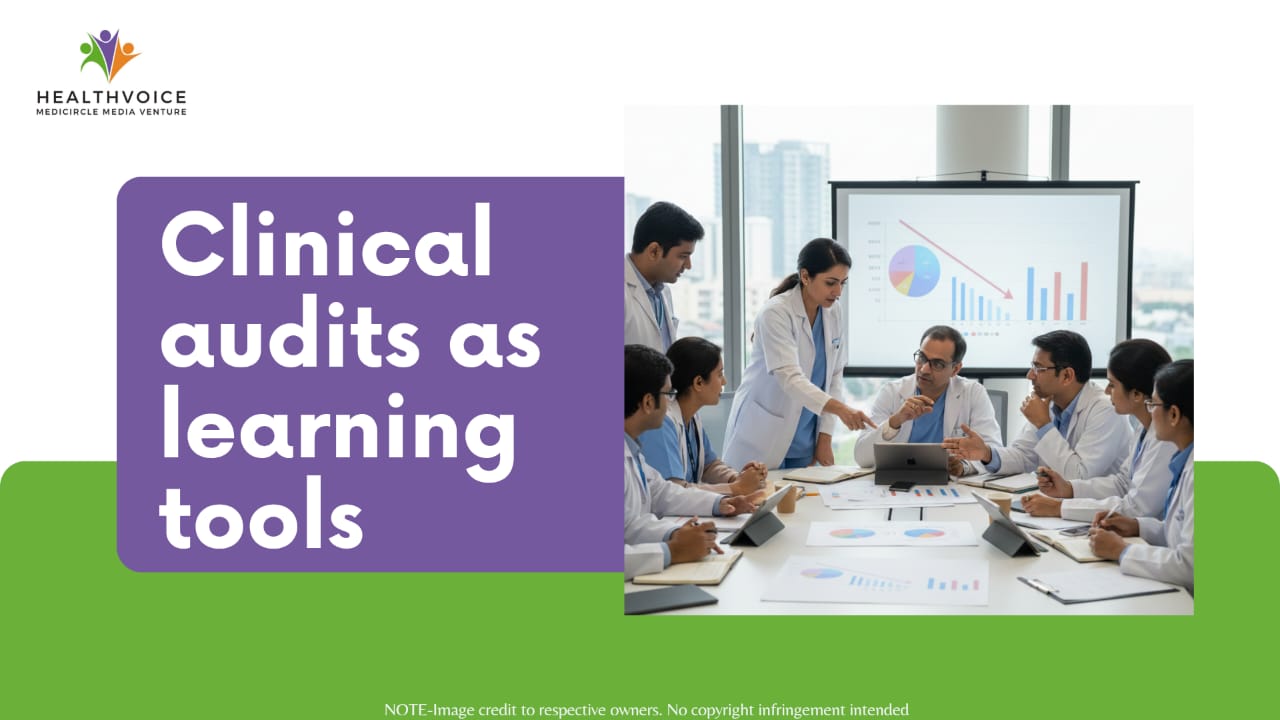
Walk into any hospital department during an audit and you might sense a familiar tension. A team pores over patient records and procedure logs, their focus intense. For countless doctors, nurses and technicians, the very mention of an audit sparks immediate anxiety. It instinctively feels like an inquisition, a process designed to find errors and assign blame for things gone wrong. This reaction is deeply ingrained but it obscures a far more valuable purpose.
Consider a different view. What if we stopped seeing these reviews as a disciplinary hearing and started viewing them as a training session? Changing the clinical audit from a tool for punishment into one for collective education could be the very step needed to build a more effective, compassionate, and safer healthcare environment for all.
Blame to better solutions:
At its heart, a clinical audit performs a vital and straightforward function. It compares everyday clinical reality with defined best practice standards. It asks, “What is our current practice?” and measures it against “What should our practice be?” That space between the ideal and the actual is not a place for shame; it is the critical zone for growth and improvement.
The old fear based approach turns this gap into a weapon. A physician might feel personally blamed for a patient’s readmission. A ward could be criticized for slow response times without understanding why. This method immediately puts people on the defensive. Conversations stop, facts get hidden and the root cause, often a flawed process and not a flawed person, stays buried. The same error is then destined to repeat.
Contrast this with an audit approached as a shared learning mission. Take the case of a mid-sized Indian hospital grappling with a rise in post-surgical infections. Instead of targeting the surgical teams, management formed a broad audit group. This team included surgeons, theatre nurses, infection control officers and housekeeping staff.
Together, they traced the entire patient journey. Their discovery was revealing. The issue was not a lack of skill or care but intermittent shortages of proper antiseptic supplies and poorly designed patient recovery areas that compromised sterile zones. The outcome was not a list of culprits but a revised procurement process and new ward protocols. The audit acted like a diagnostic tool for the system itself, curing a problem that punishment would have only driven underground.
Building a learning culture:
Moving from a culture of blame to one of curiosity does not happen by chance. It requires deliberate action to make staff feel safe enough to speak openly about shortcomings.
The first step is to analyze processes and not individuals. When a discrepancy is found, leadership must train themselves and their teams to ask, “How did our system allow this to occur?” instead of “Who is responsible?” This single change in questioning redirects energy from assigning guilt to solving problems.
Next, it is essential to involve every relevant voice. The most effective audits break down professional silos. The doctor’s prescription, the nurse’s administration record, the physiotherapist’s notes and the administrator’s bed allocation policy are all linked. A roundtable discussion including all these perspectives uncovers connections and obstacles that a single department review would miss. The people doing the work daily have the most practical insights into where it breaks down.
Finally, the cycle must end with visible action and communication. An audit report gathering dust is a demoralizing waste of effort. True learning is proven by change. Was the new discharge checklist adopted? Did the revised morning handover meeting improve clarity? Crucially, the results, both good and bad, must be shared openly with all contributors. When staff see that their honest input leads to tangible improvements, trust builds. They become active participants in quality and not passive subjects of inspection.
Clinical audits in India:
The Indian medical landscape presents unique challenges: immense patient volumes, scarce resources in many areas and significant variation in care standards. In this context, an audit model focused on reprimand is particularly destructive. It demoralizes professionals who are already working under tremendous pressure, pushing them to hide problems rather than solve them.
A learning oriented audit thrives in this setting by becoming a lever for efficiency and empowerment. When resources are tight, identifying precise points of waste or delay, like bottlenecks in outpatient flow or inconsistent record keeping, allows for smarter allocation. It turns constraints into a catalyst for innovation and streamlined processes.
Moreover, as more Indian hospitals pursue quality certifications from bodies like the National Accreditation Board for Hospitals, this philosophy aligns perfectly. The audit transforms from a box ticking compliance activity into the core driver of continuous improvement. It shows a genuine organization wide commitment to excellence that goes beyond a certificate on the wall.
The value of audits:
Beyond protocols and standards, this reimagining of the audit is fundamentally about respect for people. Every percentage point in an infection rate and every delayed report represents a real person: a patient who placed their life in the hospital’s care and a healthcare worker who dedicates their energy to healing.
A punitive audit reduces these individuals to abstract failures on a spreadsheet. A learning audit acknowledges their humanity. It declares that a patient’s well-being is so important that we will rigorously examine our own work without pride or prejudice. It states that a caregiver’s development is so valued that we will offer guidance and not just condemnation.
Embracing this shift means ending the era of secretive mistakes and silent fears. It means bringing challenges into the open, discussing them constructively and growing together. The result is more than just better metrics; it is stronger, more cohesive teams and a more resilient healthcare system.
In the end, the greatest value of a clinical audit lies not in the paperwork it produces but in the culture it fosters, one built on humility, teamwork and an unwavering commitment to do better for every single patient.
 Team Healthvoice
#ClinicalAudit #QualityImprovement #PatientSafety #HealthcareQuality #LearningHealthSystem #NoBlameCulture #MedicalEducation #HospitalManagement #ContinuousImprovement #AuditAndFeedback #HealthcareLeadership #ClinicalGovernance #ProcessImprovement #TeamBasedCare #SafeHealthcare #healthvoice