The Last Line of Defense Is Cracking: Antimicrobial Resistance in Critical Care
The path forward demands integration of diagnostics, stewardship, infection prevention, research, and policy support
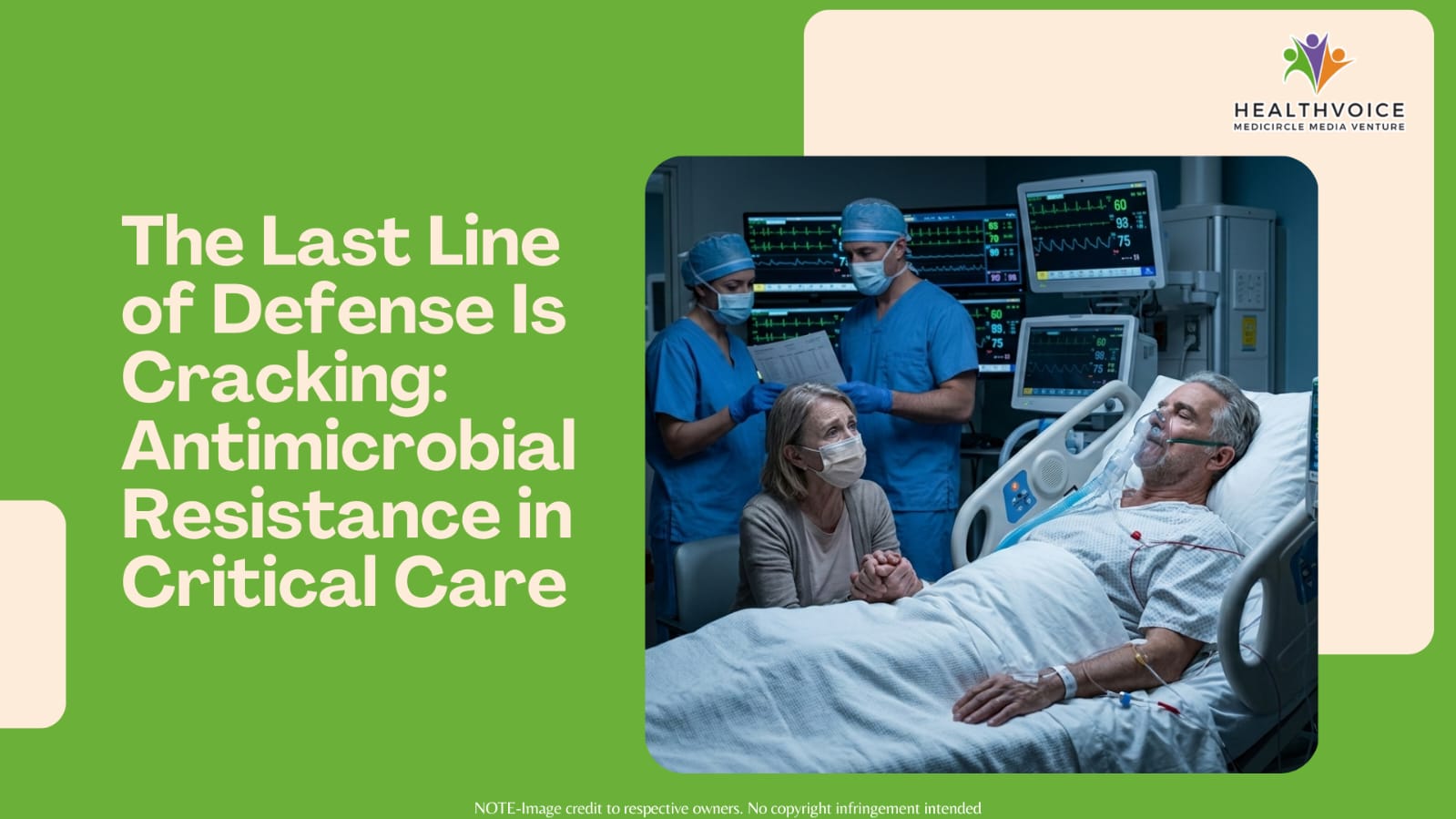
Inside an Intensive Care Unit, time behaves differently. Minutes stretch, alarms punctuate silence, and decisions carry life-altering consequences. For decades, antibiotics have been among the most trusted tools in critical care medicine. They have turned once-fatal sepsis into survivable illness and transformed postoperative infections into manageable complications. Today, however, intensivists across India are facing a stark and unsettling truth: the antibiotics that once rescued their sickest patients are losing power.
At Criticare 2026, the annual conference organised by the Indian Society of Critical Care Medicine, antimicrobial resistance dominated conversations in lecture halls and corridors alike. Specialists in critical care, infectious diseases, pulmonology, anaesthesia, and hospital medicine converged with a shared concern. Drug-resistant infections are no longer rare ICU curiosities. They are becoming daily obstacles in managing sepsis, ventilator-associated pneumonia, bloodstream infections, and complicated intra-abdominal infections.
Antimicrobial resistance, widely known as AMR, has been described by global health agencies as one of the greatest threats to modern medicine. In India, the burden is particularly heavy. High population density, over-the-counter antibiotic access, fragmented healthcare systems, and uneven infection-control practices have accelerated resistance trends. In the ICU setting, where patients are immunocompromised, intubated, catheterised, and exposed to invasive procedures, resistant organisms find fertile ground.
Critical care physicians are observing a narrowing therapeutic window. Infections caused by multidrug-resistant Gram-negative bacteria, carbapenem-resistant organisms, and pan-resistant pathogens are becoming more common. Empirical therapy, once guided by predictable local microbiology, is increasingly uncertain. The time between suspicion of infection and targeted treatment is critical. Yet culture reports often reveal organisms resistant to first-line and even second-line agents.
Dr. Srinivas Samavedam, President of the Indian Society of Critical Care Medicine, emphasised at the conference that the battle against AMR must become smarter. Advances in data science and artificial intelligence, he suggested, can assist clinicians in refining antimicrobial choices. Predictive analytics based on local antibiograms, patient risk factors, prior antibiotic exposure, and severity scoring may help personalise therapy. In an era of shrinking antibiotic effectiveness, precision matters.
However, technology alone cannot solve a problem rooted in prescribing behaviour and systemic gaps. Indiscriminate antibiotic use remains one of the strongest drivers of antimicrobial resistance. In many ICUs, the reflex to initiate broad-spectrum antibiotics at the first sign of fever persists. Fever in a critically ill patient often triggers anxiety. The stakes are high. Delayed treatment of true infection can be fatal. Yet not every fever is infectious in origin. Drug reactions, inflammatory conditions, thromboembolic events, and transfusion reactions can all produce elevated temperature.
Dr. Sachin Gupta, General Secretary of ISCCM, underscored the importance of clinical discernment. The decision to start antibiotics should follow careful assessment, diagnostic testing, and consideration of differential diagnoses. Blood cultures, procalcitonin levels, imaging studies, and focused clinical examination must guide management. Prescribing a broad-spectrum agent without confirmation may provide temporary reassurance, but it contributes to long-term harm.
Antimicrobial stewardship programmes offer structured approaches to address this challenge. Such programmes promote rational antibiotic use, defined durations of therapy, de-escalation based on culture results, and regular audit of prescribing patterns. In tertiary hospitals with established infection-control teams, stewardship protocols have demonstrated measurable reduction in antibiotic consumption and resistance rates. The concern is that these standards are not uniformly implemented across India’s vast network of secondary and smaller healthcare facilities.
Prof. Pradip Kumar Bhattacharya, Immediate Past President of ISCCM, highlighted a pattern that many intensivists recognise. Patients referred from peripheral hospitals often arrive after receiving high-end broad-spectrum antibiotics. By the time they reach tertiary ICUs, infections may already be resistant to conventional therapy. Early misuse narrows subsequent options. The challenge becomes compounded when the antibiotic pipeline is thin. Few new molecules targeting resistant Gram-negative organisms have reached the market in recent years.
The antimicrobial resistance crisis in India is shaped by interconnected factors. Over-the-counter sale of antibiotics without prescription remains common despite regulatory restrictions. Self-medication and incomplete courses contribute to selective pressure on bacteria. Diagnostic limitations further complicate rational prescribing. In many settings, culture and sensitivity testing is either delayed, unavailable, or unaffordable. Clinicians may rely on empirical treatment in the absence of microbiological confirmation.
Hospital infection control practices vary widely. Hand hygiene compliance, sterilisation protocols, environmental cleaning, and surveillance cultures form the backbone of prevention. Where these measures falter, resistant organisms spread rapidly. Intensive Care Units are particularly vulnerable due to high antibiotic exposure and invasive device usage. Central line-associated bloodstream infections, catheter-associated urinary tract infections, and ventilator-associated pneumonia represent frequent entry points for multidrug-resistant pathogens.
Search trends in India reveal rising public interest in terms such as antibiotic resistance in ICU, sepsis treatment options, multidrug-resistant infection management, antimicrobial stewardship India, and superbug crisis. The awareness is growing, yet misconceptions persist. Many patients and families equate stronger antibiotics with better care. Physicians often face pressure to prescribe aggressively. Education must therefore extend beyond medical professionals to the broader community.
Data-driven approaches can strengthen stewardship efforts. Digital health records allow monitoring of antibiotic prescribing patterns across departments. Integration of microbiology lab data with clinical decision-support systems can prompt de-escalation alerts when culture results become available. Artificial intelligence tools may eventually predict resistance risk at admission based on demographic and clinical variables. Such innovations require investment and training, yet they hold promise.
Policy-level support is equally important. Institutionalising antimicrobial stewardship as a mandatory component of hospital accreditation can drive compliance. Standard treatment guidelines tailored to local resistance patterns should be regularly updated and disseminated. Financial incentives for diagnostic testing may encourage culture-based therapy rather than blind escalation.
The ICU presents a microcosm of the national AMR landscape. Patients admitted to critical care units often have prolonged hospital stays, exposure to multiple antibiotic classes, and compromised immunity. Once colonised by resistant organisms, they may become reservoirs for transmission. Breaking this cycle demands coordinated action.
Preventive strategies begin at admission. Screening high-risk patients for colonisation, isolating those carrying resistant pathogens, and enforcing strict contact precautions reduce cross-transmission. Antibiotic time-outs, where therapy is reassessed after 48 to 72 hours, can prevent unnecessary continuation. Defined treatment durations based on evidence reduce cumulative exposure.
Education remains central. Young residents and nursing staff must internalise principles of rational antibiotic prescribing. Continuing medical education sessions on antimicrobial resistance, updated guidelines, and case-based discussions reinforce best practices. Senior consultants set the tone. When leaders prioritise stewardship, institutional culture shifts.
Public awareness campaigns can address misconceptions around antibiotics. Many community-acquired infections are viral and self-limiting. Antibiotics do not treat influenza, dengue, or common colds. Misuse in outpatient settings contributes indirectly to ICU resistance patterns. Community physicians play a vital role in reducing unnecessary prescriptions.
The economic burden of antimicrobial resistance is substantial. Prolonged ICU stays, use of expensive last-resort antibiotics, need for isolation rooms, and additional diagnostic testing increase healthcare costs. For families already strained by critical illness expenses, resistant infections add another layer of financial stress. From a national perspective, AMR threatens productivity and public health gains achieved over decades.
Globally, organisations such as the World Health Organization have called for national action plans on antimicrobial resistance. India has formulated such frameworks, yet implementation remains uneven. Surveillance networks that collect resistance data from hospitals across regions can inform policy. Transparent reporting encourages accountability.
For intensivists, the AMR crisis is deeply personal. Watching a patient deteriorate despite escalating antibiotic therapy is a humbling experience. Medicine’s promise rests on effective tools. When those tools falter, clinical confidence is tested. Yet despair is not the answer. History shows that coordinated public health action can reverse trends.
The path forward demands integration of diagnostics, stewardship, infection prevention, research, and policy support. Pharmaceutical innovation must be incentivised to replenish the antibiotic pipeline. At the same time, prudent use of existing drugs is essential. Every unnecessary prescription accelerates resistance.
In the ICU, vigilance must become instinctive. Before prescribing, doctors should ask whether infection is confirmed, whether cultures have been obtained, whether local antibiogram supports the chosen agent, and when de-escalation will occur. These questions may appear simple, yet consistent application transforms practice.
Antimicrobial resistance is no longer a distant projection for 2050. It is an immediate clinical reality in Indian Intensive Care Units. The conference discussions at Criticare 2026 reflect urgency rather than alarmism. Intensivists are calling for stronger stewardship programmes, uniform infection-control standards, improved diagnostics, and nationwide awareness campaigns.
When antibiotics begin to fail, the silence in the ICU grows heavier. It is a silence filled with questions about preparedness, policy, and prudence. Addressing antimicrobial resistance is not optional. It is essential to the survival of modern medicine itself.
 Team Healthvoice
#CriticalCare #InfectionControl #AntibioticStewardship #Superbugs #HealthcareIndia #PatientSafety #MedicalEducation #GlobalHealth #HealthcareLeadership #MedicalAwareness #HealthSystems #DoctorsOfIndia #FutureOfMedicine #healthvoice