Clinical Communication After a Medical Error: Honest, Compassionate Disclosure for Patient Safety
In Indian practice, sensitivity to family dynamics, language, and resource constraints is essential. Clinicians should seek institutional guidance on policies and legal issues, and institutions must support transparency through training, reporting systems, and clinician support.
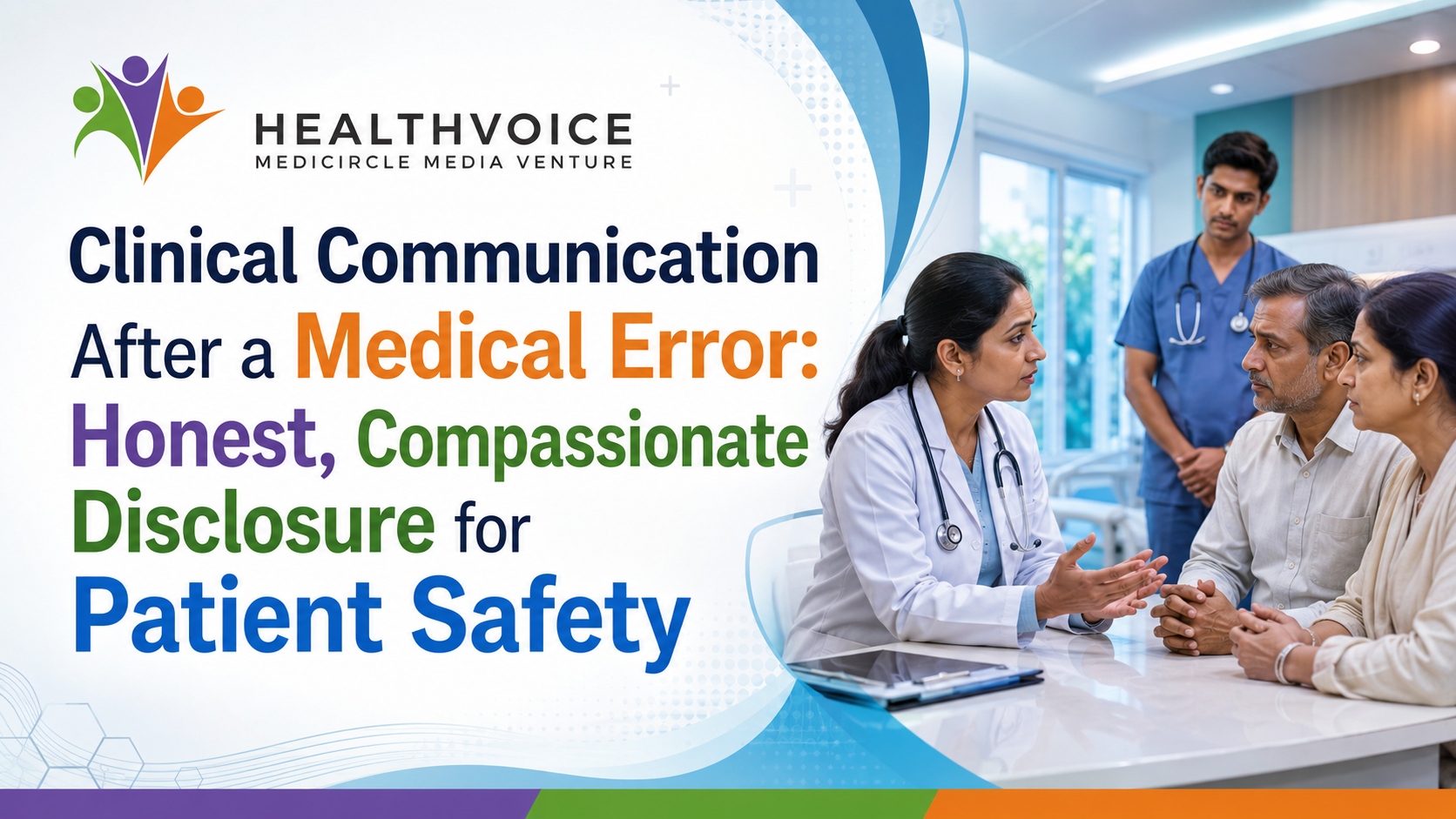
Clinical Communication After a Medical Error: Principles for Honest and Compassionate Disclosure Introduction
Every clinician has a moment they wish they could change: a wrong drug, a missed sign, an operative misstep. In India’s busy hospitals and clinics—where resource constraints, high patient volumes, and strong family involvement create unique pressures—how we speak after a mistake can define the relationship between clinician and patient for years.
This article focuses on practical, ethically grounded guidance for clinical communication after a medical error. We centre patient safety, honest explanation, and compassion while acknowledging the limits of what clinicians can promise. Whether you are a junior resident in a municipal hospital, a senior consultant in a private centre, or part of an administrative quality team, these principles aim to help you navigate the most difficult conversations with dignity and clarity.
We also address how doctors should communicate after a medical error in everyday language, with examples drawn from Indian clinical settings and a clear-eyed look at risks and institutional responsibilities.
What it means
A medical error is an unintended act (or omission) that may result in harm to a patient. Errors range from minor medication slips to significant surgical complications. 'Open disclosure' refers to the process of telling patients or families what happened, what is known and unknown, offering an apology or expression of regret, and outlining next steps.
Good clinical communication in this context combines several elements: an honest explanation, a compassionate apology, a commitment to investigate (root cause analysis), and a plan for follow-up and remediation. These elements sit within broader clinical governance—the systems, policies and accountability structures that hospitals use to improve patient safety and learn from events.
When we talk about "how doctors should communicate after a medical error," we mean the practical language, timing, and actions that balance transparency with patient welfare, and that protect both patient trust and system learning.
Why it matters
Patient safety is not only a technical issue but a relational one. How clinicians behave after an error affects immediate patient care and the future ability of the health system to learn.
An honest, timely disclosure can reduce patient distress and preserve trust. Families are often most upset when they feel excluded or misled. Conversely, silence or evasive language can escalate anger and lead to complaints or litigation. Open disclosure supports ethical communication and aligns with professional duties to respect patient autonomy.
For clinicians and institutions, transparent communication fosters a culture of safety. When teams report and discuss errors without fear of blame, they can use root cause analysis to make practical changes—improving protocols, training, supplies, or supervision in ways that prevent repetition.
However, disclosure is not risk-free. Doctors must balance legal concerns, confidentiality, and the patient's clinical stability. Institutions should support clinicians through policies, training, documentation standards, and legal advice where appropriate.
Practical guidance
Below is a stepwise approach you can adapt to your setting. These steps combine ethical communication, patient safety principles and clinical governance practice.
H3: Immediate priorities: care first
Always prioritise the patient’s immediate clinical needs. If an error has just become apparent, stabilise the patient, correct reversible harms where possible, and ensure monitoring and analgesia as required.
Notify a senior clinician and relevant team members. Clinical leadership should be present when the disclosure conversation takes place whenever feasible.
H3: Prepare before you speak
Gather factual information before you meet the patient or family. Know what happened, what is known with reasonable certainty, and which facts remain under investigation. Identify who will lead the conversation and who will document it.
Consider practicalities: choose a private setting, allow sufficient time, ensure a trusted team member or interpreter is present, and avoid interruptions from phones or pagers.
H3: Use clear, compassionate language
Begin with the facts. Use short, non-technical sentences (for example: "Mrs. Sharma, during your surgery there was unexpected bleeding which needed an additional procedure to control it"). Avoid medical jargon that can confuse or sound like evasion.
Open with an expression of regret or apology. A simple statement—"I am very sorry that this happened"—conveys empathy. "I apologise" or "I regret that you were harmed" are appropriate. This is the ethical communication that patients value.
Be transparent about what is known and unknown. If the cause is still under investigation, say so: "We do not yet know exactly why this occurred. We will investigate and explain as soon as we can."
H3: Explain next steps and support available
Outline immediate clinical actions, monitoring plans, and treatment options. Then explain the process for investigating the event, typically a root cause analysis. Tell the patient or family who will be responsible for follow-up, and when they can expect updates.
Offer emotional and practical support: access to a senior clinician for questions, social work or counselling services where available, and clear contact details. In India, many families will want regular updates; agree on a preferred communicating person and schedule.
H3: Documentation and reporting
Document the disclosure conversation in the medical record: who was present, what was said, the patient’s response, and agreed next steps. Record clinical changes and interventions prompted by the event.
Follow institutional policies for reporting incidents into clinical governance systems. Reporting enables system-level learning and may trigger audits or safety measures to prevent recurrence.
H3: Conduct root cause analysis (RCA)
Root cause analysis is a structured review to identify underlying system failures rather than assigning individual blame. RCA can reveal process gaps—such as unclear protocols, staff shortages, or equipment problems—that contributed to the error.
Share relevant findings with the patient or family in follow-up meetings, focusing on what the team has learned and what changes will reduce risk in the future.
H3: Apology and compensation discussions
An apology is ethical and often appreciated, but compensation discussions require institutional involvement. If the patient seeks remediation, direct them to the appropriate administrative or legal route at your hospital. Do not promise financial settlement on your own behalf.
H3: Cultural competence in India
Family-centred care matters in many Indian settings. Ask the patient whether they prefer family members to receive information. Use language that the patient understands; arrange interpreters for regional languages when needed.
Be mindful of social dynamics—gender norms, family hierarchy, and literacy levels may shape how information is received. Adjust communication style without hiding facts.
H3: Support for clinicians
Being involved in an error is emotionally taxing. Institutions should provide peer support, debriefing, and, when needed, counselling. Clinicians should seek support early and participate in governance processes constructively.
H3: When legal advice is needed
If there is a suspicion of criminal negligence, death, or complex compensation demands, involve institutional legal or risk-management teams promptly. This article provides general guidance and is not a substitute for legal counsel.
Common questions
H3: Who should be told first—the patient or the family?
Where the patient has capacity, clinicians should ask the patient who they want to be present for the discussion. In many Indian households, families play an active role; secure the patient’s preference, then proceed.
H3: What if the patient is unconscious or incapacitated?
Inform the legally authorised representative or next of kin, according to local law and hospital policy. Explain known facts and plan for investigation and treatment.
H3: Does disclosure mean admitting negligence?
No. Open disclosure is distinct from an admission of legal liability. It is an ethical and professional obligation to explain what happened, apologise for harm, and state that an investigation will take place.
H3: How long should the investigation take?
Timelines vary with the complexity of the event. Provide interim updates and a clear point of contact. Root cause analysis often takes days to weeks; urgent safety changes should be implemented immediately where possible.
H3: Who documents the conversation?
The clinician leading the disclosure should document the meeting, with supporting notes by other team members as needed. Maintain a factual record of what was communicated and any decisions made.
H3: What if the family becomes angry or aggressive?
Prioritise safety for everyone involved. If a situation escalates, call security and move to a neutral, safe space. Use calm, brief statements and avoid arguing; involve a senior clinician or mediator.
H3: How do institutional policies affect disclosure?
Hospitals should have clear open-disclosure policies, including suggested language, reporting pathways, and connections to legal teams. Clinicians should familiarise themselves with these policies and seek support when unsure.
Examples from Indian clinical practice (illustrative)
Example 1: Medication error in an urban outpatient clinic
A patient with hypertension receives a mistaken higher dose of antihypertensive medication and presents with dizziness and near-syncope. After stabilising the patient, the treating doctor arranges a quiet conversation with the patient and a family member. She explains the error in plain terms, apologises, adjusts the medication, documents the event, and reports it to the clinic’s safety committee. The clinic changes its dispensing checklist and adds a second verification for high-risk medicines.
Example 2: Post-operative complication in a district hospital
A patient develops an unexpected wound infection after surgery. The surgical team meets the family, states what is currently known, apologises for the adverse outcome, and explains the steps to treat the infection and investigate contributory factors. The hospital initiates an infection-control audit and improves sterilisation practices as part of clinical governance.
These examples show how disclosure intertwines with clinical remediation and system-level learning.
Limitations, risks and realistic expectations
Open disclosure supports patient safety and ethical practice, but it does not eliminate all risks. The legal and regulatory environment varies across Indian states and healthcare settings. Some errors may have serious medico-legal consequences requiring specialised legal and institutional involvement.
Disclosure is not a substitute for thorough clinical investigation or appropriate disciplinary processes when warranted. Similarly, no single conversation can undo harm; follow-up, monitoring, and system change are essential.
Clinicians should not offer guarantees about outcomes or financial settlements. They must balance empathy with factual clarity, and seek institutional support for complex situations.
Conclusion
Communicating after a medical error is among the hardest tasks in clinical care. When done well, it honours the patient, preserves patient trust, and contributes to safer systems. The practical steps—prioritise care, prepare, use clear compassionate language, apologise, investigate with root cause analysis, and document and report—fit within clinical governance and support patient safety.
In Indian practice, sensitivity to family dynamics, language, and resource constraints is essential. Clinicians should seek institutional guidance on policies and legal issues, and institutions must support transparency through training, reporting systems, and clinician support.
How doctors should communicate after a medical error is both a moral and practical question. Honest disclosure, paired with effective follow-up and system learning, helps repair relationships and prevents future harm.
FAQs
- Should I apologise even if I am not sure why the error happened?
Yes. A sincere apology or expression of regret for the patient’s harm is appropriate even if the cause is unknown. Explain what you do know, that an investigation will follow, and provide a point of contact for updates.
- Can I be disciplined for admitting a mistake?
Institutional responses vary. Admission of an error may trigger internal reviews; however, transparent disclosure is part of ethical practice. Consult your hospital’s policies and, if needed, the risk-management or legal team for guidance.
- How do I document the disclosure?
Note the date, time, participants, what was communicated, the patient’s or family’s responses, and agreed follow-up actions. Keep documentation factual and professional.
- Is it better to delay disclosure until I know everything?
No. Timely disclosure after immediate clinical priorities are handled respects patient autonomy and fosters trust. If facts are incomplete, explain what is known and commit to updates.
- Will apologising increase the chance of litigation?
Evidence from multiple settings suggests that honest communication and apologies can reduce anger and the likelihood of legal action, but individual cases vary. Seek institutional/legal advice as appropriate.
- What role does root cause analysis play?
Root cause analysis uncovers system-level contributors to error. It shifts focus from blame to learning and informs changes to prevent recurrence.
- How do I handle language barriers during disclosure?
Use a trained interpreter whenever possible. Avoid relying solely on family members as interpreters for sensitive disclosures.
- When should I involve hospital administration or legal counsel?
Involve them promptly if the event involves serious harm, death, potential criminal implications, or requests for compensation. Your institution should have protocols for escalation.
Medical/Professional/Technology disclaimer
This article provides general information about clinical communication and patient safety. It is not a substitute for professional training, hospital policy, or legal advice. Clinicians should follow local institutional policies, applicable laws, and professional standards, and seek legal counsel when required. If a patient has experienced harm, priority must be immediate clinical care and appropriate escalation within the treating institution.
Interlinking keywords
["patient consent", "informed consent", "clinical governance in India", "root cause analysis in hospitals", "apology in healthcare", "hospital safety protocols", "open disclosure policy", "patient trust after error"]
references
[
{"name": "World Health Organization – Patient Safety", "url": "https://www.who.int/teams/patient-safety"},
{"name": "Ministry of Health and Family Welfare, Government of India", "url": "https://main.mohfw.gov.in/"},
{"name": "National Medical Commission (NMC), India", "url": "https://www.nmc.org.in/"},
{"name": "Indian Council of Medical Research (ICMR)", "url": "https://www.icmr.gov.in/"},
{"name": "Centers for Disease Control and Prevention – Patient Safety", "url": "https://www.cdc.gov/patientsafety/"},
{"name": "NHS England – Being Open/Patient Safety guidance", "url": "https://www.england.nhs.uk/patient-safety/being-open/"},
{"name": "PubMed (National Library of Medicine)", "url": "https://pubmed.ncbi.nlm.nih.gov/"}
]
Resources
Interlinking Keywords
 Team Healthvoice
#PatientSafety #MedicalCommunication
