Consent, communication, and clinical responsibility
True healing in Indian healthcare depends not only on technology but on trust, built through informed consent, clear communication and ethical clinical responsibility between doctors and patients.
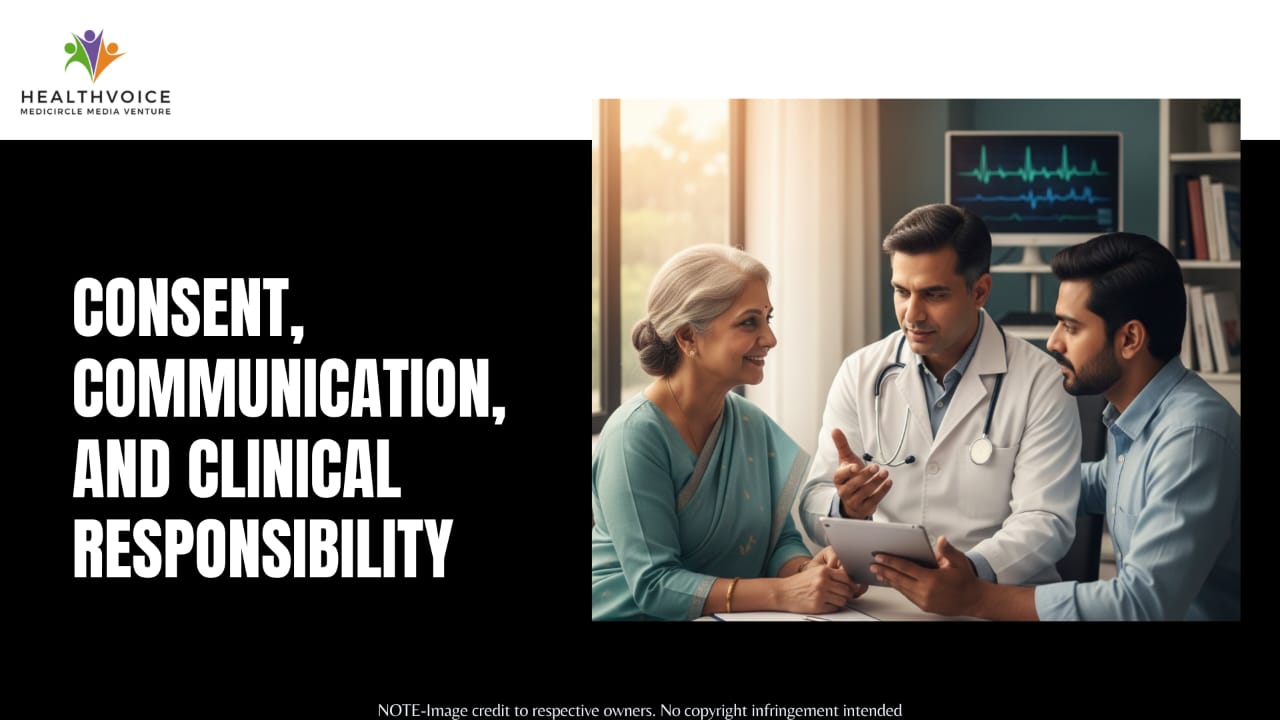
You walk into a crowded clinic, the air thick with worry. After a long wait, you finally see the doctor. Words like “procedure,” “risk” and “consent form” are spoken quickly. You sign where pointed, holding onto a fragile trust. Later, at home, the questions begin. What did it all really mean? This gap between a hurried signature and true understanding is where real healing often falters.
In the pursuit of advanced scans and newer medicines, a fundamental pillar of medicine is sometimes forgotten. It is not a drug or a device. It is the human connection built on three simple yet profound principles: informed consent, clear communication and clinical responsibility. For India’s healthcare journey, strengthening this human foundation is the most critical step forward.
Consent: A conversation
Think of the last form you signed. Did you read every line? In a clinical setting, that form carries immense weight. True informed consent is not an event; it is a process. It is the doctor sitting down, making eye contact and explaining in your language what is happening inside your body. It means understanding not only what the treatment is, but what it is for, what could go wrong and what other paths exist.
Too often, this sacred process shrinks to a bureaucratic task, a dense piece of paper thrust into a patient’s hands amidst a whirlwind of activity. When consent is rushed, it is not informed. It becomes a ritual that protects the hospital but may abandon the patient to confusion and fear. Ethical care demands that this time be reclaimed. It requires doctors to pause, invite questions and see the patient not as a case, but as a partner. That signature should mark the end of a dialogue, not the beginning.
The language of care:
Medical expertise is useless if it cannot be understood. Communication is the bridge between knowledge and healing. It starts not with talking, but with listening, to the unspoken fears, cultural beliefs and family concerns. It means translating complex terms into simple, relatable words. Saying “your heart’s pump is weak” can be clearer than saying “reduced ejection fraction.”
When this bridge breaks, the consequences are real. A patient may take the wrong dose of medicine, skip a vital follow up out of confusion or suffer in silence from a side effect they were too hesitant to mention. In a country as diverse as India, where dialects change every few hundred kilometers and health literacy varies widely, this task is both challenging and essential. The doctor’s duty is to ensure the message does not just leave their mouth, but safely reaches the patient’s mind and heart.
The sacred duty:
Holding a patient’s trust is medicine’s highest responsibility. Clinical responsibility is the anchor that holds consent and communication together. It is the doctor’s solemn promise to always act for the patient’s good. This duty goes far beyond writing a correct prescription.
It includes guarding a patient’s privacy fiercely, respecting their right to say no even when there is disagreement and having the humility to say, “I do not know, let me find someone who does.” In today’s world of targets and turnovers, this responsibility is the compass that keeps medicine honest. A financial transaction pays for a service, but the relationship itself is a sacred covenant of trust. The patient’s welfare must remain the single, unwavering focus.
A path forward:
Building this culture begins with a shift in perspective from all sides.
Doctors and hospitals must consciously create systems that value time for conversation. This may involve scheduling fewer patients to allow longer consultations, using visual aids and vernacular pamphlets and training staff in the soft skills of empathy.
Patients also have an essential role. It is acceptable and necessary, to ask “Why?” Request simpler explanations. Repeat instructions to confirm understanding. Bring a family member for support. You are the central character in your health story.
At its core, even the most advanced medical technology cannot replace the power of a trusted relationship. When a patient feels heard, understood and respected, half the battle for healing is already won. By returning to meaningful consent, compassionate conversation and sacred responsibility, Indian healthcare can achieve something extraordinary. It can build a system that does not just treat diseases, but truly heals people, one honest conversation at a time.
 Team Healthvoice
#InformedConsent #PatientRights #PatientCentricCare #PatientCommunication #PatientCare #MedicalEthics #ClinicalResponsibility #DoctorPatientRelationship #HealthcareCommunication #PatientExperience #TrustInHealthcare #SharedDecisionMaking #CompassionateCare #EthicalMedicine #HealthcareProfessionals #healthvoice
