Differences between private and public healthcare practice
India’s healthcare system operates through public and private sectors. This article explains their differences in access cost experience and how families practically navigate both to make informed health decisions.
Let us talk about a choice almost every Indian family has faced at some point. Where do we go for treatment? The trusted local government hospital or the private clinic across town? It is more than just picking a building. It is about navigating two very different worlds within our healthcare system. One is built on the promise of care for all and the other runs on the principles of service and choice. Understanding this is not just useful; it is essential for making informed decisions for your family’s health.
Where do you seek care?
The journey often starts with a simple question. Is there a good doctor nearby? For public healthcare the answer comes in the form of a structured network. Think of it like a pyramid. At the base in thousands of villages are the Sub Centers and Primary Health Centers or PHCs. They are the first point of contact for basic needs. As needs grow more complex the system directs patients upward to Community Health Centers or CHCs district hospitals and finally to large government medical colleges for specialized treatment.
In theory this network covers everyone. The reality on the ground however can be different. Many rural areas face a shortage of doctors and nurses. It is common knowledge that a large majority of medical professionals prefer to work in cities. This leaves village level centers often overburdened understaffed and struggling with long queues sometimes leading people to lose a full day’s wage just waiting for a consultation.
This gap is precisely where private healthcare steps in. In urban and semi urban areas private facilities are everywhere from a solo practitioner’s clinic to large multi-specialty hospital chains. For those who can afford it access is straightforward. You can often see a specialist within days not weeks or months. The trade-off is that this convenience is heavily concentrated in towns and cities making it a less visible option for large parts of rural India.
Real cost of getting better:
If access defines the first challenge cost defines the second often more painfully. Here the two systems are worlds apart:
Public healthcare is funded by taxes. Walking into a government hospital for treatment usually means you will not receive a bill for the core medical service. The government’s Ayushman Bharat scheme also known as PM-JAY has strengthened this further. It acts as a health insurance safety net for crores of vulnerable families covering major hospitalization costs.
Private healthcare on the other hand is funded directly by patients. You pay through private health insurance an employer plan or most commonly from your own savings. The quality of care can be excellent with modern facilities that match global standards but the price often reflects that quality. This combination of high skill and relatively lower cost compared to Western countries has also made India a hub for medical tourism.
Here lies India’s great healthcare puzzle. Even with a vast free public system our country has one of the highest rates of out of pocket health spending in the world. This means millions of families even those with modest incomes often use their savings borrow money or sell assets to pay for private treatment. The reasons are complex. It may be the perception of better quality the urgency of illness or simply the absence of a reliable public option nearby.
Tale of two experiences:
Beyond cost and access the day to day experience in these two settings is very different.
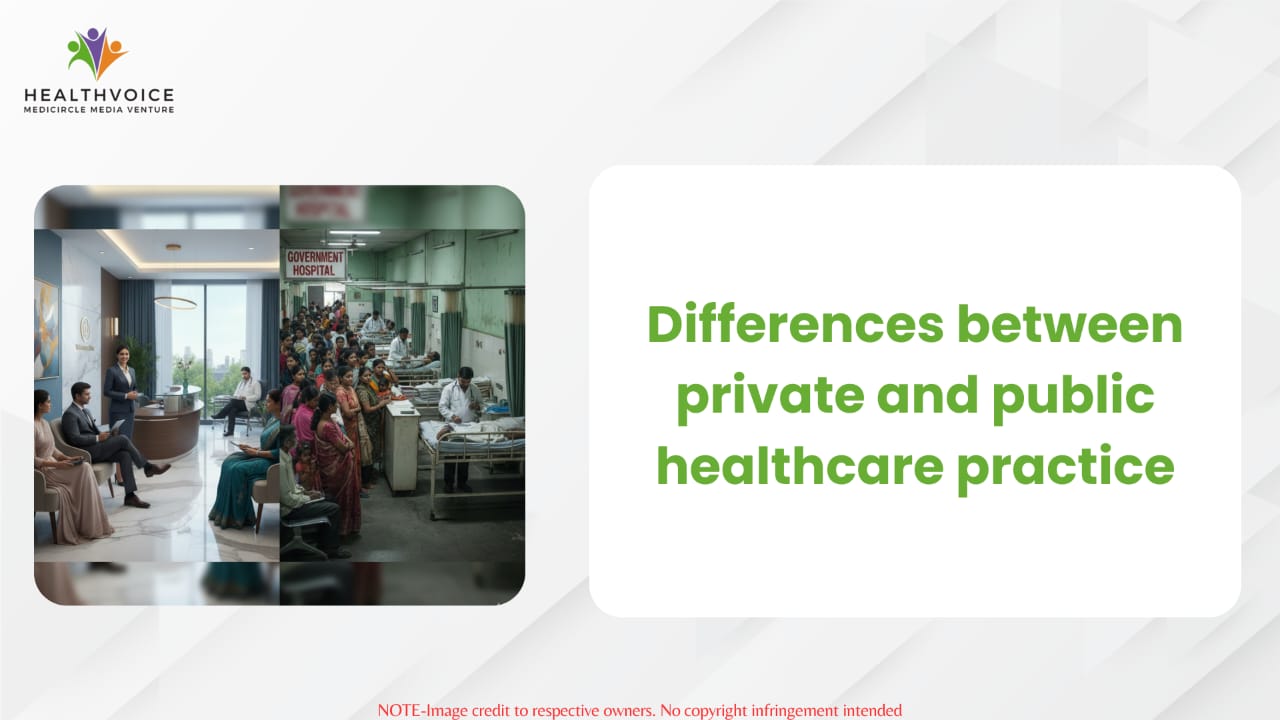
Spend a day at a busy public district hospital and you will see incredible work being done. Childbirth vaccinations and chronic diseases are managed tirelessly often with limited resources. These institutions are the backbone of national health. However they are also marked by crowded wards a fast paced environment due to patient volume and basic functional amenities.
Now walk into a mid-level or top tier private hospital and the atmosphere changes. The focus is on patient comfort privacy and quicker service. You will see modern diagnostic equipment multiple specialists under one roof air conditioned rooms and a structured appointment system. Patients are treated as clients and care is built around that relationship. This experience however varies widely depending on what a person can afford.
Navigating your own path:
So what is the solution for the average person? Most Indians do not choose one system forever. Instead they adopt a practical blended approach based on the situation.
A family may rely on their local PHC for a child’s routine immunizations but choose a trusted private pediatrician for a persistent cough. They may use the Ayushman Bharat card for a planned surgery at an empaneled private hospital and visit a government facility for follow-up physiotherapy. This flexible mix and match approach is the real story of Indian healthcare.
The future depends on strengthening both sides. It requires building a more reliable well-staffed public system that people can trust for most needs. At the same time it needs sensible regulation of the private sector to ensure fairness and affordability. The goal is a system where the choice is not between free but uncertain and excellent but unaffordable but between two competent accessible options.
In the end your strength lies in being informed. Know the good public facilities in your area. Understand schemes like Ayushman Bharat. If you choose private care ask about costs clearly in advance. Your health is your most valuable asset and navigating India’s dual healthcare system is the first step toward protecting it.
 Team Healthvoice
#IndianHealthcare #HealthAwareness #PatientChoice #HealthcareAccess #AyushmanBharat #HealthcareCosts #HealthForAll #HealthcareEquity #PublicHealthIndia #PrivateHealthcare #HealthSystems #CareForAll #HealthcareJourney #PatientRights #healthvoice