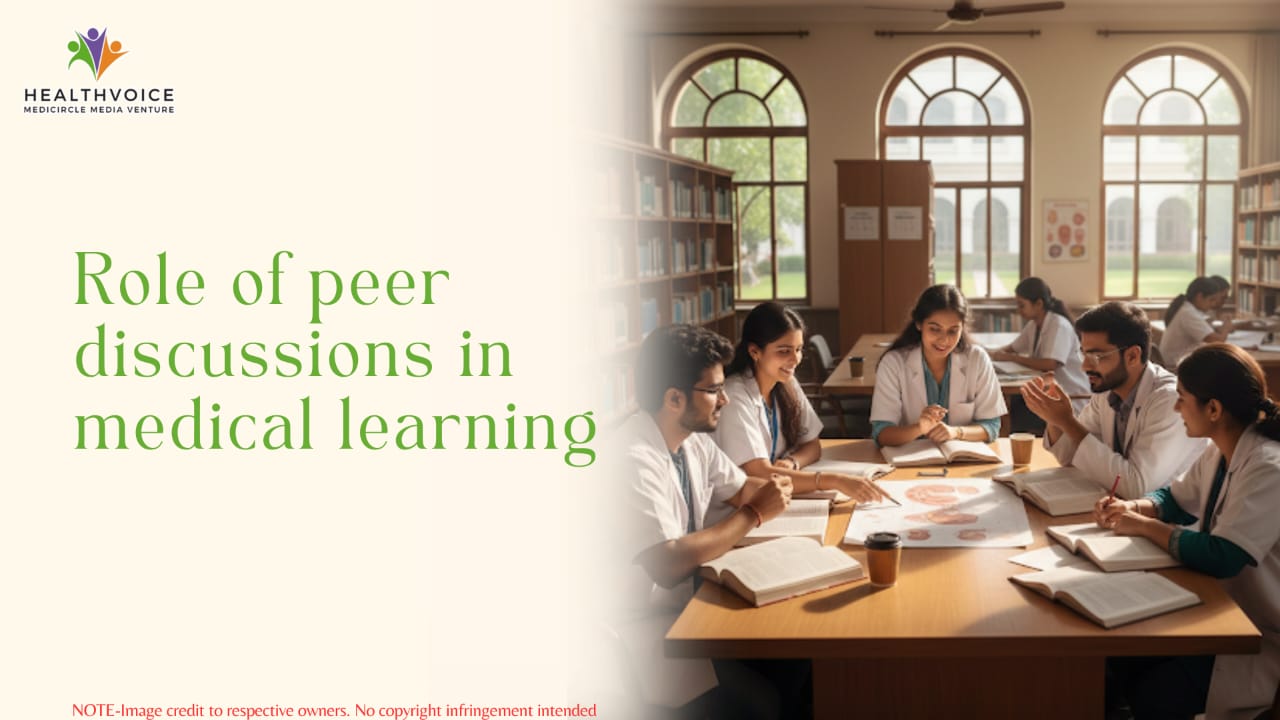
Role of peer discussions in medical learning
Peer discussions help doctors learn faster, think well and cope with stress. Shared clinical conversations turn everyday experiences into practical wisdom and strengthen medical education in India.
Every doctor remembers the moment. That sudden click of understanding when a tangled medical puzzle falls into place. More often than not that moment does not arrive in the silent solitude of a library. It happens in the noisy hospital canteen during a late night study session or in a quick corridor chat. For medical minds across India real learning often has a soundtrack: the lively sometimes heated exchange of ideas between colleagues.
In the demanding reality of Indian healthcare where experts are stretched thin these peer to peer conversations are not a luxury. They are a necessity. They form an invisible curriculum a vital supplement to textbooks and lectures. This is how knowledge breathes adapts and becomes wisdom.
Peer dialogue explained:
Peer discussion is the simple powerful act of professionals at similar stages learning side by side. It is a two Way Street unlike the one way traffic of a traditional lecture. Picture a group of interns puzzling over a patient’s unusual symptoms. Think of a final year student patiently showing a junior the steps of a procedure. It is the animated debate in a journal club where new research is weighed against everyday clinical reality. It is the shared sigh and practical tip exchanged in an online forum between doctors in different districts.
This is active learning in its purest form. It is grounded in the messy unpredictable world of actual patient care a world textbooks can only describe.
Why colleagues teach best:
The value of peer learning is immense and touches every aspect of a doctor’s growth.
First it locks knowledge in place. Explaining a concept to a colleague forces clarity of thought. You quickly discover what you truly know and where your understanding is weak. The classic medical approach of see one do one teach one exists because teaching cements learning.
Second it sharpens clinical judgement. Medicine is rarely black and white. Presenting a case to peers opens new perspectives. A colleague may ask a question you had not considered or suggest a differential diagnosis that was not on your radar. This collective thinking reflects how modern hospitals actually function as teams rather than isolated individuals.
Third it strengthens human skills. Through discussion young doctors practice clear communication learn to justify decisions and become comfortable giving and receiving feedback. These skills are essential for building patient trust and ensuring smooth teamwork in busy wards.
Finally it supports mental wellbeing. Medicine is stressful. Sharing struggles with someone who understands the pressure long hours and emotional burden creates a vital support system. It reduces isolation and burnout and reminds doctors that they are not alone.
Studies from Indian medical colleges support this approach. They show that structured peer learning is highly effective. Students often report feeling less intimidated and more willing to ask questions leading to better understanding.
Turning discussion into habit:
Knowing why peer discussion matters is easy. Making it happen requires intention.
Teams can set aside short regular time slots for informal case discussions with a focus on learning rather than hierarchy. Senior students or residents can guide juniors reinforcing their own knowledge while helping others navigate familiar challenges. Journal clubs can move beyond summarizing papers to answering one key question: how does this change patient care here. Trusted digital forums allow doctors across cities to share region specific challenges and solutions.
Peer learning works best when combined with structured education. Expert led content provides a solid foundation while peer discussion helps apply question and adapt that knowledge to real life making learning stick.
Handling common challenges:
Time constraints are the biggest barrier. The solution is integration rather than addition. Even a ten minute post round discussion can be valuable. Concerns about incorrect information can be addressed by light guidance from senior residents and by always linking discussions back to established guidelines. The aim is respectful evidence informed dialogue.
Start small and stay consistent. Create a space where no question feels foolish. Focus on collective growth rather than individual performance.
Learning together:
The future of medical education in India is collaborative. Peer discussion is a quiet powerful and deeply human tool. It creates not only more competent doctors but also more compassionate and connected healthcare communities.
It turns the long often lonely journey of medical training into a shared experience. The colleague next door facing similar doubts is not just a coworker but a mirror a guide and one of the most valuable teachers you will ever have. By valuing these conversations we strengthen the heart of healing one shared insight at a time.
 Team Healthvoice
#MedicalEducation #PeerLearning #DoctorsOfIndia #MedicalStudents #ClinicalLearning #HealthcareProfessionals #LearningTogether #MedicalCommunity #DoctorLife #MentalWellbeing #FutureOfHealthcare #IndianHealthcare #healthvoice