Digital Hospital Transformation in India: What It Means, Why It Matters, and How Hospitals Are Getting There
Digital hospital transformation in India is reshaping patient care, operational efficiency, and healthcare policy compliance through smart infrastructure, EMR adoption, and ABDM-aligned digital integration.
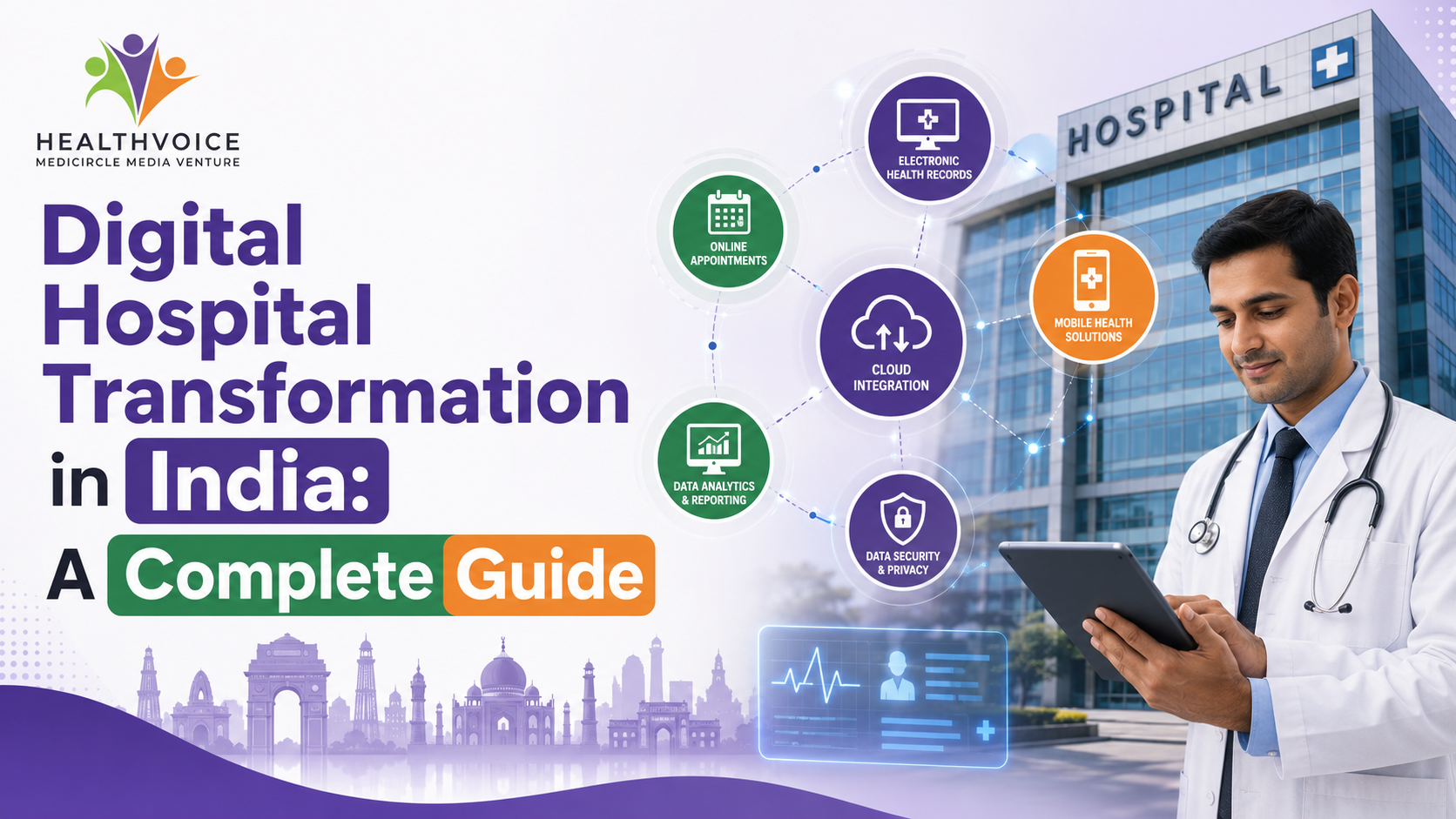
Introduction
Indian healthcare is standing at a defining crossroads. On one side is a legacy of paper-based systems, fragmented patient records, overburdened staff, and clinics that still rely on registers and manual billing. On the other side is a rapidly evolving digital future shaped by electronic health records, artificial intelligence, smart building infrastructure, predictive diagnostics, and real-time patient monitoring. The distance between these two realities is what the phrase "digital hospital transformation" describes, and bridging that distance is now one of the most urgent priorities in Indian hospital management.
Digital hospital transformation is not simply about purchasing software or upgrading hardware. It represents a fundamental reimagining of how a hospital functions at every level, from how patient data flows between departments to how energy is consumed across the facility, and from how doctors access clinical information at the bedside to how administrators forecast resource requirements before a crisis occurs. For a country managing the healthcare needs of 1.4 billion people, this transformation is not optional. It is essential.
India's National Digital Health Mission, now formalized as the Ayushman Bharat Digital Mission (ABDM), has given institutional direction to this shift. The mission creates a national framework for health IDs, digitized health records, and interoperable healthcare platforms. Yet the technology infrastructure within most Indian hospitals, particularly those outside Tier 1 cities, remains far behind what the mission envisions. Understanding the full scope of digital hospital transformation, why it matters, where Indian hospitals currently stand, and what a credible roadmap looks like is the starting point for any meaningful change.
Understanding Digital Hospital Transformation
At its core, digital hospital transformation is the process of using technology to improve how hospitals deliver care, manage operations, and make decisions. This definition, however, understates the depth of change involved. True transformation goes far beyond replacing paper files with digital folders. It involves aligning technology investments with clinical and administrative outcomes in a structured, measurable way.
A useful way to understand this transformation is through the concept of infrastructure maturity, a framework that assesses how well a hospital's technology infrastructure can support increasingly sophisticated levels of information use. Research published in JMIR Medical Informatics describes an eight-level Infrastructure Maturity Model that maps hospitals from fully paper-based operations at Level 1 to fully orchestrated, context-aware digital environments at Level 8. Most hospitals globally, and the majority of Indian hospitals specifically, currently operate somewhere between Level 2 and Level 3, where some departmental digital systems exist but they do not communicate with each other effectively.
For Indian healthcare leaders, this maturity framework offers a practical mirror. It makes visible the gap between where a hospital currently stands and where it needs to reach in order to fully benefit from digital investment. It also explains why hospitals that have purchased expensive software sometimes see limited returns: the underlying infrastructure, including network quality, data availability, collaboration systems, and cybersecurity, does not yet support the intended use.
Digital hospital transformation, understood correctly, is therefore a layered journey. Each layer of infrastructure maturity unlocks new possibilities for patient care, clinical efficiency, and operational resilience.
Primary Drivers and Key Challenges in India
Several forces are simultaneously pushing Indian hospitals toward digital transformation. Understanding these drivers helps healthcare leaders and hospital administrators prioritize where to begin.
Clinical quality and patient safety remain the most compelling drivers. When a patient arrives at an emergency department in a government hospital and there is no immediate access to their medical history, allergy records, or previous test results, clinical decisions are made in the dark. Digital systems that enable instant access to complete patient records directly reduce diagnostic errors, medication mistakes, and duplicated investigations.
Operational burden is another major driver. Indian hospitals, particularly secondary and tertiary public hospitals in states like Uttar Pradesh, Bihar, Rajasthan, and Odisha, face extreme patient loads. The All India Institute of Medical Sciences in New Delhi routinely handles outpatient volumes that far exceed international norms for comparable facilities. Without digital systems to streamline registration, queuing, billing, laboratory workflows, and discharge summaries, staff spend disproportionate time on administrative tasks rather than patient care.
Government policy alignment now makes digitalization a strategic necessity. The ABDM framework requires hospitals to issue Ayushman Bharat Health Account identifiers to patients and to link health records to this national ecosystem. NABH accreditation standards increasingly include digital documentation as a quality indicator. Hospitals that delay transformation risk falling outside compliance frameworks and losing eligibility for government empanelment under schemes like Pradhan Mantri Jan Arogya Yojana.
Despite these drivers, the challenges are real and must be acknowledged honestly.
- Many smaller hospitals and nursing homes lack the capital to invest in enterprise-level digital infrastructure without financial support or phased implementation plans.
- Interoperability between different hospital information systems remains a significant technical obstacle, with vendor fragmentation making data exchange difficult.
- Digital literacy among clinical and administrative staff varies greatly, and without structured training, technology adoption stalls after installation.
- Cybersecurity risks have grown substantially as hospitals digitize sensitive patient data, and most Indian hospital IT teams are understaffed relative to the threat environment they face.
- Connectivity infrastructure in Tier 2 and Tier 3 cities and rural areas remains inconsistent, limiting the viability of cloud-dependent systems in these regions.
Acknowledging these challenges is not pessimism. It is the foundation for building a realistic and effective transformation strategy.
Recognizing the Core Components of a Digital Hospital
A digital hospital is not defined by a single technology or system. It is characterized by the integration of multiple interconnected components that together create a smarter, more responsive, and more efficient care environment.
Electronic Medical Records and Health Information Systems form the backbone of any digital hospital. An EMR system consolidates patient demographics, clinical history, investigation reports, treatment plans, prescriptions, and discharge summaries into a single accessible digital record. For Indian hospitals, EMR adoption aligned with ABDM interoperability standards is now the foundational requirement. The ABDM Health Information Exchange and Consent Manager framework governs how patient data moves between providers, making EMR compliance a regulatory as well as a clinical priority.
Smart building infrastructure is an often underappreciated dimension of digital transformation. Hospitals are complex physical environments that require precise environmental controls, energy management, equipment tracking, and building security. Internet of Things sensors can monitor temperature in operating theaters, oxygen supply pressure in ICUs, medication refrigeration temperatures in pharmacies, and energy consumption across departments in real time. Building Management Systems integrated with clinical workflows reduce both operational costs and risk.
Artificial intelligence and predictive analytics are increasingly relevant even for mid-sized Indian hospitals. AI-assisted diagnostic tools, particularly in radiology and pathology, can support overburdened specialists by flagging priority cases, detecting early abnormalities, and reducing reporting turnaround times. Predictive analytics applied to bed management, surgical scheduling, and outpatient appointment systems can significantly reduce patient waiting times and improve resource utilization.
Telemedicine and remote care infrastructure have been accelerated by the COVID-19 pandemic and subsequent policy support from the Ministry of Health and Family Welfare. Digital hospitals that integrate teleconsultation capabilities can extend their clinical reach beyond physical walls, connecting specialists in urban centers with patients in underserved districts.
Cybersecurity infrastructure is the protective layer that makes all other components safe and trustworthy. A hospital that digitizes patient data without investing in security frameworks, access controls, data encryption, and incident response protocols creates serious risks to patient privacy and institutional integrity.
Diagnosis and Current State of Indian Hospital Digitalization
An honest assessment of where Indian hospitals currently stand reveals significant variation. Large private hospital chains such as Apollo Hospitals, Fortis Healthcare, and Manipal Hospitals have made substantial investments in hospital information systems, EMRs, and digital operations management. Some of these institutions have achieved HIMSS EMRAM Level 6 and Level 7 certifications, placing them among the better-digitized hospitals in the Asia-Pacific region.
However, this level of digitalization represents a small fraction of India's total hospital ecosystem. According to estimates from the National Health Authority, India has approximately 70,000 hospitals and over one million healthcare facilities. The vast majority of these, including district hospitals, community health centers, and private nursing homes outside major cities, remain at the earliest stages of digital maturity.
The National Health Policy 2017 recognized this gap and called for increased use of digital health tools across all levels of the healthcare system. The National Medical Commission has begun incorporating digital health competency into medical education frameworks. The ABDM has linked financial incentives to digital health adoption through schemes like the Incentive Scheme for Promotion of Ayushman Bharat Digital Mission.
Despite these efforts, the pace of digital adoption in public hospitals remains slow. Infrastructure readiness, budget constraints, and human resource challenges continue to create barriers. The gap between policy intent and implementation reality is where the practical work of hospital management leadership must focus.
Treatment Options: A Practical Roadmap for Digital Hospital Transformation
Hospital leaders approaching digital transformation for the first time need a structured and phased roadmap rather than a list of technologies to purchase. The following approach reflects proven implementation logic adapted for the Indian hospital context.
The first phase focuses on establishing foundational infrastructure. This means ensuring reliable high-speed wired and wireless network connectivity across all clinical and administrative areas, deploying a basic Hospital Information System for patient registration, billing, and appointment management, and training staff on digital documentation. Without this foundation, no advanced system will function reliably.
The second phase focuses on clinical digitalization. This involves deploying or upgrading an EMR system, integrating laboratory information systems and radiology information systems with the EMR, and enabling the issuance of Ayushman Bharat Health Account IDs to patients. NABH accreditation documentation should also move to digital format at this stage.
The third phase focuses on integration and intelligence. Once core systems are functional and staff is comfortable with digital workflows, hospitals can begin integrating their systems to enable seamless data flow, deploying analytics dashboards for operational decision-making, and exploring AI-assisted tools in high-volume departments such as radiology, pathology, and outpatient triage.
The fourth phase focuses on advanced transformation, including telemedicine capabilities, smart building integration, predictive maintenance systems, and participation in the national health data ecosystem through ABDM-compliant data exchange.
Throughout all phases, cybersecurity must be treated as a continuous priority rather than a one-time installation. The Indian Computer Emergency Response Team has issued multiple advisories specific to healthcare sector cybersecurity, and hospitals must align with these guidelines at every stage of transformation.
Prevention and Sustaining Digital Transformation
One of the most underappreciated aspects of digital hospital transformation is sustainability. Many Indian hospitals have invested in software systems that fell into disuse within two to three years because of insufficient training, inadequate vendor support, or failure to maintain systems as clinical needs evolved. Sustaining digital transformation requires ongoing commitment across several dimensions.
Leadership commitment from hospital management is non-negotiable. Digital transformation cannot be delegated entirely to an IT department. Clinical leaders, nursing heads, and administrative directors must champion adoption and hold their teams accountable for meaningful use of digital systems.
Continuous staff training and change management must be built into the operational budget. Technology adoption fails not because of poor software but because of poor preparation of the human systems surrounding the software. Regular refresher training, digital literacy programs for clinical staff, and designated digital champions within each department significantly improve adoption outcomes.
Community and peer learning networks play an important role in sustaining momentum. Platforms that connect hospital management professionals, IT leaders, and clinicians across institutions allow for knowledge sharing, problem-solving, and collective advocacy for better digital health policies. HealthVoice, as a platform dedicated to amplifying the professional voices of doctors and healthcare communities across India, provides exactly this kind of connected space where hospital leaders can engage with peers, share insights on digital health implementation, and stay informed about evolving standards and opportunities.
Monitoring outcomes from digital investments through defined indicators, including reduction in average length of stay, improvement in diagnostic report turnaround times, reduction in billing errors, and improvement in patient satisfaction scores, ensures that digital transformation remains connected to its original purpose: better care for patients and a better working environment for healthcare professionals.
Conclusion
Digital hospital transformation in India is no longer a distant aspiration. It is an active and accelerating process, shaped by government policy, clinical necessity, technological advancement, and growing patient expectations. The journey from a paper-based hospital to a fully integrated digital care environment is complex and requires sustained investment, skilled leadership, and a phased approach grounded in a realistic assessment of current infrastructure maturity.
The stakes of this transformation are high. For patients, it means safer, faster, and more personalized care. For clinicians, it means better access to information, reduced administrative burden, and more time for meaningful patient interaction. For hospital administrators, it means more efficient operations, stronger compliance, and the ability to make evidence-based decisions in real time. For the Indian healthcare system as a whole, it means a stronger foundation for achieving universal health coverage and fulfilling the promise of Ayushman Bharat.
The hospitals and healthcare leaders who approach this transformation thoughtfully, by understanding their current maturity, investing in the right sequence, engaging their people, and connecting with the broader professional community, are the ones who will shape the future of Indian medicine.
Frequently Asked Questions
Q1: What is digital hospital transformation and why is it important for Indian hospitals?
Digital hospital transformation refers to the comprehensive adoption of technology across clinical, administrative, and infrastructure functions within a hospital. It is important for Indian hospitals because it improves patient safety, reduces operational inefficiencies, enables compliance with national health frameworks like ABDM, and allows hospitals to serve larger patient volumes without proportional increases in staff or infrastructure.
Q2: What is the Ayushman Bharat Digital Mission and how does it relate to hospital digitalization?
The Ayushman Bharat Digital Mission (ABDM) is the Government of India's national framework for creating a unified digital health ecosystem. It enables citizens to create Ayushman Bharat Health Account IDs and links their health records across providers. Hospitals participating in ABDM must adopt EMR systems that comply with ABDM interoperability standards, making hospital digitalization a regulatory and operational necessity.
Q3: What are the biggest challenges Indian hospitals face during digital transformation?
The most significant challenges include limited capital investment capacity among smaller hospitals and nursing homes, lack of interoperability between different software systems, variable digital literacy among healthcare staff, growing cybersecurity threats, inconsistent internet connectivity in Tier 2 and Tier 3 cities, and the absence of structured change management during technology adoption.
Q4: How can a small or mid-sized Indian hospital begin its digital transformation journey?
A small or mid-sized hospital should begin with foundational infrastructure: reliable network connectivity, a basic Hospital Information System for registration and billing, and initial staff training. Once this foundation is in place, the hospital can progressively add EMR systems, laboratory and radiology integration, and compliance with ABDM standards. A phased approach aligned to the hospital's clinical priorities and budget is more effective than attempting full transformation at once.
Q5: What role does cybersecurity play in digital hospital transformation?
Cybersecurity is a foundational requirement of digital hospital transformation, not an optional add-on. As hospitals digitize sensitive patient records and connect clinical systems to networks and cloud platforms, they become targets for data breaches and ransomware attacks. Robust IT security frameworks, staff training on data protection, access control policies, and alignment with advisories from the Indian Computer Emergency Response Team are essential at every stage of digital transformation.
Resources
- Ayushman Bharat Digital Mission (ABDM): Official national framework governing health IDs, electronic health records, and digital health interoperability across Indian healthcare institutions.
- National Health Authority of India (NHA): Policy body overseeing Pradhan Mantri Jan Arogya Yojana and ABDM implementation, offering guidance for hospital empanelment and digital compliance.
- National Accreditation Board for Hospitals and Healthcare Providers (NABH): Accreditation standards body whose quality benchmarks increasingly include digital documentation and hospital information systems.
- Ministry of Health and Family Welfare, Government of India: Source of the National Health Policy, telemedicine guidelines, and overarching digital health policy directions for Indian hospitals.
- Indian Computer Emergency Response Team (CERT-In): Issues cybersecurity advisories and guidelines specifically relevant to healthcare sector data protection and IT security frameworks.
Interlinking Keywords:
hospital digital transformation India, ABDM compliance for hospitals, EMR adoption Indian hospitals, smart hospital infrastructure, hospital information systems, NABH accreditation digital standards, AI in healthcare India, telemedicine hospital integration, hospital management technology, healthcare IT India
Last medically reviewed by:
HealthVoice Medical Editorial Team on August 17, 2026
Medical Disclaimer:
The information provided in this article is intended for educational and informational purposes related to hospital management and healthcare technology. It does not constitute clinical or legal advice. Hospital administrators and healthcare professionals should consult qualified experts, regulatory authorities, and technology specialists before making institutional decisions regarding digital transformation investments, cybersecurity frameworks, or compliance requirements.
 Team Healthvoice
#DigitalHospital #HealthcareTechnology