Medical Documentation Standards for Indian Hospitals: A Complete Guide for Healthcare Professionals
Medical documentation standards are essential to safe patient care, legal compliance, and hospital quality in India. This article covers core principles, regulatory frameworks, and best practices for Indian healthcare professionals.
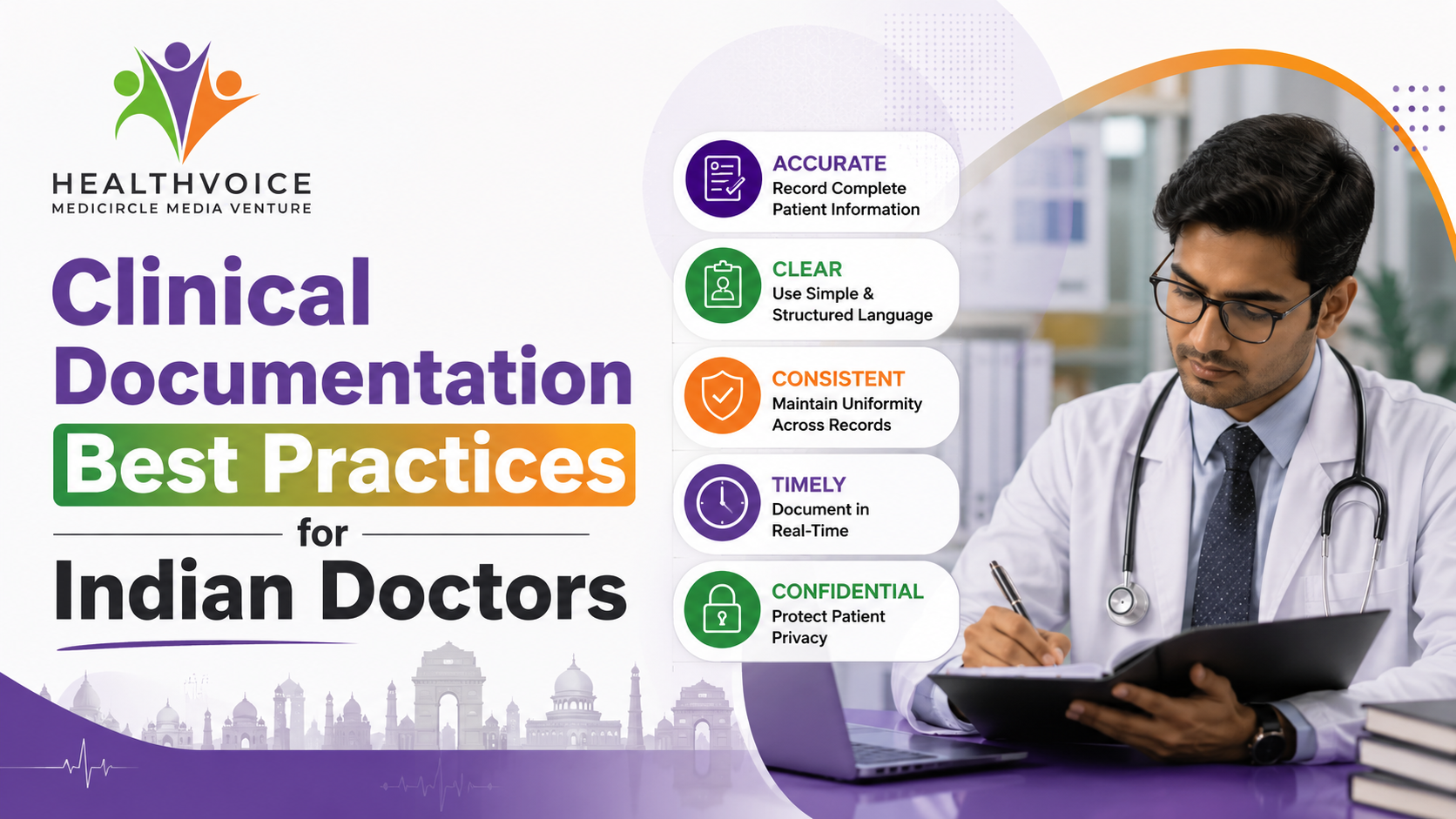
Introduction
Medical documentation is the backbone of safe, accountable, and legally defensible clinical care. In hospitals across India, from large tertiary care institutions in metropolitan cities to district hospitals and nursing homes in Tier 2 and Tier 3 towns, the quality of medical records directly determines the quality of patient outcomes, the efficiency of care delivery, and the institution's ability to withstand legal or regulatory scrutiny.
Yet, despite its foundational importance, medical documentation remains one of the most undervalued disciplines in Indian healthcare. Physicians are trained to diagnose and treat, not to maintain records. This gap has real consequences. Incomplete records contribute to medication errors, delayed diagnoses, failed insurance claims, and serious medico-legal exposure for doctors and hospitals alike.
With the rapid expansion of the Ayushman Bharat Digital Mission (ABDM), the growing adoption of Electronic Health Records (EHR), and the increasing role of the National Accreditation Board for Hospitals and Healthcare Providers (NABH) in setting institutional benchmarks, medical documentation standards in India are evolving faster than ever before. Understanding these standards is no longer optional for healthcare professionals. It is a professional and ethical obligation.
Understanding Medical Documentation: The Foundation of Clinical Practice
Medical documentation refers to the systematic recording of all clinical information related to a patient's health history, examination findings, diagnostic results, treatment decisions, and care outcomes. It encompasses a wide range of records, including outpatient case notes, inpatient admission files, operating theater records, nursing notes, discharge summaries, radiology reports, laboratory findings, informed consent forms, and referral letters.
At its most fundamental level, a medical record serves three interconnected purposes. First, it is a clinical communication tool that enables continuity of care across treating teams, shifts, and departments. Second, it is a legal document that establishes what was known, decided, and done at every point in the patient's care journey. Third, it is a data resource that supports hospital management, quality improvement, insurance processing, research, and public health reporting.
In India, the Clinical Establishments (Registration and Regulation) Act, 2010 mandates that all registered clinical establishments maintain proper patient records. The National Medical Commission (NMC) also expects registered practitioners to adhere to professional standards that include responsible documentation. For hospitals seeking NABH accreditation, documentation is a core evaluation parameter across multiple chapters, including patient rights, care of patients, management of information, and quality improvement programs.
Primary Drivers and Risk Factors Behind Poor Documentation in India
Understanding why documentation standards fail in Indian healthcare requires looking at both systemic and individual-level factors. Several consistent drivers emerge across the healthcare landscape.
One of the most significant systemic challenges is the extreme patient-to-doctor ratio in India. According to government data, India has approximately 1 doctor for every 834 people, well below the WHO-recommended ratio of 1 per 1000. In high-volume public hospitals, a single physician may attend to hundreds of patients in a single outpatient shift, leaving minimal time for detailed documentation. The result is often abbreviated, incomplete, or entirely missing records.
A second driver is the absence of standardized documentation training in most Indian medical colleges. MBBS curricula have historically emphasized clinical skills and pharmacology over record-keeping practices. Many doctors enter practice without formal knowledge of documentation standards, medico-legal responsibilities, or institutional record-keeping protocols.
The third factor is the uneven adoption of digital health infrastructure. While large private hospitals in cities like Mumbai, Delhi, Bengaluru, and Hyderabad have invested in hospital information systems and EHR platforms, a significant proportion of smaller hospitals, nursing homes, and clinics in semi-urban and rural India continue to depend on paper-based records. These records are vulnerable to loss, damage, illegibility, and tampering.
Finally, there is a cultural reluctance in parts of the medical community to document clinical reasoning, particularly around difficult decisions. Physicians sometimes avoid detailed documentation for fear that written records may be used against them in medico-legal proceedings. This concern, while understandable, is counterproductive. As evidence from clinical risk management consistently demonstrates, thorough and transparent documentation is actually the most effective protection against medico-legal liability.
Recognizing the Core Elements of a High-Quality Medical Record
A high-quality medical record is not defined by its length. It is defined by its accuracy, completeness, clarity, and clinical relevance. Every well-documented patient file must reliably capture several essential components.
Patient Identification and Registration: Every record must begin with unambiguous patient identification, including full name, age, sex, contact information, and a unique hospital identification number. Under ABDM, linking records to a patient's Ayushman Bharat Health Account (ABHA) number is becoming standard practice.
Presenting Complaints and History: The record must capture the patient's presenting symptoms in precise clinical language, along with a thorough history of the presenting illness, past medical and surgical history, family history, drug history, and relevant social history.
Clinical Examination Findings: All relevant positive and negative examination findings must be documented. A record that captures only positive findings without noting the absence of clinically important signs is considered incomplete.
Diagnosis and Clinical Reasoning: The treating physician's diagnostic conclusions and the reasoning that supports those conclusions must be clearly documented. This is particularly important at decision points, such as when choosing between surgical and conservative management, initiating high-risk medications, or deciding on discharge.
Investigations and Results: Laboratory and imaging investigations must be recorded with reference ranges and clinical interpretation, not merely raw values.
Treatment Plan and Prescriptions: Every prescription must include the drug name, dose, route, frequency, and duration. Verbal orders, where unavoidable, must be countersigned within a prescribed timeframe.
Informed Consent: Informed consent must be documented for all invasive procedures, surgeries, anesthesia, blood transfusions, and high-risk interventions. The consent record must confirm that the patient or their legally authorized representative was informed of the procedure, its risks, benefits, and alternatives.
Discharge Summary: A comprehensive discharge summary is one of the most critical documents in any hospital record. It must include the admission diagnosis, treatment provided, investigations done, clinical course, discharge condition, follow-up instructions, and pending results.
Diagnosis and Audit: How Hospitals Evaluate Documentation Quality
Sound medical documentation does not happen automatically. It requires deliberate institutional systems to monitor, audit, and continuously improve record quality. In accredited hospitals, this function is performed through the Medical Records Department (MRD) and internal quality audit teams.
NABH accreditation standards require hospitals to conduct periodic medical record audits. These audits typically assess parameters such as completion rates of discharge summaries, timeliness of record submission, presence of informed consent forms, accuracy of diagnosis coding, and authentication of clinical entries. Hospitals pursuing or maintaining NABH accreditation must demonstrate ongoing improvement based on audit findings.
In India, diagnosis coding using the International Classification of Diseases (ICD-10) or the more recent ICD-11 framework is increasingly important, especially in the context of Ayushman Bharat Pradhan Mantri Jan Arogya Yojana (AB-PMJAY) cashless health coverage. Incorrect or incomplete diagnosis coding directly affects insurance claim approvals and reimbursements, making clinical documentation a financial concern for hospital management as well.
Treatment Standards: Documentation Best Practices for Indian Healthcare Teams
Effective documentation is a team responsibility, not solely the treating physician's task. Nurses, pharmacists, physiotherapists, dietitians, and other allied health professionals must all contribute to a patient's comprehensive medical record.
Nursing notes are often the most continuous record of a patient's clinical status during a hospital admission. They capture vital signs trends, patient behavior changes, medication administration, and responses to treatment that a physician's twice-daily rounds may not fully reflect. Ensuring that nursing documentation is contemporaneous, accurate, and legible is essential to patient safety.
Medication reconciliation, the process of comparing a patient's medication orders to all medications the patient has been taking, is a documentation practice that significantly reduces medication errors, particularly at admission, transfer between departments, and discharge. The Joint Commission International (JCI) and NABH both identify medication reconciliation as a patient safety priority.
For hospitals operating under ABDM, all clinical teams must understand how to generate, link, and share health records through the Health Information Exchange (HIE) framework. This requires staff training not only on clinical documentation but also on data privacy obligations under India's Digital Personal Data Protection Act, 2023.
Prevention: Building a Culture of Documentation Excellence
Preventing documentation failures requires a proactive institutional approach rather than reactive audit-based correction. Hospitals that maintain consistently high documentation standards share several common characteristics.
They invest in structured documentation training during induction programs for new medical officers, resident doctors, and nursing staff. They develop and implement standardized clinical documentation templates for common conditions, surgical procedures, and discharge processes. They use clinical checklists that prompt physicians to capture all required data elements before closing a patient record. They hold regular departmental case discussions that include review of documentation quality alongside clinical outcomes.
Leadership commitment is also a crucial factor. When senior consultants model thorough documentation practices and reinforce their importance in clinical governance meetings, junior staff internalize documentation as a professional standard rather than an administrative chore.
Platforms such as HealthVoice support this cultural shift by offering a credible space where medical professionals can engage in knowledge-sharing on topics like documentation best practices, medico-legal responsibilities, hospital quality standards, and emerging regulatory requirements. When doctors are connected to a community that values professional accountability and continuous learning, documentation culture improves organically across institutions.
Frequently Asked Questions
Q1: What are the legal requirements for medical documentation in India?
In India, medical documentation is governed by the Clinical Establishments Act 2010, NMC guidelines, NABH accreditation standards, and the Digital Information Security in Healthcare Act (DISHA). Records must be retained for a minimum of three to seven years depending on the type of document and the institution.
Q2: How long should hospitals in India retain patient medical records?
As per standard Indian healthcare regulations and NABH guidelines, hospitals are required to retain inpatient records for a minimum of five years. Records of minors must be retained until the patient turns 18, plus an additional three years. Critical records such as operation notes may need to be retained for longer periods.
Q3: What is ABDM and how does it affect medical documentation in India?
The Ayushman Bharat Digital Mission (ABDM) is a Government of India initiative to create a unified digital health ecosystem. It links health IDs, health records, and care providers through a common platform, enabling interoperable and standardized digital medical documentation across the country.
Q4: What is the role of NABH in setting documentation standards for Indian hospitals?
The National Accreditation Board for Hospitals and Healthcare Providers (NABH) sets accreditation standards that include rigorous requirements for medical record keeping, patient consent documentation, discharge summaries, and clinical audit trails. Compliance with NABH standards is increasingly linked to hospital empanelment and insurance reimbursements in India.
Q5: What are the most common medical documentation errors in Indian hospitals?
The most common documentation errors include incomplete patient history, missing informed consent records, illegible handwriting, unauthenticated entries, lack of discharge summaries, absent nursing notes, and improper correction of errors. These gaps create serious medico-legal risks and can compromise patient care continuity.
Resources
- National Accreditation Board for Hospitals and Healthcare Providers (NABH): Standards for hospitals including medical records and information management guidelines
- Ayushman Bharat Digital Mission (ABDM): Official government portal for India's national digital health ecosystem and health records interoperability framework
- National Medical Commission (NMC): Regulatory body setting professional standards and ethical guidelines for registered medical practitioners in India
- Ministry of Health and Family Welfare (MoHFW): Government of India health policies, clinical establishment regulations, and public health directives
- World Health Organization (WHO) India: International clinical documentation frameworks, patient safety standards, and health records guidance adapted for the South-East Asia region
Interlinking Keywords
Medical records management India, NABH accreditation standards, hospital documentation compliance, ABDM health records, clinical documentation best practices, informed consent in hospitals, discharge summary guidelines, electronic health records India, hospital quality audit, medico-legal documentation
Last medically reviewed by:
HealthVoice Medical Editorial Team on August 17, 2026
Medical Disclaimer:
The information provided in this article is intended for general educational and informational purposes only and is directed at healthcare professionals, hospital administrators, and medical community stakeholders. It does not constitute legal advice, regulatory guidance, or a substitute for consultation with qualified medical or legal professionals. Regulatory requirements may vary by state and institution type. Readers are advised to consult the relevant regulatory bodies and legal advisors for specific compliance requirements applicable to their institutions.
 Team Healthvoice
#MedicalDocumentation #HealthcareCompliance