Exhaustion, Silence, and a Cry for Help: Are India’s Young Doctors Being Pushed Too Far?
If India hopes to build a stronger healthcare system in the coming decades, it must begin by protecting the people who form its foundation.
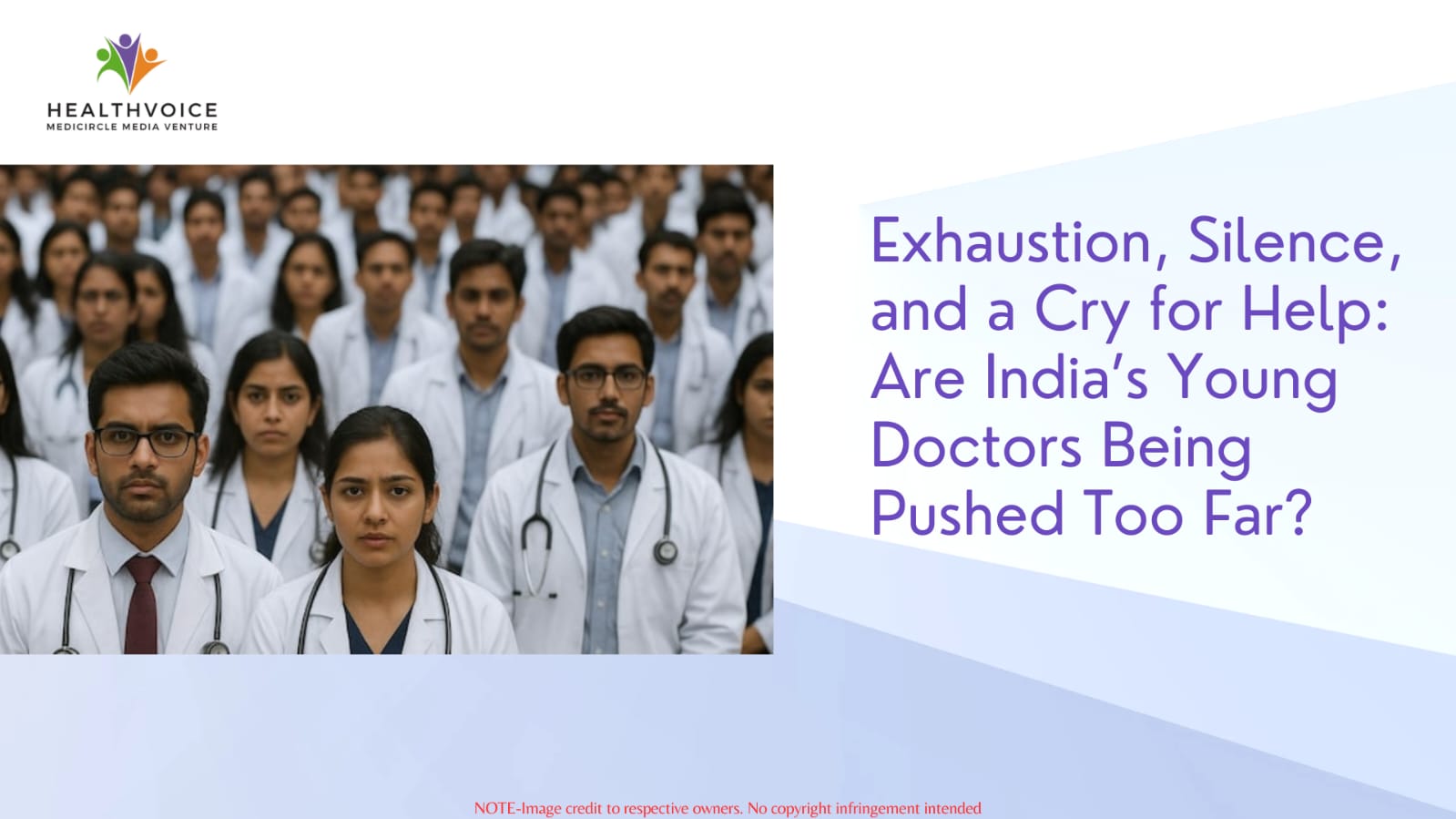
It was close to midnight when a young doctor, barely at the beginning of her medical career, reportedly decided she could no longer endure the life she had been living. Inside a postgraduate room in a government medical college in Alappuzha, Kerala, a first-year paediatrics resident allegedly attempted to take her own life. She was rescued in time by a combination of timely intervention from authorities and her family. The doctor survived, but the incident has shaken the medical community.
The story of this young resident doctor is a window into a deeper, long-standing crisis within the training system that produces India’s future specialists. Behind the white coats and hospital corridors lies a culture that many doctors privately describe as exhausting, emotionally draining, and often deeply isolating.
According to information that emerged after the incident, the resident had been under intense stress due to continuous and prolonged duty hours. Residency in India has always been demanding. Long shifts, night duties, emergency calls and heavy patient loads are considered part of the training process. But in many institutions, the workload stretches far beyond what even the most resilient individuals can manage.
The emotional toll of this pressure became painfully clear through messages the doctor reportedly sent to her fiancé before the incident. In those messages, she expressed an overwhelming sense of helplessness. She wrote that she felt unable to cope with the duties assigned to her and feared that nothing would change. Her words revealed the depth of her despair, suggesting that the relentless workload had gradually eroded her mental resilience.
Such messages are deeply disturbing to read, yet they echo the quiet struggles many young doctors experience during residency. Medical education in India is often seen as a path of prestige and purpose. Families celebrate when their children secure a postgraduate seat, knowing how fiercely competitive the process is. What remains largely invisible, however, is the emotional and physical price many residents pay once they enter the system.
In the aftermath of the incident, allegations surfaced that the doctor was told she could leave the postgraduate programme only if she paid a penalty of ₹50 lakh. This clause, which exists in many medical colleges, is intended to prevent residents from abandoning their training mid-way. But when placed against the backdrop of mental distress, such financial penalties can feel like an impossible trap.
For a young doctor already battling exhaustion and emotional strain, the idea of either continuing under the same conditions or facing an enormous financial burden can deepen feelings of hopelessness. It raises a troubling question about whether the system adequately recognises the psychological limits of those it trains.
Medical professionals and doctor associations have reacted strongly to the incident. Many have pointed out that the situation contradicts long-standing regulations designed to protect resident doctors. Under the Residency Scheme introduced by the Ministry of Health in 1992, duty hours for resident doctors are supposed to be capped at 48 hours per week. On paper, the rule exists to ensure that trainees receive balanced exposure to clinical work while maintaining their health and safety.
In reality, however, the situation in many hospitals looks very different. Residents across India frequently report working far beyond the recommended limit. Continuous shifts stretching well past 24 hours, multiple night duties in a week, and minimal time for rest are commonly described experiences. In busy government hospitals where patient loads are overwhelming and staffing remains limited, resident doctors often become the backbone of hospital functioning.
They are the ones admitting patients late at night, responding to emergencies, monitoring critical cases, and performing routine ward work that keeps hospitals running. Senior doctors supervise and guide treatment, but the day-to-day clinical workload often rests heavily on the shoulders of residents.
The result is a paradox within the healthcare system. While these young doctors are still in training, they are simultaneously expected to function as the primary workforce in many hospitals.
For the public, the image of a doctor is associated with authority, expertise, and resilience. Patients rarely imagine that the doctor standing beside their hospital bed may have been awake for more than 30 hours. Few realise that the same resident who carefully writes prescriptions and examines patients may be physically exhausted and mentally overwhelmed.
Healthcare experts have long warned that such working conditions carry serious consequences, both for doctors and for patient safety.
Sleep deprivation, chronic fatigue, and prolonged psychological stress are known to impair cognitive performance. Studies conducted internationally have shown that doctors working excessively long shifts are more likely to experience burnout, depression, and reduced clinical accuracy. In other words, the well-being of doctors is directly connected to the quality of care patients receive.
The concept of physician burnout has gained increasing attention in recent years. Burnout is not simply about feeling tired after a long day at work. It is a state of emotional exhaustion, depersonalisation, and reduced sense of professional accomplishment that develops when individuals are exposed to prolonged stress without adequate recovery.
For resident doctors, several factors contribute to this condition. Long duty hours are a major contributor, but they are not the only one. Many residents work under intense hierarchical structures where questioning workload or raising concerns can be difficult. Academic pressure, fear of poor evaluations, and the constant responsibility of patient care add additional layers of stress.
In paediatrics, the specialty involved in the recent incident, emotional demands can be particularly high. Treating sick children requires not only clinical expertise but also emotional resilience. Residents often find themselves dealing with anxious parents, critically ill infants, and situations where outcomes may not always be favourable. Such experiences can be psychologically draining, especially when combined with physical exhaustion.
Mental health support for doctors in training remains limited in many institutions. While some hospitals have begun introducing counselling services or wellness initiatives, these programmes are far from universal. Even when they exist, residents may hesitate to use them due to concerns about stigma or fear that acknowledging distress could affect their professional reputation.
This reluctance is rooted in a longstanding culture within medicine that equates endurance with competence. Young doctors are often taught, directly or indirectly, that suffering through difficult conditions is part of becoming a skilled physician. While resilience is undoubtedly important in medical practice, the expectation that doctors should silently absorb extreme stress can become dangerous.
Over the past decade, several tragic incidents involving resident doctors across India have brought this issue into public focus. Each time, the conversation briefly intensifies, associations demand reforms, and institutions promise review of duty hours. Still the structural challenges within the healthcare system remain largely unchanged.
One major factor is the severe imbalance between patient demand and healthcare workforce capacity. India’s public hospitals serve enormous populations with limited resources. In many teaching hospitals, the number of residents available to manage patients is far lower than what would be required for humane working schedules.
As a result, hospitals depend heavily on residents to sustain clinical services. Reducing their duty hours without simultaneously expanding staffing or infrastructure can appear difficult for administrators trying to keep hospitals operational.
However, continuing the current system carries its own risks. A healthcare system that relies on exhausted trainees is not sustainable in the long term. Burnout among doctors leads to reduced job satisfaction, higher dropout rates from residency programmes, and in some cases migration of professionals to countries with better working conditions.
This phenomenon contributes to another challenge India already faces: the uneven distribution of healthcare professionals. When young doctors feel unsupported or overwhelmed during training, they may choose to leave public healthcare settings altogether.
The recent incident has also triggered calls for stricter enforcement of existing rules. Doctor organisations have emphasised that the 48-hour weekly duty limit under the residency scheme was created precisely to prevent such situations. Yet enforcement remains inconsistent, and monitoring mechanisms are weak.
Advocates argue that simply having guidelines is not enough. Medical colleges and hospitals must develop transparent systems to record duty hours, ensure mandatory rest periods, and provide safe channels for residents to report excessive workload without fear of retaliation.
Another critical dimension of the discussion involves mental health awareness within the medical community itself. Doctors spend their careers treating patients with compassion and empathy, yet many struggle to extend the same understanding to themselves or their colleagues.
Changing this culture requires leadership from medical institutions. Senior faculty members and administrators must acknowledge that mental health challenges among doctors are real and deserve attention. Creating supportive environments where residents feel comfortable discussing stress, fatigue, or burnout could prevent many crises from escalating.
The story from Alappuzha is therefore not an isolated episode but a reflection of a systemic issue that demands thoughtful reform. Behind the statistics and policy debates lies the human reality of young individuals who entered medicine with dreams of healing others.
Most resident doctors begin their journey with passion and determination. They spend years preparing for entrance examinations, sacrificing personal time and comfort to secure a place in postgraduate training. When such individuals reach a point where life itself begins to feel unbearable, it signals that something within the system requires urgent attention.
As the rescued resident doctor recovers from this traumatic experience, the focus should move beyond the immediate incident to the broader lessons it carries. Ensuring safe working conditions for resident doctors is not merely a labour issue within hospitals. It is a public health concern that affects the quality, safety, and sustainability of healthcare delivery.
If India hopes to build a stronger healthcare system in the coming decades, it must begin by protecting the people who form its foundation. Resident doctors are not just trainees passing through hospital corridors; they are the future specialists who will shape medical care for millions of patients.
The question that remains is whether the system will listen to the warning signs now, or wait until more young doctors reach the breaking point.
Because when those who dedicate their lives to saving others begin to lose hope themselves, the crisis is no longer confined to hospital walls. It becomes a reflection of how a society values the very people it depends upon to keep it alive.
 Team Healthvoice
#ResidentDoctors #DoctorMentalHealth #PhysicianBurnout #HealthcareInIndia #MedicalEducation #HospitalLife #DoctorWellbeing #MentalHealthAwareness #HealthcareWorkers #MedicalResidency #WorkLifeBalance #HealthcareReform #MedicalCommunity #YoungDoctors #healthvoice