Handling Aggressive Patient Attendants in Emergency Departments
Managing emergency room tension requires emotional intelligence and clear communication. By recognizing red flags and using de-escalation strategies, clinicians can turn hostile environments into partnerships for patient healing and safety.
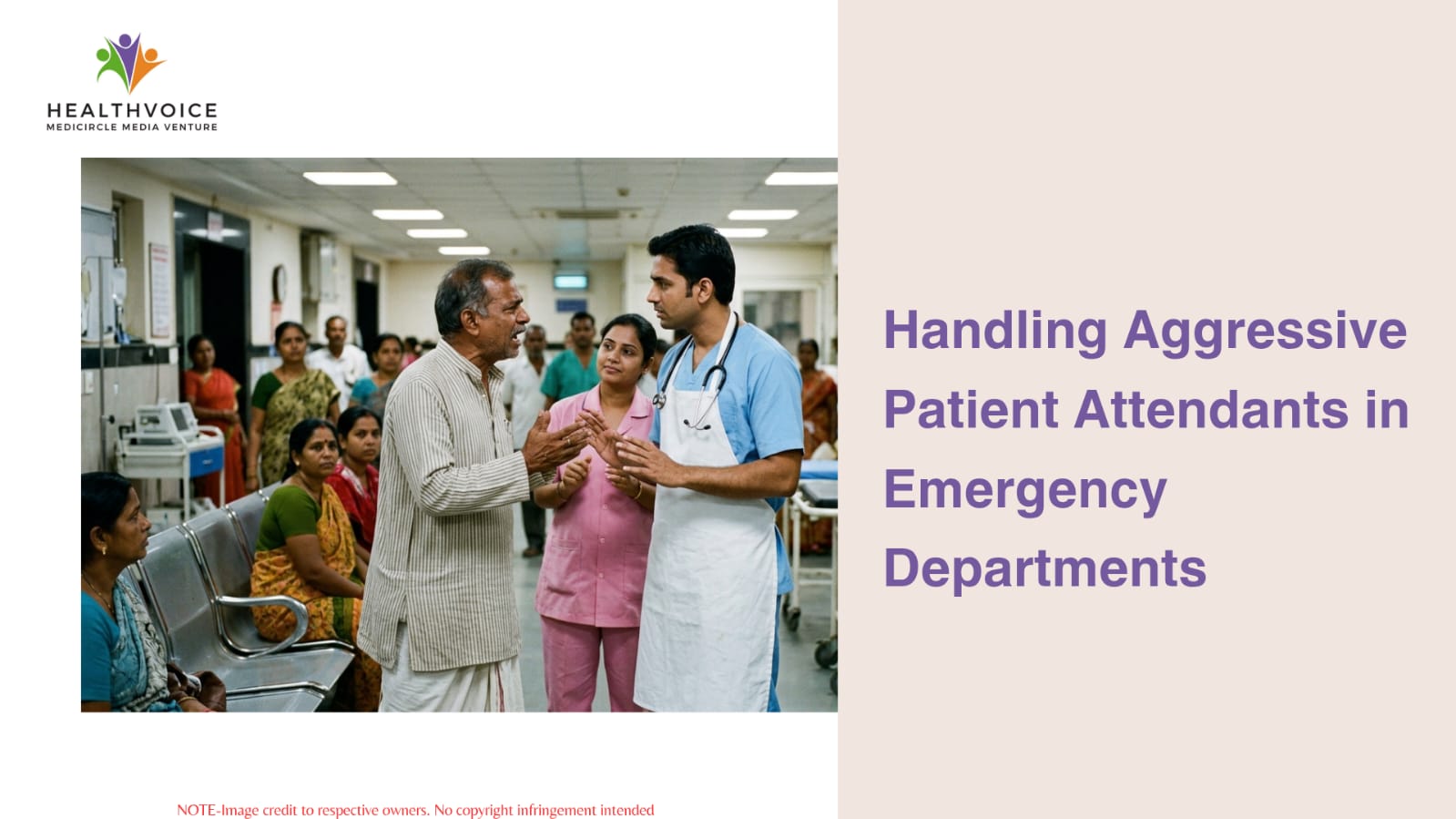
Entering an Indian Emergency Department means stepping into a medical zone and a high stakes emotional arena. For clinicians, the challenge involves more than complex triage or a ticking clock. It often includes the volume and intensity of people standing behind the patient.
In India, healthcare is a family affair. While a strong support system is culturally vital, the environment can turn that support into a pressure cooker. When medical jargon meets high anxiety, communication can collapse. This leads to friction between medical staff and patient attendants. Managing these moments requires more than medical expertise. It demands situational awareness and emotional intelligence.
Roots of Aggression:
It is easy to label an angry attendant as difficult, but aggression in the ER is rarely personal. It is usually a byproduct of fear, helplessness, and a lack of information.
Family members often see their loved ones in a vulnerable state for the first time. They may grapple with the shock of a sudden accident, financial stress, or the intimidating maze of hospital paperwork. When a doctor appears too busy to offer reassurance, that silence is filled with worst case scenarios.
Spotting Red Flags:
Before a situation explodes, there are usually quiet warnings. Recognizing these signs early can save a lot of trouble. Watch for repetitive, rapid fire questioning. Notice individuals pacing or invading the buffer zone of the nursing station. Be alert for raised voices or a sarcastic tone. Pay attention to a gathering of more family members in a restricted area. Identifying these behaviors allows for early intervention.
Communication Strategy:
The most effective way to lower the temperature in a room is to fill the silence. When a patient is wheeled away for a scan or a procedure, the family feels disconnected from the person they care about most.
You do not need to give a twenty minute lecture on pathophysiology. A simple, sixty second update can act as a massive pressure release valve. By stating that you have stabilized breathing and are now waiting for lab results, you validate their concern. This proves that the patient is not forgotten. Using plain, conversational language instead of medical shorthand ensures that your message is actually received.
Calming Techniques:
When an attendant crosses the line into verbal aggression, your response determines whether the situation defuses or detonates. You should keep your voice low and steady because the other person will eventually lower theirs to hear you. Never match their volume.
Listen first and talk second. Sometimes an outburst is just a vent. Let them speak for forty five seconds without interruption. Often, once the steam is out, they become much more reasonable. Watch your body language carefully. Avoid pointing fingers or crossing your arms. Maintain a respectful distance because getting too close can feel like a physical challenge. Use the word we instead of you to avoid accusatory language. This simple shift frames the doctor and family as a single team.
Handling Large Crowds:
In many Indian hospitals, it is common to see a dozen relatives for one patient. This creates a crowd effect where emotions are amplified. The most effective clinical fix is a spokesperson rule.
Politely ask the family to choose one person who will be the point of contact. Explain that having one clear channel of communication prevents confusion. This allows the medical team to focus on the patient rather than repeating the same information ten times. This brings order to the chaos without making the family feel excluded.
Prioritizing Staff Safety:
Empathy is important, but your safety is non-negotiable. If a situation moves from verbal frustration to physical threats, the soft approach must end.
Every department should have a functional security protocol, often referred to as a Code Grey. Doctors and nurses should be empowered to call for security or administrative help the moment they feel unsafe. Documenting these incidents is not just about hospital policy. It is a legal necessity in an era where violence against healthcare workers is a serious concern.
Promoting Mutual Respect:
At its core, the relationship between a doctor and a patient's attendants should be a partnership. Organizations like HealthVoice work to highlight these ground realities. They advocate for better hospital infrastructure and legal protections that allow doctors to work without looking over their shoulders.
By refining communication skills and setting clear boundaries, we can turn a potentially hostile environment back into a sanctuary for healing. When a family feels seen and heard, they stop being an obstacle. They start being an ally in the recovery of the patient.
 Team Healthvoice
#EmergencyCare #HospitalManagement #healthvoice
