Clinical Decision Support Systems in Busy Practices
Clinical Decision Support Systems act as digital co-pilots in busy Indian clinics. They reduce cognitive fatigue, prevent medication errors, and streamline documentation while allowing doctors to maintain human connections.
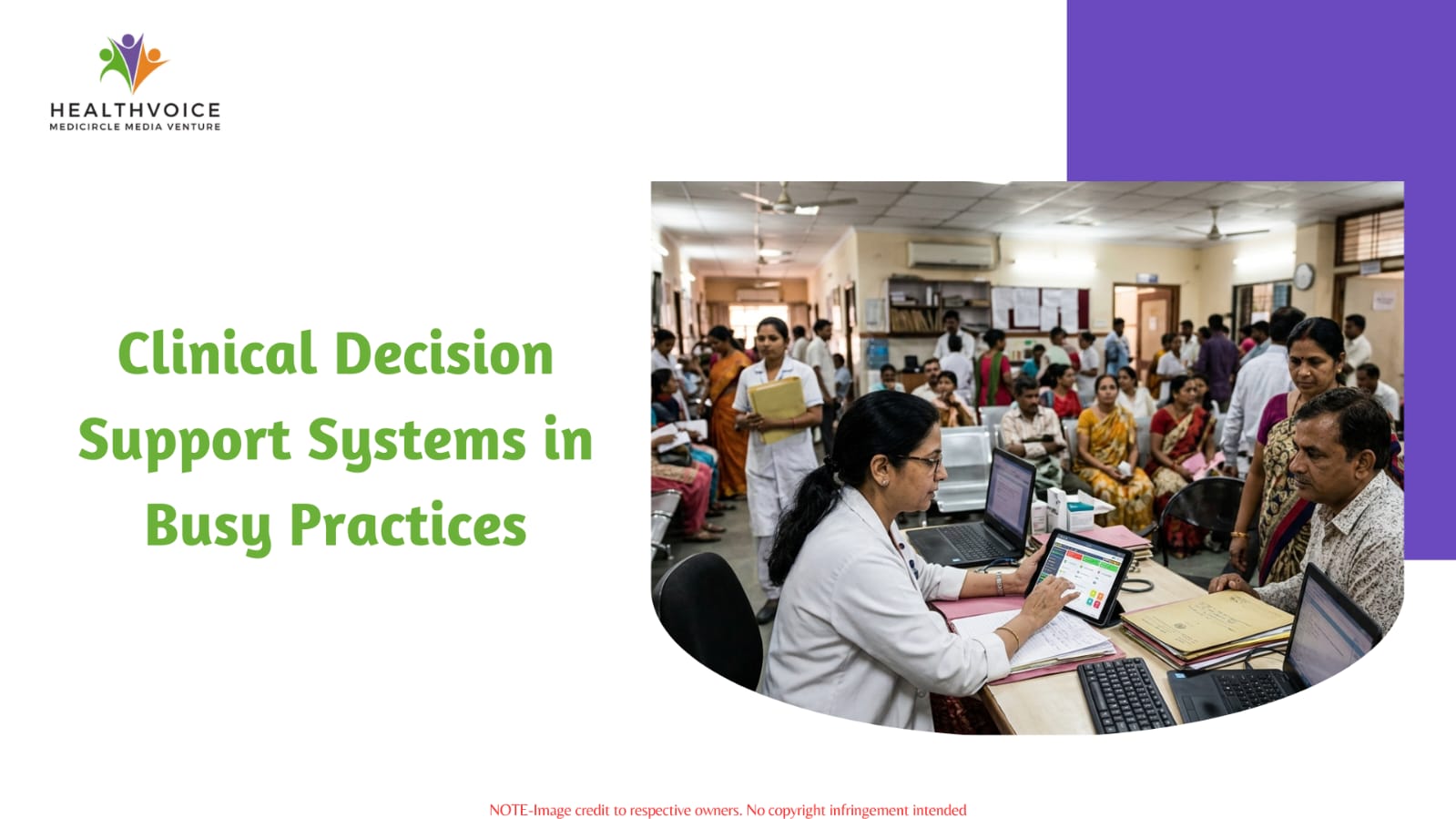
For a physician practicing in India, a standard day at the clinic represents a rigorous marathon for the mind. Whether they are working within a crowded government hospital or a private practice, the sheer number of patients remains staggering. By the time a doctor reaches the fiftieth consultation of a single shift, mental fatigue becomes a significant factor. In such high-pressure environments, the margin for error remains thin, while the requirement to be both fast and accurate remains immense.
This is exactly where Clinical Decision Support Systems are making an impact. These tools do not serve as a replacement for the seasoned expertise of a doctor, but rather as a reliable digital assistant. These systems are quietly changing how healthcare providers manage the intensity of a busy outpatient department. They ensure that high quality care remains a priority even when time is a scarce resource.
Challenges in Indian OPDs:
The medical landscape in India is unlike any other in the world. Doctors manage a massive spectrum of patients, ranging from those with chronic lifestyle diseases to individuals traveling long distances with acute infections. When you combine this diversity with a constant queue of patients waiting outside, the cognitive load on a physician becomes quite heavy.
Every single prescription involves a complex mental checklist to ensure safety. A doctor must consider if a drug clashes with existing medications or if a dosage is safe for the age of the patient. Even the most brilliant physicians are human, and under extreme stress, minor oversights can occur. These digital systems act as a safety net by catching small details before they develop into major health problems.
Preventing Medication Errors:
One of the most practical applications of these systems in India is the management of polypharmacy. As the population continues to age, it is common for a single patient to take multiple different medications for various ailments. Keeping track of how all these different drugs interact is a monumental task for any human brain.
A decision support tool analyzes the data of the patient in real time. If a doctor prescribes an antibiotic that might negatively interact with current heart medication, the system triggers a gentle alert. It is similar to having a clinical pharmacist standing nearby to offer evidence-based suggestions without disrupting the flow of the conversation. This does not just prevent errors, it also gives the doctor the mental space to focus on the person.
Improving Legal Safety:
In the modern medical environment, the accuracy of documentation is more important than ever before. Indian practitioners are increasingly aware of the need for precise medical records for both long-term health and legal protection. However, writing detailed notes while dozens of people wait outside is a constant struggle for many.
Digital support helps solve this problem by streamlining the entire documentation process. By prompting the doctor to record essential vitals and providing structured templates, these systems ensure a comprehensive digital trail is created with minimal effort. If that patient later visits a specialist or an emergency room, the medical history is clear and professional. The transition from handwritten notes to organized digital data is a massive leap forward for patient safety.
Technology and Empathy:
A common concern among many Indian doctors is that bringing a screen into the consultation room might damage the healing touch. We value the personal connection and the empathy that defines our local medical culture. There is often a fear that a computer might become a wall between the healer and the patient.
However, the best digital tools are designed to be completely unobtrusive. They stay in the background and only surface when there is a critical insight or a safety warning to share. When technology handles the routine fact checking and data entry, it actually frees the doctor to spend more quality time looking at the patient. Instead of being buried in a notebook, the physician can engage more deeply because the system handles the technical details.
Future of Care:
As the digital health mission in India gains momentum, these systems will do more than just flag errors. We are moving toward a future where technology can analyze lifestyle patterns and family histories to predict risks for conditions like diabetes before symptoms appear. This proactive approach will change the way we handle preventive medicine.
In teaching hospitals across the nation, these tools are also proving to be invaluable for younger doctors. They provide a standardized level of care and ensure that protocols are followed consistently by every member of the staff. It levels the playing field and makes high quality healthcare more accessible and uniform for everyone involved.
Advancing Healthcare Standards:
At its heart, medicine will always remain a human endeavor. Technology cannot replace the intuition born from years of looking into the eyes of a patient or listening to a personal story. But in the high-pressure world of Indian healthcare, doctors need all the support they can get.
Clinical Decision Support Systems are not about taking the art out of medicine. They are about giving the artist better tools to work with every day. By reducing burnout and sharpening accuracy, these systems allow Indian doctors to do what they do best. They can finally heal their patients with total confidence.
 Team Healthvoice
#DigitalHealthIndia #ClinicalDecisionSupport #healthvoice