The Cost of Care: When Doctors and Nurses Become Patients
Their illness is a signal flare that urges policymakers, administrators, and society to recognize that protecting healthcare workers is inseparable from protecting public health.
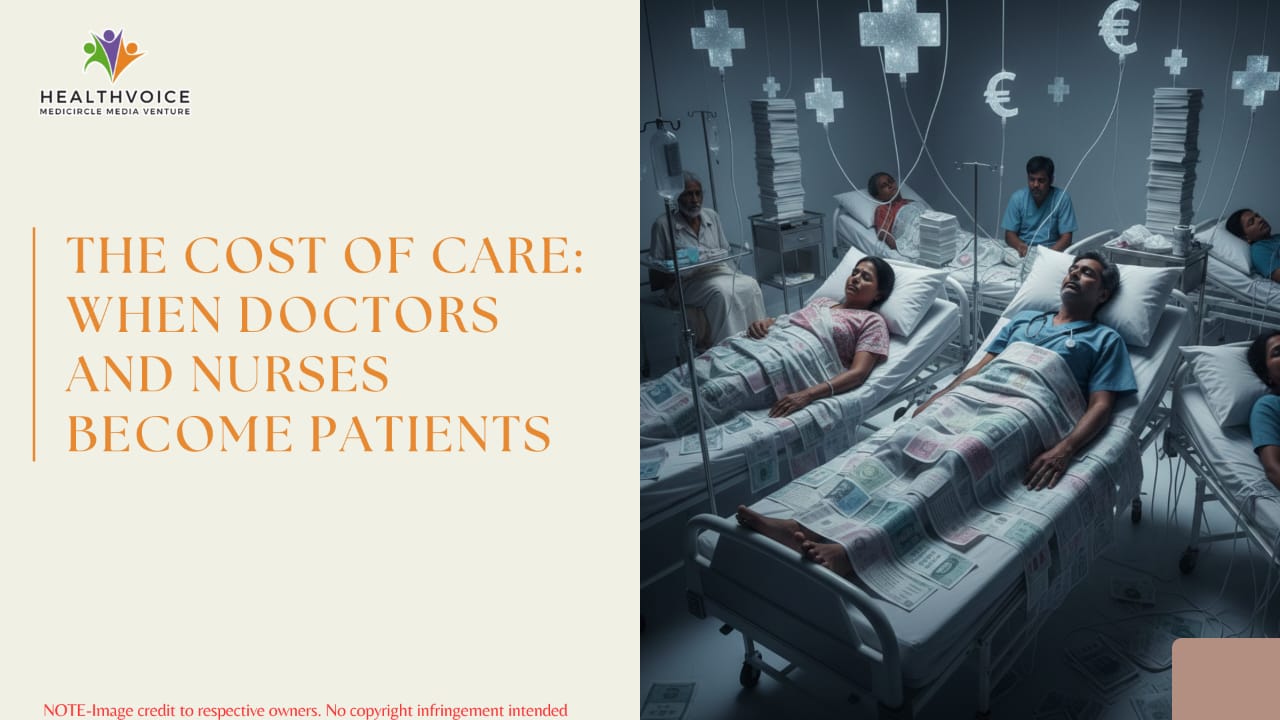
The recent news has carried the weight of an old fear returning to familiar ground. A junior doctor and a nurse, both caregivers by calling and duty, were admitted to Kolkata’s Infectious Diseases and Beliaghata General Hospital after developing early symptoms suspected to be linked to Nipah infection. They were not strangers to risk. They had been treating a healthcare worker who later tested positive at Burdwan Medical College and Hospital in Purba Bardhaman. In the world of infectious diseases, this is how danger often travels through care, contact, and compassion.
For India Nipah is not just another virus. It is a reminder that some threats never truly leave; they retreat, wait, and return when conditions allow. The current situation in West Bengal has stirred unease across hospitals and public health offices. Samples from the two newly admitted healthcare workers have been sent for confirmation, and they remain in isolation as a precaution. The state machinery has swung into motion, with contact tracing, surveillance, and screening underway across districts like North 24 Parganas, Bardhaman, and Nadia. More than 120 people who may have come in contact with confirmed cases including hospital staff, family members, and ambulance drivers, have been asked to isolate themselves.
The human cost of this virus is already visible. Just days before these suspected cases emerged, two healthcare workers tested positive and remain in critical condition at a hospital in Barasat. One lies in a coma. The other depends on ventilator support. Their initial diagnosis came from All India Institute of Medical Sciences Kalyani and was later reconfirmed by National Institute of Virology. These are not anonymous statistics; they are trained professionals who stepped forward in the line of duty, now fighting for their lives.
Nipah is often described has a zoonotic disease, transmitted from animals such as fruit bats and pigs to humans, with the added danger of human-to-human spread. But beyond definitions lies a harsher reality. The virus can begin like a common fever, masquerading as something mild and familiar. It may bring cold-like symptoms, fatigue, or headache. Then, in some cases, it turns ruthless, attacking the brain to cause encephalitis or inflaming the heart to trigger myocarditis. The transition from mild illness to life-threatening emergency can be swift, leaving little room for complacency.
West Bengal has encountered Nipah before. The outbreaks of 2001 and 2007 are etched into public health memory, lessons learned at a time when surveillance systems were less robust and awareness was limited. More recently, Kerala reported cases as late as August last year, showing that the virus continues to surface in different parts of the country. Each episode carries its own context, yet the pattern remains troublingly similar where frontline healthcare workers often stand among the first affected.
This is where the current episode demands deeper reflection. Doctors and nurses are trained to manage risk, but they are not expendable shields. When those providing care begin to fall ill, it signals gaps that go beyond individual precautions. It raises questions about infection control protocols, availability of protective equipment, early warning systems, and the overall preparedness of healthcare institutions to handle high-risk pathogens.
The state health department has acknowledged that the source of the present outbreak has not yet been identified. This uncertainty adds another layer of anxiety. Without knowing where the virus originated whether from animal exposure, environmental factors, or unnoticed human transmission, containment becomes more complex. Investigations are ongoing, and authorities insist that surveillance has been intensified. Yet history teaches that viruses like Nipah thrive in silence, exploiting delays, assumptions, and fatigue.
What makes this episode particularly unsettling is its timing and context. Indian healthcare systems are still recovering from the physical and emotional toll of the COVID-19 pandemic. Hospitals have improved their infection control awareness, but they are also stretched thin. Staff shortages, long working hours, and resource constraints remain common realities. In such an environment, the emergence of a virus with a high fatality rate and no specific antiviral treatment feels like a stress test few are eager to face again.
The psychological impact on healthcare workers cannot be ignored. Knowing that colleagues have been infected while doing their jobs creates fear that is rarely voiced aloud. Every patient interaction begins to feel heavier. Every fever raises suspicion. Isolation protocols, while essential, also carry emotional weight. For the junior doctor and nurse now under observation in Kolkata, isolation is a medical necessity. For their peers, it is a reminder of vulnerability.
Public communication becomes crucial at such moments. Transparent, measured information helps prevent panic without downplaying risk. Media reports from outlets like Hindustan Times and The Hindu have highlighted both the seriousness of the situation and the steps being taken. This balance matters. Overreaction can lead to stigma and fear, while underreaction breeds complacency.
Contact tracing remains one of the strongest tools available. The fact that authorities have already identified and isolated more than a hundred contacts suggests that systems are responding faster than in earlier decades. Screening of additional individuals is underway, and district-level monitoring has been intensified. These measures may appear disruptive, but they are essential in breaking transmission chains before they expand.
At the same time, Nipah exposes the limits of reactive healthcare. Once cases appear, the focus shifts to containment. But prevention lies in surveillance of animal reservoirs, environmental monitoring, and community awareness. Fruit bats, often implicated in Nipah transmission, are part of complex ecosystems. Addressing zoonotic diseases requires coordination between health departments, veterinary services, environmental agencies, and local communities. It is a reminder that human health cannot be separated from animal health and ecological balance.
The word “Nipah” triggers understandable concern. Memories of past outbreaks, images of isolation wards, and reports of high mortality rates linger in collective memory. Yet experts repeatedly emphasize that awareness, early reporting of symptoms, and adherence to public health advisories can significantly reduce risk. Fever surveillance, prompt isolation of suspected cases, and strict hospital infection control practices are the backbone of response.
Every outbreak reopens the debate on occupational safety in healthcare. Adequate personal protective equipment, regular training in handling high-risk infections, mental health support, and institutional accountability are no longer optional discussions. They are necessities. When healthcare workers become patients, the system must ask itself whether it did enough to protect them.
The ongoing situation in West Bengal is still unfolding. Test results are awaited. The source remains unidentified. The condition of critically ill healthcare workers continues to be closely monitored. In such moments, restraint in speculation is as important as vigilance. What can be said with certainty is that Nipah has once again reminded India that emerging and re-emerging infections are part of our reality, and preparedness must be continuous rather than episodic.
In the long run, outbreaks like this should drive investment in infectious disease research, regional laboratories, and rapid diagnostic capabilities. Institutions like AIIMS Kalyani and the National Institute of Virology play a critical role, but their work must be supported by strong state-level infrastructure. Training programs, simulation exercises, and inter-hospital coordination can turn lessons learned into lasting resilience.
As the junior doctor and nurse remain in isolation in Kolkata, their situation symbolizes both risk and responsibility. They represent thousands of healthcare workers who show up every day despite uncertainty. Their illness is not just a medical event; it is a signal flare. It urges policymakers, administrators, and society to recognize that protecting healthcare workers is inseparable from protecting public health.
Nipah may be rare, but its message is clear. In a world where viruses cross boundaries with ease, vigilance cannot be seasonal. It must be built into the everyday functioning of healthcare systems. When healers fall ill, it is not merely a tragedy for individuals. It is a warning to the system they serve and a reminder that preparedness, transparency, and respect for frontline workers are the strongest defenses we have.
 Sunny Parayan
#NipahVirus #HealthcareWorkers #FrontlineHeroes #PublicHealthAlert #InfectiousDiseases #ZoonoticDiseases #HealthEmergency #IndiaHealth #HospitalSafety #HealthCrisis #MedicalNews #CriticalCare #PublicHealthIndia #StayInformed #healthvoice