The Role of Specialty Committees in Medical Association Governance
This article examines specialty committees from a HealthVoice perspective, outlining the practical context, workflow considerations, common gaps, and useful questions that can support better-informed decisions.
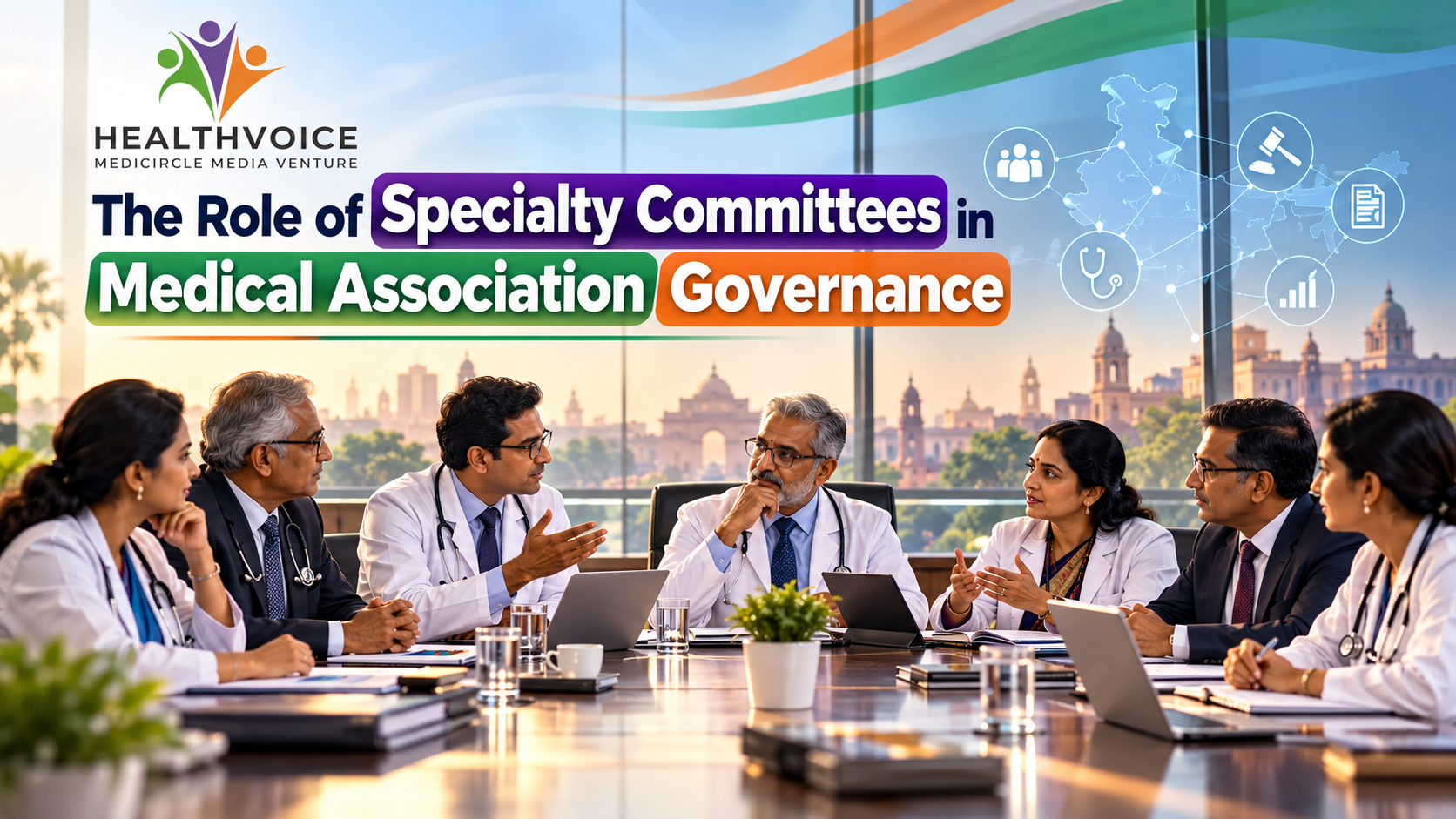
The Role of Specialty Committees in Medical Association Governance
specialty committees is not only about technology, policy, or procedure. It is about how people experience and manage a process from beginning to end. A practical discussion starts with the problem the process is trying to solve, then looks at where information, responsibility, and follow-up can become unclear.
For HealthVoice, the focus belongs on doctors, professional communities, education, collaboration, and the systems that allow medical knowledge to be shared responsibly.
The context behind specialty committees
specialty committees affects more than one step in a workflow. The people involved may have different priorities, but they still need a shared understanding of what has to happen, what information is required, and what counts as completion. A process becomes easier to manage when those expectations are visible rather than assumed.
The topic also sits inside a wider operational context. Decisions about specialty committees can influence time, communication, documentation, user experience, or the ability to review what happened later. That is why it is useful to look at the entire journey instead of treating one stage as the complete solution.
How the pieces fit together
A structured approach begins by mapping the actual sequence. Ask what starts the process, what information moves between people, which approvals are required, and what the next person needs to know. For doctors and medical association leaders, this kind of mapping usually reveals whether a problem comes from missing information, unclear ownership, duplicated work, or inconsistent follow-up.
It is equally important to separate essential information from optional detail. When every field or instruction is treated as equally important, users can miss the few items that genuinely drive a decision. Clear priorities make specialty committees easier to understand and easier to maintain.
What often gets overlooked
Most recurring gaps are not caused by one dramatic failure. They appear when a hand-off is assumed rather than recorded, when a status is not updated, or when people use different methods for the same task. Over time, those small inconsistencies can create larger delays or confusion around specialty committees.
Another common issue is designing around the ideal scenario instead of the busy-day scenario. A workflow should still make sense when staff are under pressure, information arrives late, a team member is unavailable, or a system needs a fallback. Planning for those situations makes the process more resilient.
Designing a practical solution
Improvement does not necessarily require a complete redesign. In many settings, the first step is to simplify the current process, remove avoidable duplication, standardise key fields or instructions, and create a clear escalation path for exceptions. That gives teams a more reliable base for specialty committees before additional features or policies are added.
A good implementation also uses clear ownership. People should know who starts the process, who verifies the important information, who receives the next hand-off, and who reviews the outcome. Shared responsibility is useful, but undefined responsibility is not.
How teams can measure progress
Once the basic workflow is stable, organisations can review whether the process is producing the intended result. Practical measures might include completion time, rework, missed follow-ups, documentation quality, user questions, or exceptions that repeatedly require manual intervention. The right measure depends on the subject, but the principle is the same: measure what matters to the workflow.
Sustainability matters too. Processes often change when teams, systems, or rules change. A short review cycle helps keep specialty committees aligned with current needs instead of allowing an old workaround to become the new standard.
Why this fits HealthVoice
That is where HealthVoice's perspective becomes relevant. The brand approach is not about adding technology or advice for its own sake. It is about making the subject clearer, more practical, and more connected to the people who use the process every day.
For doctors and medical association leaders, the most useful outcome is a workflow or decision framework that feels realistic. When the process is understandable, responsibilities are visible, and the information needed for the next step is available, improvement becomes easier to sustain.
Relevant Internal Reading
HealthVoice content and insights
Things to Keep in Mind
- Begin with the real requirements behind specialty committees, not just the feature or idea.
- Define who owns each important step and when the hand-off happens.
- Keep records structured enough to support review, follow-up, and accountability.
- Test the process with real users before treating it as a finished workflow.
- Measure practical outcomes and refine the process when recurring gaps appear.
Frequently Asked Questions (FAQs)
What is specialty committees?
In this context, specialty committees refers to the structured way an organisation, professional group, institution, or reader approaches the topic so that the relevant steps, information, responsibilities, and follow-up are clear.
Why does specialty committees matter?
It matters because gaps in specialty committees can make an otherwise sound process harder to coordinate, explain, review, or improve. A clearer structure helps people work from the same understanding.
What should doctors and medical association leaders review first?
Start with the real workflow. Identify the people involved, the information they need, the points where decisions are made, and the places where follow-up is commonly missed.
How can organisations improve it without overcomplicating the process?
Use a small number of clearly defined steps, assign ownership, document important information, and review the process after implementation. Improvement should make the workflow easier to follow, not add unnecessary layers.
Wrapping It Up
The strongest approach is rarely the most complicated one. It is the one that fits the real workflow, gives people clear responsibilities, and makes important information easier to act on.
HealthVoice keeps the discussion centred on doctors, professional communities, responsible knowledge sharing, and practical medical communication.
Resources
World Health Organization - Health Topics: https://www.who.int/health-topics
Indian Council of Medical Research: https://www.icmr.gov.in/
National Medical Commission: https://www.nmc.org.in/
Interlinking Keywords
HealthVoice specialty committees insights
Editorial / Medical Disclaimer
This article is intended for education and responsible healthcare communication. It discusses systems, processes, research, policy, or professional practice and does not provide individual medical advice. Factual or medical claims should be reviewed against current authoritative sources before publication.
.png) Prathama Bhowal
Prathama Bhowal
#MedicalGovernance #SpecialtyCommittees #MedicalAssociations #HealthcareLeadership