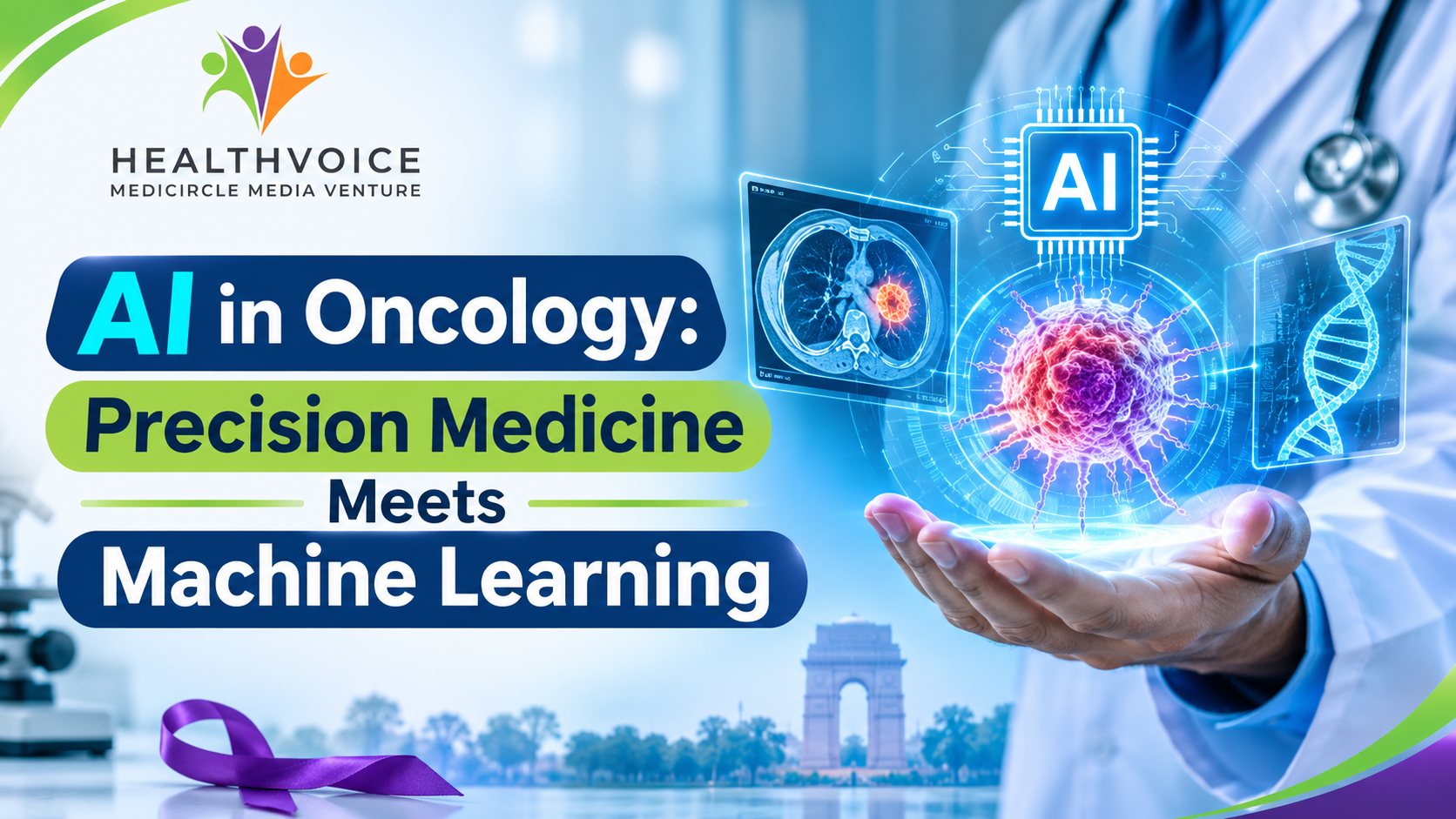
AI in Oncology: Precision Medicine Meets Machine Learning
Artificial intelligence and machine learning are transforming oncology through precise diagnosis, genomic analysis, and personalized treatment, offering India's overburdened cancer care system scalable, data-driven solutions.
AI in Oncology: Where Precision Medicine Meets Machine Learning
Introduction
Cancer remains one of the most formidable public health challenges facing India and the world today. According to the Indian Council of Medical Research, India recorded approximately 14.1 lakh new cancer cases in 2022, with numbers projected to rise sharply in the coming decade. Early detection, personalized treatment, and efficient resource allocation have long been the three pillars of effective oncology care. Yet for decades, each of these pillars has been constrained by the limitations of human bandwidth, inconsistent diagnostic access, and a one-size-fits-all treatment philosophy.
Artificial intelligence is now changing that reality in profound and measurable ways. The convergence of machine learning, big data, genomics, and clinical informatics is opening a new chapter in cancer care, one where the right treatment can be matched to the right patient at the right time, with a level of precision that was previously unimaginable. For the Indian medical community, this transformation carries particular significance. A country where oncologists are vastly outnumbered by patients, where radiology infrastructure is unevenly distributed across states, and where late-stage cancer diagnosis remains alarmingly common stands to gain enormously from intelligent, scalable technology solutions.
This article explores how artificial intelligence and machine learning are reshaping oncology, the specific clinical applications already being deployed, the promise of precision medicine, and what this shift means for Indian doctors, healthcare institutions, and the patients they serve.
Understanding Artificial Intelligence and Its Role in Cancer Care
Before examining clinical applications, it is worth establishing what artificial intelligence actually means in a medical context. Artificial intelligence refers to the ability of computer systems to perform tasks that would normally require human intelligence, such as recognizing patterns, making decisions, and learning from new data. Within AI, machine learning is the subset that allows systems to improve their performance over time by analyzing large volumes of data without being explicitly reprogrammed for each new task.
In oncology, the data available for analysis is extraordinarily rich. It includes medical imaging such as CT scans, MRIs, and histopathology slides, genomic sequencing outputs, electronic health records, treatment response data, and population-level epidemiological datasets. No single human mind can synthesize all of this information simultaneously or consistently. Machine learning algorithms, particularly deep learning neural networks, are specifically designed to identify meaningful patterns within such complex, multi-dimensional datasets.
This capability is not merely theoretical. Peer-reviewed studies published in leading journals, including Nature Medicine and The Lancet Oncology, have demonstrated that AI models can match or outperform experienced clinicians in specific diagnostic tasks, particularly in image-based cancer detection. The question for the medical community is no longer whether AI works in oncology. The more important and pressing question is how to integrate it responsibly, equitably, and effectively.
Key Clinical Applications of AI in Oncology
Early Detection and Diagnostic Imaging
Perhaps the most mature application of AI in oncology today is in the domain of diagnostic imaging. Machine learning models trained on hundreds of thousands of annotated scans have demonstrated remarkable accuracy in identifying malignant lesions in radiology and pathology images.
In breast cancer screening, AI-assisted mammography tools have been shown to reduce false-negative rates, catching tumors that human readers might overlook during high-volume screening sessions. In lung cancer, AI models analyzing low-dose CT scans can flag pulmonary nodules with a sensitivity that rivals specialist radiologists. For dermatological malignancies, convolutional neural networks trained on dermoscopy images have achieved diagnostic performance comparable to board-certified dermatologists in controlled study settings.
For India, where there is a significant shortage of trained radiologists in Tier 2 and Tier 3 cities, AI-powered imaging tools carry enormous potential. If a primary health center or a district hospital equipped with a CT scanner can transmit images to an AI-assisted cloud platform for preliminary screening, the diagnostic gap between metropolitan and non-metropolitan India could begin to close in a meaningful way.
Pathology and Digital Slide Analysis
Histopathology, the microscopic examination of tissue samples, is fundamental to cancer diagnosis and staging. Traditionally, this requires a skilled pathologist to manually examine glass slides under a microscope, a process that is both time-intensive and subject to inter-observer variability.
Digital pathology powered by AI is transforming this process. Whole slide imaging systems digitize glass slides into high-resolution files that AI algorithms can then analyze to detect malignant cells, grade tumors, and predict biological behavior. Research has shown that AI-driven digital pathology tools can predict molecular subtypes and even survival outcomes directly from slide images, capabilities that would take considerably longer with conventional methods.
In a country like India, where the pathologist-to-population ratio remains critically low, digital pathology platforms supported by AI can extend the reach and consistency of diagnostic services significantly.
Genomics, Biomarker Analysis, and Precision Medicine
The term precision medicine refers to the tailoring of medical treatment to the individual characteristics of each patient, particularly at the genetic and molecular level. Cancer is fundamentally a disease of genomic disruption. Each tumor carries a unique landscape of mutations, copy number variations, gene fusions, and expression changes that determine how it will behave and how it will respond to therapy.
Analyzing a patient's tumor genome to identify actionable mutations requires processing enormous amounts of data rapidly and accurately. AI and machine learning tools are now capable of:
- Identifying targetable mutations such as EGFR, ALK, BRCA1, BRCA2, and HER2 from next-generation sequencing outputs
- Predicting responses to immunotherapy based on tumor mutational burden and microsatellite instability profiles
- Integrating multi-omics data, including genomics, transcriptomics, and proteomics, to build more complete biological portraits of individual tumors
- Matching patient mutation profiles to appropriate clinical trials or approved targeted therapies
In India, next-generation sequencing is becoming increasingly accessible at leading cancer centers in cities such as Mumbai, Delhi, Bengaluru, and Chennai. As sequencing costs continue to fall and AI-powered interpretation tools become more widely available through cloud-based platforms, the benefits of molecular oncology and precision medicine are gradually extending beyond elite academic hospitals.
Treatment Planning, Drug Discovery, and Outcomes Prediction
Radiation oncology is an area where AI is making significant inroads into treatment planning. Contouring, the process of delineating tumor volumes and healthy tissues on CT or MRI scans before radiation therapy, is a time-consuming and highly skilled task. AI-based auto-segmentation tools can perform this task in minutes rather than hours, freeing radiation oncologists to focus on clinical decision-making while maintaining or improving planning accuracy.
In drug discovery, machine learning is accelerating the identification of novel cancer targets and the design of candidate molecules. Platforms developed by pharmaceutical and biotech companies are using AI to analyze biological data at a scale that traditional computational chemistry cannot match, potentially shortening the timeline from target identification to clinical trial candidacy.
Outcomes prediction is another rapidly developing application. By integrating clinical data, treatment histories, and genetic profiles, AI models can estimate the probability of disease recurrence, treatment response, and survival, providing oncologists with decision-support tools that go far beyond conventional prognostic scoring systems.
The Indian Context: Opportunities, Challenges, and the Road Ahead
India's oncology landscape presents both a compelling case for AI adoption and a set of unique implementation challenges that the medical community must address thoughtfully.
The opportunities are substantial. India has a large and growing dataset of cancer cases concentrated in specialized centers such as Tata Memorial Hospital in Mumbai, the Regional Cancer Centre in Thiruvananthapuram, and AIIMS campuses across the country. The National Digital Health Mission and the Ayushman Bharat Digital Mission are building the foundational health data infrastructure that AI tools require to function effectively at scale. India's strong technology sector and growing healthtech ecosystem mean that homegrown AI solutions tailored to Indian cancer epidemiology, including the high burden of head and neck cancers, oral cancers, and cervical cancers, are entirely within reach.
The challenges are equally real. Data quality and standardization remain inconsistent across public and private healthcare systems. Privacy frameworks for genomic and clinical data are still evolving. The digital literacy of healthcare workers in rural and semi-urban settings requires investment. And there is the ever-present risk of algorithmic bias if AI tools trained predominantly on Western patient populations are applied without validation to Indian patients, whose genetic backgrounds and disease presentations differ in important ways.
Addressing these challenges requires a coordinated effort from oncologists, radiologists, pathologists, data scientists, policymakers, and medical associations. HealthVoice, as a platform dedicated to amplifying the voice of the Indian medical community, is well-positioned to host precisely these conversations, bringing together clinical leaders, healthcare innovators, and institutional stakeholders to shape responsible AI adoption in Indian oncology.
Ethical and Clinical Responsibilities for the Medical Community
The integration of AI into oncology does not diminish the central role of the physician. It reframes it. The oncologist of the near future will need to be not only a clinical expert but also a thoughtful interpreter of AI-generated insights, a communicator who can translate probabilistic machine outputs into human-centered care decisions, and an advocate for equitable access to these tools.
Medical associations and academic institutions bear a responsibility to train a new generation of oncologists who are fluent in the language of data science without losing the clinical and ethical grounding that defines excellent medical practice. Continuing medical education programs that address AI literacy, algorithm validation, and responsible use of predictive tools are becoming essential components of oncology training.
Trust is another critical dimension. Patients need to understand and consent to the use of AI-driven tools in their care. Transparency about how decisions are made, what data is used, and what the limitations of AI tools are is not simply a legal obligation. It is a reflection of the physician-patient relationship that sits at the heart of medical ethics.
Conclusion
Artificial intelligence is not a distant prospect for oncology. It is a present and accelerating reality. From AI-assisted imaging that catches tumors earlier to machine learning models that decode the genomic complexity of individual cancers and match patients to targeted therapies, the technology is already reshaping what is possible in cancer care.
For India, the promise is especially significant. A country navigating a rising cancer burden with limited specialist resources and wide geographic disparities in healthcare access has much to gain from intelligent, scalable, and equitable AI solutions. Realizing that promise requires the active participation of the medical community, not as passive adopters of technology but as informed, critical, and ethically grounded partners in its development and deployment.
The future of oncology is both human and intelligent. The two do not compete. They converge.
Frequently Asked Questions
Q1: How is artificial intelligence currently being used in cancer diagnosis in India?
AI is being used in India primarily in the domains of radiology and pathology. AI-assisted imaging tools help detect abnormalities in mammograms, CT scans, and endoscopy images, while digital pathology platforms support faster and more consistent tissue analysis. Leading cancer centers in Mumbai, Delhi, and Bengaluru are actively piloting or integrating such tools.
Q2: What is precision medicine in cancer treatment and how does AI support it?
Precision medicine involves tailoring cancer treatment to the genetic and molecular characteristics of an individual patient's tumor. AI supports precision medicine by rapidly analyzing next-generation sequencing data to identify actionable mutations, predict immunotherapy responses, and match patients to appropriate targeted therapies or clinical trials.
Q3: Can AI replace oncologists in diagnosing or treating cancer?
AI cannot replace oncologists. It functions as a decision-support tool that enhances the speed and accuracy of specific tasks such as image analysis or mutation identification. Final clinical judgments, patient communication, ethical reasoning, and holistic care planning remain exclusively in the domain of trained physicians.
Q4: What are the main challenges of implementing AI in Indian oncology settings?
Key challenges include inconsistent data quality and standardization across hospitals, the risk of algorithmic bias when Western-trained AI models are applied to Indian patients, inadequate digital infrastructure in rural healthcare settings, evolving data privacy regulations, and the need for AI literacy training among clinicians.
Q5: What role do medical associations play in guiding responsible AI adoption in oncology?
Medical associations are critical in setting clinical standards, advocating for validation requirements before AI tools are deployed, developing AI literacy education for oncologists, and creating ethical frameworks for data use and patient consent. Platforms like HealthVoice support this role by providing a space for expert dialogue and community-driven policy advocacy.
Resources
- Indian Council of Medical Research (ICMR): National cancer incidence data, oncology research guidelines, and evidence-based clinical recommendations for cancer care in India
- World Health Organization (WHO): Global cancer burden reports, international guidelines on cancer prevention and treatment, and WHO frameworks on digital health
- PubMed, National Library of Medicine: Peer-reviewed research on AI applications in oncology, machine learning in radiology, and precision medicine clinical trials
- Ayushman Bharat Digital Mission (ABDM): India's national digital health infrastructure framework relevant to health data integration and AI readiness
- National Cancer Grid (NCG), Tata Memorial Centre: India-specific clinical guidelines, tumor board protocols, and cancer research network resources
Interlinking Keywords
AI in cancer diagnosis, machine learning oncology, precision medicine India, cancer early detection technology, digital pathology AI, genomic cancer treatment, AI radiology India, targeted cancer therapy, oncology artificial intelligence, cancer screening technology India
Last reviewed by:
Dr. Manthan Tripathi, HealthVoice Editorial and Medical Advisory Team, November 18, 2026.
Disclaimer
The content published in this article is intended for informational and educational purposes only. It is not a substitute for professional medical advice, diagnosis, or treatment. Readers should always consult a qualified and licensed medical professional or oncologist for any questions or concerns regarding cancer diagnosis, treatment, or any other health condition. HealthVoice does not endorse any specific diagnostic tool, AI platform, pharmaceutical product, or medical device. Clinical decisions must always be made by trained healthcare professionals in accordance with individual patient circumstances and applicable medical guidelines.
 Dr. Manthan Tripathi
#AIinOncology #PrecisionMedicine