How Digital Referrals Improve Continuity of Care in India
Digital referrals bridge care fragmentation in India by enabling structured, trackable doctor-to-doctor communication, strengthening continuity of care through ABDM-linked health information exchange and improved clinical coordination.
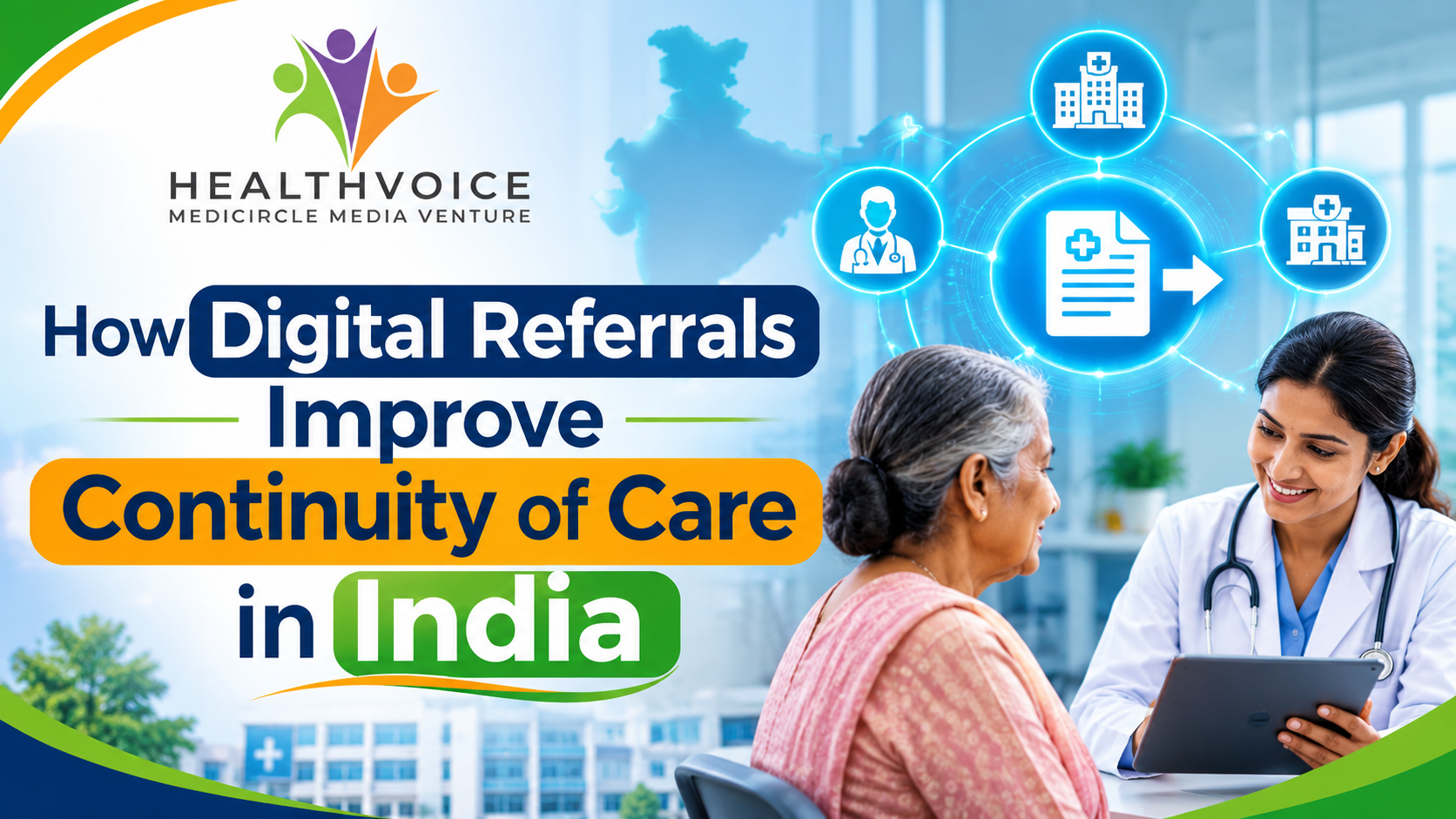
How Digital Referrals Could Improve Continuity of Care in India
Introduction
India's healthcare system serves more than 1.4 billion people across an extraordinarily diverse geography, spanning remote tribal villages, rapidly growing Tier 2 cities, and densely populated metropolitan centres. Despite significant investments in public health infrastructure over the past decade, one persistent challenge continues to undermine patient outcomes at every level: care fragmentation. When a patient moves from a primary health centre to a district hospital, or from a general physician to a specialist, critical medical information is frequently lost, delayed, or misunderstood.
This gap is not simply a logistical inconvenience. It contributes to duplicate diagnostic testing, medication errors, missed follow-ups, and in serious cases, avoidable deterioration in patient health. Digital referrals, powered by health information technology and frameworks such as the Ayushman Bharat Digital Mission (ABDM), represent a meaningful solution to this long-standing problem. By enabling structured, real-time, and trackable communication between healthcare providers, digital referrals have the potential to fundamentally transform how continuity of care is maintained in India.
Understanding Continuity of Care and Why It Matters
Continuity of care refers to the seamless, coordinated delivery of healthcare services to a patient over time and across different providers or settings. It encompasses three interconnected dimensions. The first is informational continuity, which is the sharing of relevant medical history, test results, diagnoses, and treatment plans between providers. The second is management continuity, which is the consistent and coherent approach to managing a patient's condition as they move across care settings. The third is relational continuity, which is the ongoing therapeutic relationship between a patient and their primary care provider.
In the Indian context, these dimensions are frequently disrupted. A patient visiting a government primary health centre (PHC) may carry a handwritten referral slip to the district hospital, where the receiving doctor has no access to the original clinical notes, previous investigations, or the referring physician's observations. The patient, often from a rural or semi-urban background, may not fully understand or recall the information they were asked to convey. The result is a clinical encounter that begins without adequate context, increasing the risk of incomplete care.
The World Health Organization has consistently identified care continuity as a cornerstone of effective primary healthcare. In India, strengthening this dimension is especially critical given the high burden of non-communicable diseases such as diabetes, hypertension, and chronic kidney disease, all of which require long-term coordinated management across multiple providers.
The Current State of Referrals in India
The referral system in India, particularly within the public sector, has historically relied on paper-based communication. A doctor at a subcentre writes a referral letter, the patient carries it to the next facility, and there is no automatic mechanism for the referring doctor to know whether the patient arrived, what diagnosis was made, or what treatment was initiated.
Several challenges compound this problem:
- Paper referral notes are often incomplete, illegible, or lost in transit.
- There is no standardised format for referral documentation across states or health systems.
- Reverse referral feedback, whereby the receiving specialist communicates findings back to the referring doctor, is largely absent.
- Patients who visit private specialists independently do not enter the public system's referral chain at all, creating parallel, disconnected records.
- Urban private healthcare operates in highly fragmented silos, with multi-specialty hospitals rarely sharing structured discharge summaries with the patient's regular general physician.
A 2021 assessment by the National Health Systems Resource Centre highlighted that referral completion rates in several states remain below 60 percent at the PHC level, with even lower rates of feedback reaching the referring provider. This statistical reality underscores the depth of the problem.
What Digital Referrals Offer
A digital referral system replaces the paper slip with an electronic, structured, and trackable communication channel between healthcare providers. At its most functional, it includes not just the referral request but also the clinical summary, relevant investigation reports, prescribed medications, the reason for referral, and the urgency classification.
When integrated with a patient's digital health record, such as the Ayushman Bharat Health Account (ABHA) under the ABDM framework, a digital referral becomes far more powerful. The receiving specialist can access the patient's longitudinal health history with informed consent, review prior consultations, and begin the encounter with a complete clinical picture. The referring physician, in turn, receives a structured discharge note or specialist opinion, enabling them to continue management with full awareness of what occurred at the referral facility.
Key capabilities that well-designed digital referral platforms offer include:
- Real-time referral status tracking for the referring provider.
- Structured clinical templates that ensure completeness of information.
- Integration with diagnostic labs and imaging systems for direct report sharing.
- Appointment scheduling coordination between facilities.
- Secure, consent-based access to the patient's ABHA-linked health records.
- Automated reverse referral notes from specialists back to primary providers.
These features address nearly every gap identified in the current paper-based model, and they do so without requiring the patient to act as the information carrier between providers.
ABDM and the Digital Infrastructure for Referrals in India
India's Ayushman Bharat Digital Mission, launched by the Ministry of Health and Family Welfare, has laid foundational infrastructure that makes scalable digital referrals achievable. The ABHA ID system gives every consenting citizen a unique health identifier that links their medical records across providers. The Health Facility Registry and Healthcare Professionals Registry create a verified directory of facilities and doctors across the country.
The ABDM's Health Information Exchange and Consent Manager (HIE-CM) framework allows health records to flow between verified entities with patient consent, which is precisely the technical environment that a robust digital referral system requires. Several state governments, including those of Andhra Pradesh, Telangana, and Rajasthan, have piloted e-referral modules within their state health management systems, with encouraging early results in reducing patient loss to follow-up.
Private health technology companies are also contributing to this space. Platforms enabling digital referral workflows between clinic management software, hospital information systems, and telemedicine providers are gradually closing the gap between aspiration and implementation.
Impact on Doctor Communities and Professional Communication
One dimension of digital referrals that deserves greater attention within the medical community is the impact on professional relationships and communication quality between doctors. A well-structured referral is not merely an administrative action. It is a clinical communication between two professionals, one of whom is entrusting the care of a patient to another.
Paper-based referrals have often reduced this communication to a few lines on a prescription pad. Digital referrals, particularly when accompanied by complete clinical summaries and structured specialist feedback, have the potential to elevate the quality of doctor-to-doctor communication considerably. Specialists gain genuine respect for the clinical thinking of the referring physician. Primary care doctors receive educationally valuable feedback from specialists. Over time, this bidirectional communication strengthens clinical reasoning at both ends of the referral chain.
For platforms like HealthVoice, which are built to amplify the voice and expertise of the medical community, the integration of digital referral discussions, case-based learning from referral outcomes, and community-driven insights into referral best practices represents a natural extension of its mission to connect and strengthen the healthcare professional ecosystem.
Challenges That Must Be Addressed
Transitioning from a paper-based to a fully digital referral system in India is not without its obstacles, and it would be misleading to suggest otherwise.
Digital literacy and infrastructure gaps remain significant, especially at the level of rural PHCs, subcentres, and small private clinics. Many doctors working in these settings do not have reliable internet connectivity or access to functional devices. Training and onboarding support for digital tools is inconsistent across states.
Interoperability between different hospital information systems, clinic management software, and government health platforms remains a technical challenge. Without seamless data exchange, digital referrals risk becoming another siloed system rather than a truly connected one.
Privacy and data security are critical concerns that require robust governance frameworks, clear patient consent mechanisms, and strict regulatory oversight. The Digital Personal Data Protection Act, 2023, sets the legislative foundation, but implementation at the ground level requires sustained attention.
Finally, behavioural change within the medical community itself takes time. Doctors who have practised within paper-based workflows for many years may resist new systems unless they are demonstrably easy to use and genuinely save time rather than adding administrative burden.
Prevention of Care Gaps Through Digital Accountability
One of the most powerful aspects of digital referral systems is the accountability they create within care pathways. When a referral exists as a digital record, it is possible to track whether the patient attended the referred appointment, whether the specialist sent back a report, and whether the referring doctor reviewed it. This traceability creates a feedback loop that simply does not exist in paper-based systems.
For healthcare administrators, this data becomes an invaluable tool for identifying bottlenecks in care pathways, measuring referral quality, and planning health system strengthening interventions. For patients, it provides a form of systemic protection against being lost within a complex multi-provider journey. For doctors, it supports clinical governance and reduces medicolegal risk by creating a documented trail of coordinated care decisions.
Conclusion
Digital referrals are not simply a technological upgrade to an administrative process. They represent a structural shift in how continuity of care is designed, delivered, and monitored within India's healthcare system. By ensuring that clinical information moves reliably and completely alongside the patient, digital referrals have the potential to reduce diagnostic duplication, prevent medication errors, improve specialist-primary care communication, and ultimately support better health outcomes.
The technical foundation is being built through ABDM and state-level health digital initiatives. The policy intent is clear. What is needed now is consistent implementation, sustained capacity building, and a medical community that recognises the professional and clinical value of structured digital communication. As India advances toward a more integrated healthcare ecosystem, digital referrals will be central to ensuring that no patient falls through the cracks of a fragmented system.
Frequently Asked Questions
Q1: What is a digital referral in healthcare?
A digital referral is an electronic communication sent from one healthcare provider to another, recommending that a patient be seen or assessed by a specialist or higher-level facility. Unlike paper referrals, digital referrals include structured clinical information, can be tracked in real time, and allow for reverse communication back to the referring provider.
Q2: How does ABDM support digital referrals in India?
The Ayushman Bharat Digital Mission provides the foundational infrastructure for digital referrals through the ABHA ID system, the Health Facility Registry, the Healthcare Professionals Registry, and the Health Information Exchange and Consent Manager framework. These components enable consent-based sharing of a patient's health records between verified providers across the country.
Q3: What are the main barriers to implementing digital referrals in rural India?
The primary barriers include limited internet connectivity and digital infrastructure at rural health facilities, low digital literacy among healthcare workers in remote settings, lack of interoperability between different health information systems, absence of standardised referral templates across states, and the need for sustained training and onboarding support.
Q4: How do digital referrals improve patient safety?
Digital referrals improve patient safety by ensuring that receiving providers have access to accurate and complete clinical information before seeing the patient. This reduces the risk of medication errors arising from unknown drug histories, prevents duplication of diagnostic investigations, and ensures that care decisions are made with full awareness of the patient's prior clinical journey.
Q5: Can digital referrals work within India's private healthcare sector?
Yes. While much of the current focus has been on public sector implementation, digital referrals are equally applicable and valuable within private healthcare. Private hospitals, clinics, and diagnostic centres can integrate referral workflows within their existing health information systems, and ABDM-compliant platforms enable cross-sector referral communication with appropriate patient consent.
Resources
- Ayushman Bharat Digital Mission (ABDM): Official government platform outlining India's digital health infrastructure, including ABHA ID, Health Facility Registry, and HIE-CM framework.
- Ministry of Health and Family Welfare (MoHFW): Source for national health policy documents, referral system guidelines, and public health programme updates.
- National Health Systems Resource Centre (NHSRC): Technical resource body providing assessments of India's public health system, including evaluations of referral completion rates and care coordination gaps.
- World Health Organization (WHO) India: International authority on primary healthcare standards, continuity of care frameworks, and health system strengthening recommendations.
- PubMed (National Center for Biotechnology Information): Peer-reviewed research database covering studies on digital health, referral system effectiveness, and care continuity outcomes globally.
Interlinking Keywords
Digital health India, ABDM health records, continuity of care, patient referral system, electronic health records India, doctor-to-doctor communication, telemedicine referral, primary care coordination, Ayushman Bharat health account, healthcare fragmentation
Last reviewed by:
Dr. Manthan Tripathi, HealthVoice Editorial and Medical Advisory Team, November 17, 2026.
Disclaimer
The information presented in this article is intended for general awareness and educational purposes only. It does not constitute medical advice, clinical guidance, or a recommendation to alter any existing patient care practice or healthcare system workflow. Healthcare professionals and administrators should refer to relevant national guidelines, institutional protocols, and applicable regulatory frameworks before implementing any changes to referral processes or digital health systems. HealthVoice does not endorse any specific technology platform, vendor, or product. Readers are encouraged to consult qualified health informatics professionals and appropriate regulatory authorities for implementation guidance.
 Dr. Manthan Tripathi
#DigitalHealthcare #ContinuityOfCare