Connected Healthcare: Hospitals to Home in India health system.
Connected healthcare bridges hospitals, homes, and patients across India through ABDM, telemedicine, and remote monitoring, transforming fragmented care into a continuous, coordinated, and accessible health system.
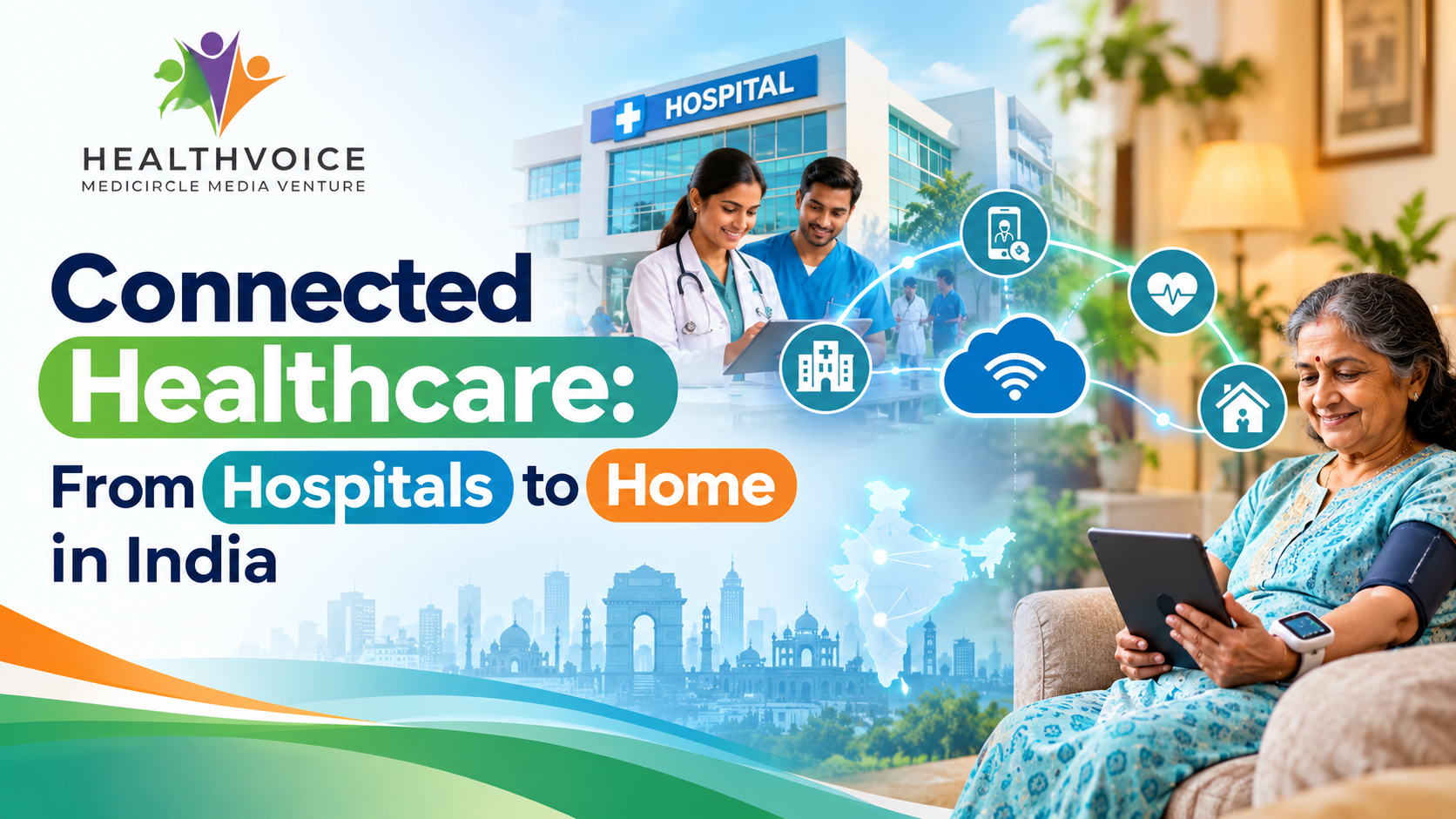
Connected Healthcare: From Hospitals to Home in India
Introduction
India's healthcare system is undergoing a transformation that is both quiet and profound. For decades, the journey of a patient in India was fragmented. A visit to a general physician in a neighborhood clinic, a referral to a specialist in another city, diagnostic reports scattered across different labs, and follow-up care that often relied entirely on the patient's memory and paperwork. This fragmentation cost time, money, and in some cases, lives.
Connected healthcare is changing this reality. It refers to a model where hospitals, clinics, diagnostic centers, pharmacies, healthcare providers, and patients are all linked through a shared digital infrastructure. Data flows securely, care is coordinated, and patients receive support not just when they walk through hospital doors but throughout their entire health journey, including at home.
For India, a country of 1.4 billion people with enormous diversity in geography, language, socioeconomic status, and healthcare access, connected healthcare is not just a technological upgrade. It is a structural solution to some of the most persistent challenges in public health delivery.
Understanding Connected Healthcare
At its core, connected healthcare is built on the principle that good medical care should not be limited by physical location or institutional boundaries. It is an integrated ecosystem where patient data, clinical decisions, prescriptions, diagnostics, and follow-up care are shared seamlessly between different stakeholders using digital tools.
This ecosystem includes several key components:
- Electronic Health Records (EHRs) that store a patient's complete medical history in a secure, accessible digital format
- Telemedicine platforms that allow patients to consult doctors remotely through video, audio, or chat
- Wearable devices and remote monitoring tools that track vital parameters like blood pressure, oxygen levels, and blood glucose from home
- Interoperable systems that allow different hospitals and clinics to access the same patient data with consent
- Digital prescription and pharmacy networks that reduce errors and delays in medication delivery
India's Ayushman Bharat Digital Mission (ABDM), launched by the Ministry of Health and Family Welfare, is the country's national framework for making this ecosystem a reality. Through the ABHA (Ayushman Bharat Health Account) system, every citizen can now have a unique health ID that links all their medical records across different hospitals and healthcare providers. This is the foundational layer of connected healthcare in India.
The Indian Healthcare Landscape and the Case for Connectivity
India faces a distinctive set of healthcare challenges that make connectivity not just useful but essential.
The country has approximately 0.7 doctors per 1,000 people, which is significantly below the WHO-recommended ratio of 1 per 1,000. Most specialist care is concentrated in Tier 1 cities like Mumbai, Delhi, Bengaluru, and Hyderabad. Patients from smaller towns and rural areas frequently travel hundreds of kilometers for a single consultation, often losing wages and time while doing so.
Hospital beds are similarly unevenly distributed. Urban tertiary care hospitals are frequently overcrowded while district hospitals and primary health centers in rural areas remain underutilized. The result is a system where patients cluster at the top of the pyramid even for conditions that could easily be managed at lower levels of care.
The burden of chronic disease adds another layer of complexity. India accounts for a large share of the global burden of diabetes, hypertension, cardiovascular disease, and chronic kidney disease. These conditions require regular monitoring, medication adjustments, and ongoing communication between patients and their care teams. Without a connected system, this continuity is nearly impossible to achieve at scale.
Connected healthcare directly addresses these gaps by enabling remote consultations, decentralizing specialist access, reducing unnecessary hospital visits, and supporting ongoing chronic disease management from the patient's home.
How Connectivity Is Reshaping Hospital Care
Inside hospitals, connectivity is transforming clinical workflows in ways that directly improve patient outcomes.
Hospital Information Systems (HIS) now integrate radiology, pathology, pharmacy, billing, and clinical notes into a single platform. A doctor reviewing a patient in the ward can access their latest reports without waiting for a physical copy to arrive. Emergency physicians can view the medical history of an unconscious patient who arrives without family, provided the patient has an ABHA-linked record.
Clinical Decision Support Systems (CDSS), powered by artificial intelligence, are helping doctors identify drug interactions, flag abnormal reports, and suggest evidence-based treatment pathways. These tools do not replace clinical judgment but enhance it by surfacing relevant information at the point of care.
Referral management systems are reducing the delays and information loss that occur when a patient moves from one hospital to another. When a patient is referred from a district hospital to a tertiary center, the receiving team already has access to the previous investigation reports, treatment history, and clinical notes. This eliminates duplicate testing, reduces costs, and speeds up the diagnostic process.
The Home as a Healthcare Setting
One of the most significant shifts in connected healthcare is the recognition that the home is a legitimate and important site of medical care. This is not simply about convenience. It reflects a fundamental rethinking of where and how care is delivered.
Remote patient monitoring (RPM) technology allows patients with chronic conditions to track their vital signs at home using connected devices. Blood pressure cuffs, pulse oximeters, glucometers, and ECG patches now transmit real-time data to healthcare providers. When values fall outside a predefined range, care teams receive automated alerts and can intervene promptly before a crisis develops.
For post-surgical patients, RPM reduces the risk of complications going undetected after discharge. For elderly patients who find hospital visits physically challenging, it provides a safety net without requiring regular travel. For patients in remote areas with limited local healthcare infrastructure, it creates a direct line to specialist monitoring that would otherwise be inaccessible.
Telemedicine, which received a significant regulatory boost through the Telemedicine Practice Guidelines issued by the Board of Governors of the Medical Council of India in 2020, has expanded rapidly. Platforms like eSanjeevani, operated by the Ministry of Health, have already facilitated tens of millions of teleconsultations across India. Many state governments have integrated telemedicine into their public health infrastructure, allowing patients in village-level wellness centers to consult with specialists based in district or state hospitals without leaving their communities.
ABDM and the Interoperability Backbone
For connected healthcare to work, different systems must be able to talk to each other. This is the challenge of interoperability, and it is one of the most technically complex aspects of building a national digital health infrastructure.
ABDM addresses this through a set of open standards and application programming interfaces (APIs) that allow different health applications and hospital systems to exchange data in a standardized format. A patient's records created on one platform can be shared with a provider using a different system, as long as both are ABDM-compliant and the patient gives consent.
The Health Information Exchange and Consent Manager (HIE-CM) framework ensures that patients retain control over who can access their records and for what purpose. This consent-based architecture is an important safeguard in a country where digital literacy and awareness of data rights are still developing.
For doctors and medical associations, ABDM compatibility is becoming increasingly important. Clinics and hospitals that are ABDM-linked are better positioned to participate in public health programs, receive referrals through digital channels, and offer patients the continuity of care that modern medicine requires. HealthVoice, as a platform connecting doctors and healthcare communities, plays a meaningful role in helping the medical community stay informed about these evolving digital frameworks and what they mean for clinical practice.
Challenges That Cannot Be Overlooked
Connected healthcare in India is growing rapidly, but several significant challenges remain.
Digital infrastructure is still uneven. Rural areas continue to face limited internet connectivity, low smartphone penetration, and insufficient power supply. Building digital health solutions that work for a first-time smartphone user in a small village requires a very different design philosophy than building for an urban professional.
Digital health literacy is another barrier. Many patients, particularly older adults and those with limited formal education, find it difficult to use telemedicine apps, navigate health portals, or manage their ABHA accounts independently. Bridging this gap requires sustained public education efforts and community health worker programs that can support patients in adopting digital tools.
Data privacy and security concerns are real and must be taken seriously. As more health data moves into digital systems, the risk of breaches, unauthorized access, and misuse increases. Robust regulatory frameworks, strong encryption standards, and transparent consent mechanisms are essential to maintaining patient trust.
Finally, the healthcare workforce must be adequately trained to use digital tools effectively. Electronic medical records and clinical decision support systems are only valuable if doctors and nurses know how to use them and trust the information they provide.
The Road Ahead for Indian Healthcare
India's connected healthcare journey is well underway, but it is still in its early stages. The coming decade will determine how effectively the country can translate digital infrastructure into measurable improvements in health outcomes.
Several priorities will shape this journey:
- Expanding ABDM enrollment and ensuring that hospitals, clinics, and pharmacies across all tiers are linked to the national digital health ecosystem
- Strengthening telemedicine platforms at the primary care level so that specialist access is truly democratized
- Investing in digital health literacy programs for both patients and healthcare providers
- Developing India-specific clinical AI tools that account for the country's unique disease burden, genetic diversity, and social determinants of health
- Creating sustainable financing models for home-based care and remote monitoring that can be integrated into insurance schemes like Pradhan Mantri Jan Arogya Yojana (PMJAY)
The vision is a healthcare system where a patient in a village in Uttar Pradesh has the same access to quality diagnosis and specialist care as a patient in a corporate hospital in Mumbai. That is an ambitious goal, but connected healthcare is making it structurally possible for the first time in India's history.
Conclusion
Connected healthcare represents a fundamental shift in how India thinks about medical care. It moves the conversation from isolated clinical encounters to continuous, coordinated care that follows the patient from hospital to home and back. It distributes specialist access, reduces inefficiencies, supports chronic disease management, and empowers both patients and providers with better information.
The building blocks are already in place. ABDM, telemedicine guidelines, remote monitoring technology, and a growing digital health ecosystem are creating the conditions for a genuinely connected health system. What is needed now is sustained commitment from governments, healthcare institutions, the medical community, and technology providers to build on this foundation thoughtfully and inclusively. When that happens, the hospital-to-home continuum will not be an aspiration. It will be the standard of care.
Frequently Asked Questions
Q1: What is connected healthcare and why is it important for India?
Connected healthcare refers to an integrated system where hospitals, doctors, diagnostic centers, pharmacies, and patients share health information through digital tools and platforms. It is especially important for India because of the country's vast geography, uneven distribution of doctors and specialists, and the growing burden of chronic diseases that require ongoing monitoring and management.
Q2: What is ABDM and how does it support connected healthcare?
The Ayushman Bharat Digital Mission (ABDM) is India's national digital health framework. It provides citizens with a unique health ID called ABHA that links all their medical records across different hospitals and healthcare providers. ABDM creates the interoperability backbone that allows different systems to exchange patient data securely and with patient consent, which is the foundation of connected healthcare in India.
Q3: How does telemedicine contribute to the hospital-to-home care model?
Telemedicine allows patients to consult doctors remotely using video, audio, or chat platforms, without visiting a hospital or clinic in person. This is especially valuable for patients in rural areas, elderly individuals with limited mobility, and those managing chronic conditions who require frequent follow-up. India's eSanjeevani platform has already delivered tens of millions of such consultations through the public health system.
Q4: What is remote patient monitoring and who can benefit from it?
Remote patient monitoring (RPM) uses connected devices such as blood pressure monitors, glucometers, and pulse oximeters to track a patient's vital signs from home and transmit the data to their healthcare provider. Patients with diabetes, hypertension, heart disease, and those recovering from surgery are among those who benefit most. It allows timely intervention before health conditions worsen into emergencies.
Q5: What are the main challenges in implementing connected healthcare across India?
The main challenges include uneven digital infrastructure in rural areas, limited smartphone and internet access among lower-income populations, low digital health literacy among older patients, data privacy and cybersecurity concerns, and the need for healthcare workers to be trained in using digital tools. Addressing these challenges requires a combination of policy support, public education, and technology design that prioritizes accessibility.
Resources
- Ayushman Bharat Digital Mission (ABDM): Official national portal for India's digital health infrastructure, ABHA registration, and healthcare interoperability standards
- Ministry of Health and Family Welfare (MoHFW): Source for telemedicine practice guidelines, national health policies, and digital health program updates
- World Health Organization (WHO) India: Reports on digital health strategy, telemedicine, and health system strengthening in the South-East Asia region
- Indian Council of Medical Research (ICMR): Publications and guidelines on evidence-based clinical practice and India-specific disease burden data
- National Health Authority (NHA): Operational body overseeing Ayushman Bharat programs including PMJAY and ABDM implementation
Interlinking Keywords
Connected healthcare India, ABDM digital health, telemedicine India, remote patient monitoring, ABHA health ID, hospital to home care, digital health interoperability, eSanjeevani platform, chronic disease management India, Ayushman Bharat scheme
Last reviewed by:
Dr. Manthan Tripathi, HealthVoice Editorial and Medical Advisory Team, November 18, 2026.
Disclaimer
This article is intended for general informational and educational purposes only. It does not constitute medical advice, diagnosis, or treatment. Readers should consult a qualified and registered medical professional for any health-related concerns or before making decisions related to their healthcare. HealthVoice does not endorse any specific product, service, technology platform, or healthcare provider mentioned in this article. All information is based on publicly available sources and is accurate to the best of the editorial team's knowledge at the time of publication.
 Dr. Manthan Tripathi
#ConnectedHealthcare #DigitalHealth