Diabetes Remission: What Doctors Should Communicate Without Overpromising
Reaching type 2 diabetes remission is entirely possible for many individuals through weight loss, dietary adjustments, and physical activity, but it requires lifelong maintenance rather than looking for a permanent cure.
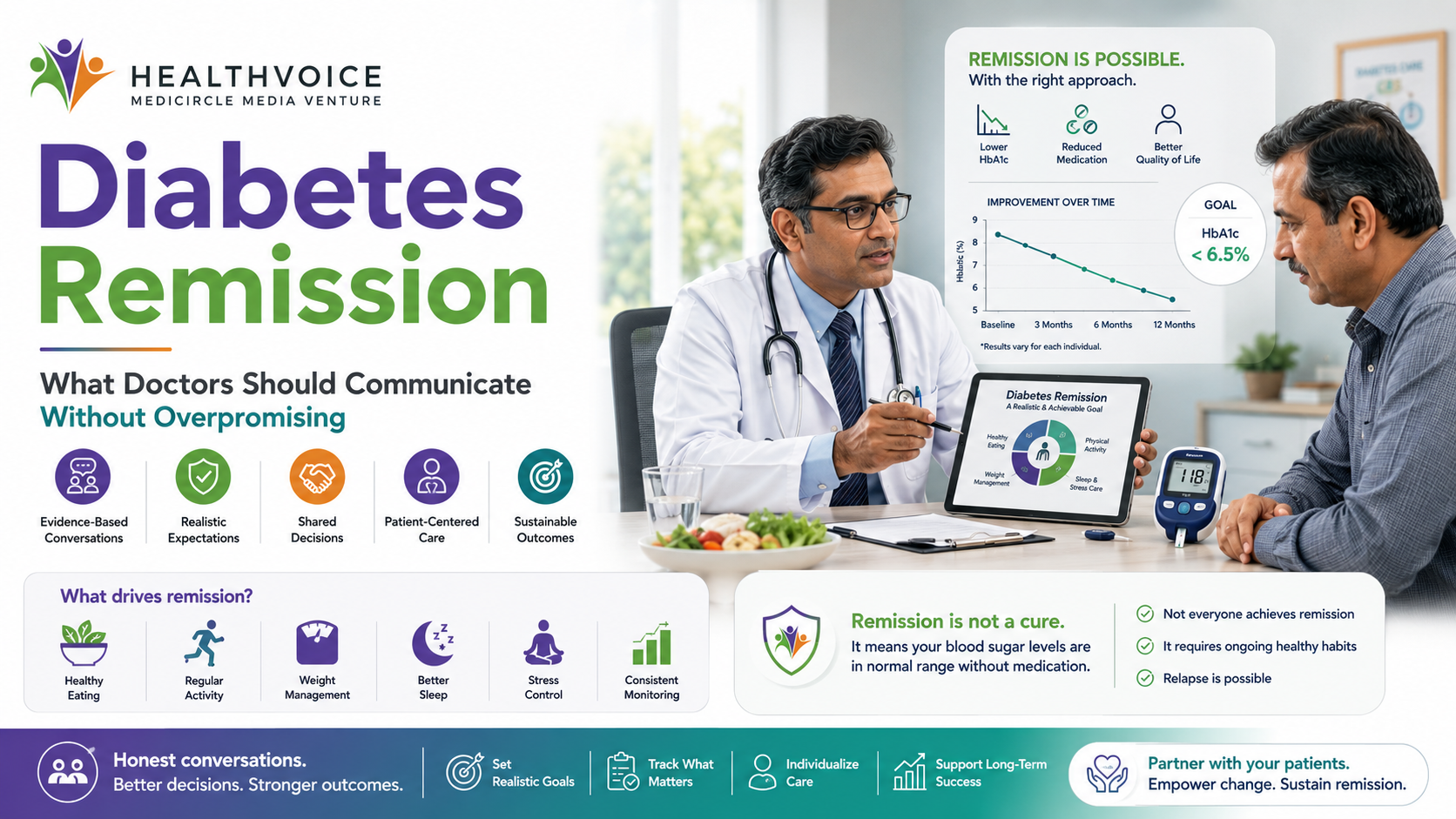
The Truth about Diabetes Remission
Receiving a type 2 diabetes diagnosis used to feel like a life sentence of slowly increasing medicine dosages. Today, the medical conversation has shifted toward a much more encouraging possibility known as clinical remission. Across India, where metabolic health challenges are incredibly common, this concept has sparked immense excitement. Unfortunately, it has also opened the door to internet sensationalism. Scroll through any social media feed and you will find self-proclaimed health gurus promising instant, effortless shortcuts to eliminate diabetes symptoms completely.
While the scientific community shares the enthusiasm for what the human body can achieve, we must separate verified medical breakthroughs from dangerous marketing myths. Reaching a state where you do not require active type 2 diabetes treatment is entirely possible for many individuals, but it is not a magic trick. It requires a clear understanding of your metabolism and a commitment to sustainable habits. Looking at the real science behind blood sugar management helps you make safe, smart choices without falling for empty promises that could compromise your long-term well-being.
Remission Versus Cure
To navigate your health journey safely, we need to clarify our medical vocabulary. A cure means a disease has been completely erased from your system. If you cure an infection with antibiotics, it is gone, and your body returns to its baseline state. Diabetes mellitus does not work this way because you cannot alter your genetic tendencies. Even if your random sugar level normal range returns to a perfectly healthy balance, your underlying genetic blueprint and metabolic sensitivity to high-carbohydrate foods or inactive routines remain waiting in the wings.
Remission is a more accurate and safer term. In the medical world, a patient is in remission when their type 2 diabetes hba1c level drops and stays below 6.5% for a minimum of three months without any help from glucose-lowering drugs. Think of it like a fire that has been safely contained rather than permanently extinguished. The danger is gone for now, but if you abandon the balanced diet and active daily routines that put the fire out, the flames will return. Viewing remission as an ongoing state of metabolic health protects you from getting complacent or feeling blindsided by sudden blood sugar spikes down the road.
Reversing Insulin Resistance
To understand how the body achieves this state, we have to look at what causes type 2 diabetes in the first place, which is a combination of insulin resistance and overworked pancreatic cells. When we carry extra weight, especially deep inside our abdomen, fat builds up around crucial organs like the liver and the pancreas. This internal fat blocks insulin from doing its job efficiently. In response, your pancreas works overtime to pump out extra insulin, eventually leaving its delicate insulin-producing beta-cells exhausted and damaged.
Clearing Organ Fat
The secret to reducing insulin resistance lies in shedding that deep, visceral fat. Medical research reveals that losing weight forces the body to pull fat deposits out of the liver and pancreas first. Clearing just a fraction of a gram of fat from the pancreas can instantly relieve the pressure on your beta-cells, allowing them to wake up and produce insulin normally again. This internal cleanup restores your body's natural ability to handle carbohydrates.
Importance of Timing
Time plays a massive role in your chances of successfully reaching remission. If you were diagnosed recently, your pancreatic cells are likely still resilient and capable of bouncing back quickly. On the flip side, if you have lived with type 2 diabetes mellitus for ten or fifteen years, or if your body relies on heavy doses of synthetic insulin, the pancreatic cells may have sustained permanent structural damage. Remission might be harder to reach in these scenarios, but significant health improvements and medicine reductions are still completely within grasp.
Practical Indian Foundations
You cannot find a pill, powder, or ancient root that will automatically trigger diabetes remission. True metabolic health is built on the choices you make every single day, right in your own home.
Plate Dietary Adjustments
Standard daily meals across India tend to center heavily on refined carbohydrates, including premium polished white rice, maida, and large portions of refined wheat flatbreads. Adopting a structured type 2 diabetes diet does not mean giving up your favorite regional flavors; it means making smarter ingredient choices. Swapping processed grains for fiber-dense complex carbohydrates like ragi, jowar, bajra, or brown rice keeps blood sugar stable. Prioritizing proteins like dals, sprouted legumes, paneer, and local green vegetables keeps you full longer and helps build muscle mass, which acts as a sponge for excess blood glucose.
Staying Actively Moving
Physical activity is essentially free medicine for your metabolism. When your muscles contract during exercise, they pull sugar directly out of your bloodstream to use for fuel, bypassing the need for insulin entirely. Aiming for roughly 150 minutes of moderate movement per week, such as regular brisk walking, cycling, or simple bodyweight exercises, dramatically enhances your insulin sensitivity. Even small adjustments, like committing to a casual ten-minute stroll around your neighborhood immediately after lunch and dinner, can flatten post-meal blood sugar spikes.
Managing Individual Expectations
It is incredibly important to remember that every individual possesses a totally unique metabolic makeup. Your genetics, age, stress levels, and sleep hygiene all dictate how your body responds to lifestyle changes. You might follow a perfect diet and exercise plan alongside a friend, only to watch their blood sugar drop rapidly while your sugar level after eating food stabilizes just slightly above the official remission cutoff.
This scenario is not a personal failure, and it should never discourage you. Dropping weight, eating nutrient-dense foods, and staying active provide massive head-to-toe health benefits, even if you still need a low dose of daily diabetes medications to assist your body. These changes protect your vision, shield your kidneys from strain, improve cardiovascular health, and prevent nerve damage. True medical success is about reducing your overall health risks and feeling energetic, not hitting an arbitrary, non-medicated target.
Lifelong Vigilance Required
Stepping into diabetes remission is an incredible milestone, but it does not mean you can throw away your continuous glucose monitoring tools or stop visiting your clinic. Because your underlying metabolic tendencies never truly disappear, regular monitoring is your best defense against unexpected health changes.
Tracking Your HbA1c
Even when you feel perfectly healthy and your daily glucose monitor tests look ideal, you should still schedule an HbA1c blood test once or twice a year. This test gives you a clear three-month average of your glucose levels, catching any slow, quiet upward trends early enough for you to adjust your diet or activity before full-blown hyperglycemia returns.
Total Systemic Wellness
Diabetes is a systemic condition that can quietly influence various parts of the body over time. Complete wellness means looking beyond blood sugar numbers alone. Keeping up with annual checkups for kidney function, cholesterol profiles, eye health, and nerve sensitivity ensures your body stays protected from every angle. Building a lasting relationship with trusted medical professionals keeps your health strategy proactive rather than reactive.
Common Remission Questions
Is it possible for every single person with type 2 diabetes to achieve full remission?
No, it is not possible for everyone. Your chances depend heavily on how long you have had diabetes, your genetic background, and how much functioning capacity is left in your pancreatic beta-cells. However, everyone can use these same lifestyle changes to achieve safer blood sugar levels and better overall health.
Once my blood sugar numbers look normal, can I go back to eating traditional sweets and fried snacks?
No. Remission is an active state, not a permanent change. It only lasts as long as you maintain your healthy habits. If you return to a lifestyle filled with ultra-processed foods, simple sugars, and heavy oils, visceral fat will accumulate around your organs again, bringing back insulin resistance and high blood sugar.
How many years can a person stay in diabetes remission?
The timeline varies wildly based on individual factors. Remission can last for several years, or even decades, provided you keep your weight stable, eat balanced meals, and avoid a sedentary routine. Regular checkups are the only way to confirm your status over time.
Navigating Credible Advice
Taking control of your metabolic health can feel overwhelming when you are constantly bombarded with conflicting online advice. Relying on unverified claims or extreme crash diets can actually harm your organs and derail the positive progress you have already made. True long-term wellness relies on accessing clear, evidence-based data that respects your lifestyle.
Independent health platforms like HealthVoice play a vital role in this process. By delivering vetted insights, practical advice, and expert medical perspectives tailored for everyday Indian families, they help strip away the confusion surrounding chronic conditions. Turning to reliable, patient-centered resources ensures your daily health choices remain grounded in real science, giving you the tools to live a vibrant, balanced life.
Conclusion
The reality of diabetes remission brings a breath of fresh air to modern healthcare, proving that lifestyle modifications can fundamentally change how our bodies process energy. By committing to mindful weight management, adjusting traditional meals to emphasize whole foods, and keeping your body moving, you can take charge of your metabolic destiny and safely lower your dependence on prescription drugs. However, true success lies in treating remission as a lifelong journey of self-care rather than a quick race to a finish line. By maintaining realistic expectations, scheduling routine checkups, and relying on trusted, verified health information, you can safeguard your long-term wellness and enjoy the lasting benefits of a healthier body.
 Team Healthvoice
#DiabetesRemission #MetabolicHealth