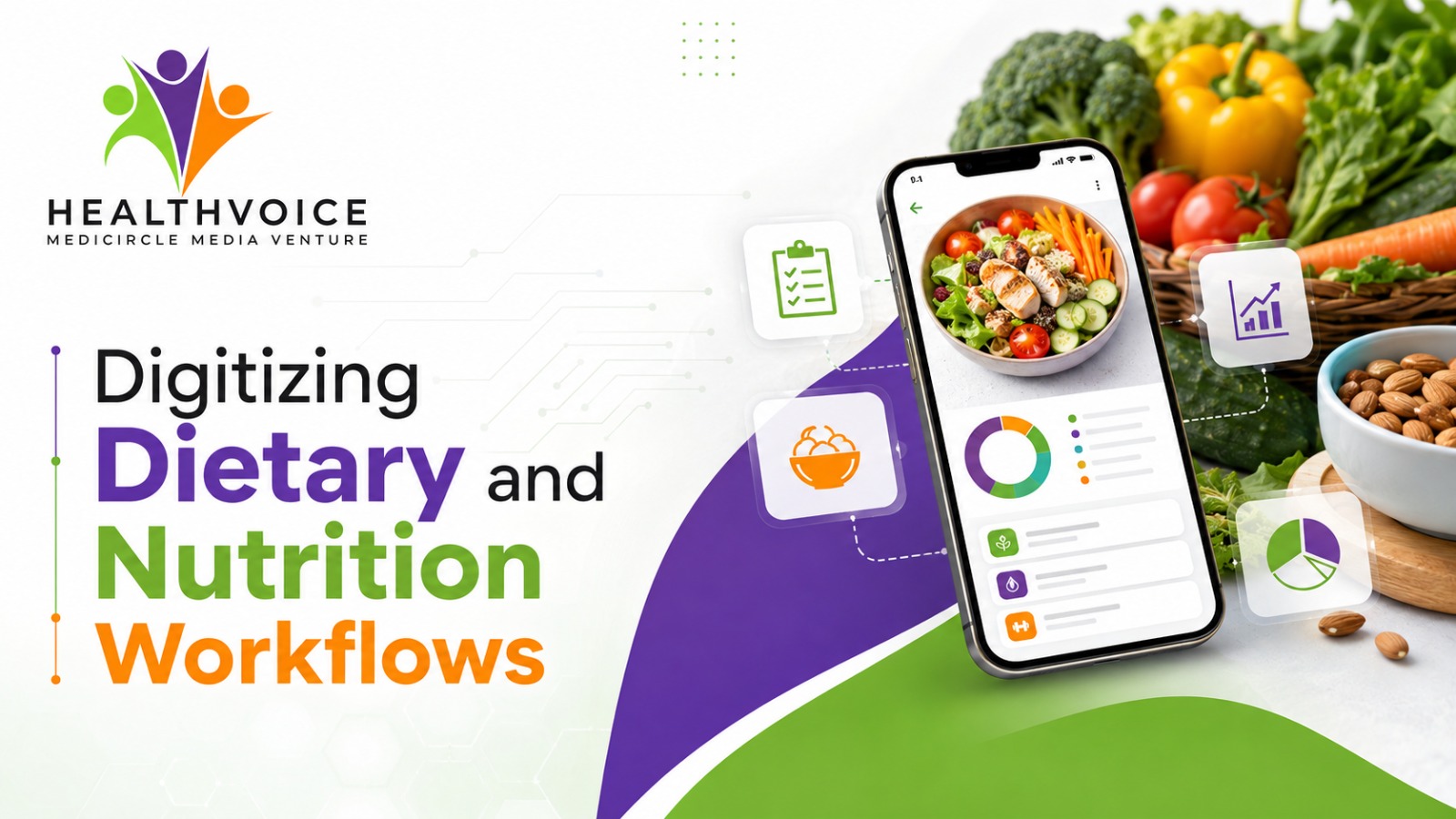
Digitizing Dietary and Nutrition Workflows: Integrating Inpatient Meal Plans with EMR Systems
EMR-integrated dietary workflows improve inpatient nutrition safety, reduce errors and food waste, enable real-time meal tracking, and support timely nutritional interventions through automated, connected hospital food service operations.
Clinical nutrition is a fundamental pillar of inpatient therapeutic care. From managing strict sodium and fluid restrictions in congestive heart failure (CHF) patients to calculating carbohydrate counts for brittle diabetics and adjusting texture-modified diets for post-stroke dysphagia, what an inpatient eats directly impacts clinical recovery, length of stay (LOS), and readmission rates.
Historically, hospital dietary and food service operations functioned as isolated, analog silos. Diets were scribbled on paper requisition slips, called in via telephone, or updated on static dry-erase whiteboards. This fragmentation created severe clinical vulnerabilities—such as feeding a patient prior to general anesthesia, delivering high-potassium meals to end-stage renal patients, or serving known food allergens.
Implementing digitizing inpatient dietary workflows EMR integration bridges the gap between clinical charting and food service delivery. By converting medical nutrition orders into real-time, automated meal assembly and delivery workflows, hospitals eliminate transcription errors, automate nutritional tracking, and improve clinical outcomes.
1. Clinical and Operational Bottlenecks in Analog Dietary Systems
Manual and disconnected dietary workflows introduce significant risks across clinical and administrative domains:
- Diet-Order Latency & Communication Lags: When a physician updates an order from "Clear Liquids" to "NPO" (nil per os / nothing by mouth) prior to emergency surgery, paper systems often take hours to communicate the change to the basement kitchen, leading to canceled procedures and delayed operating theater (OT) schedules.
- Allergen & Drug-Nutrient Conflicts: Hand-written tray tickets cannot dynamically cross-reference real-time pharmacy administration records. Critical drug-food interactions (e.g., high vitamin K intake conflicting with warfarin therapy, or tyramine-rich foods interacting with MAO inhibitors) easily slip through manual checks.
- Malnutrition Underdiagnosis & Fragmented Documentation: Hospital-acquired malnutrition affects up to 30\%\text{ to }50\% of admitted patients. Without continuous, digital tracking of percentage meal intake linked to nursing flowsheets, clinical dietitians miss opportunities for early oral nutrition supplement (ONS) or enteral nutrition escalation.
- Food Waste and Financial Leakage: Unsynchronized bed boards result in hundreds of wasted meal trays prepared and sent to wards for discharged, transferred, or fasting patients, inflating operational overhead.
2. Technical Architecture: How EMR-Dietary Integration Works
Modern digital nutrition solutions establish a bidirectional, automated data loop between the core Electronic Medical Record (EMR) and the Food Service Management System (FSMS):
Key Technical Enablers
- HL7 & FHIR Standards (NutritionOrder Resource): The system leverages standard NutritionOrder and Observation data structures to communicate oral diets, texture modifications, enteral feeding formulas, and oral supplements seamlessly across disparate vendor platforms.
- Dynamic Menu Filtering Algorithms: When a patient logs into their bedside tablet or room infotainment display to select meals, the software automatically hides items that violate their active clinical profile (e.g., hiding high-glycemic desserts for diabetic patients or fibrous foods for low-residue post-surgical orders).
- Closed-Loop Tray Tracking (Barcode/RFID): Each prepared tray receives a unique digital barcode. Food service staff scan the tray at kitchen dispatch, at ward arrival, and at patient bedside against the patient’s ID wristband, ensuring the right meal reaches the right patient.
3. Structural Comparison: Analog Food Services vs. Integrated Digital Workflows
Evaluating manual dietary logistics against fully integrated EMR-dietary systems highlights dramatic improvements across safety, efficiency, and clinical documentation:
- Order Processing & Latency: Paper/phone workflows experience a 45-to-90-minute lag between doctor order entry and kitchen recipe modification. Integrated digital systems execute order updates in under 5 seconds.
- NPO & Pre-Op Safety Enforcement: Analog workflows rely on nurses placing physical signs on doors or verbal calls, frequently resulting in inadvertent feeding and delayed surgeries. Digital systems trigger an instant kitchen halt and lock patient meal ordering the second an NPO order is entered.
- Allergen & Drug Interaction Checks: Manual tray matching relies on human memory and static tray card notes. Integrated platforms run automated multi-point cross-checks against real-time allergy profiles and active medication administration records (MAR).
- Intake Tracking & Clinical Documentation: Analog workflows use subjective, end-of-shift nurse estimates on paper charts. Digital systems allow meal delivery staff or nursing assistants to log visual plate consumption percentages (0\%, 25\%, 50\%, 75\%, 100\%) directly via handheld scanners, instantly populating clinical dietitian charting dashboards.
- Food Waste & Overproduction: Disconnected kitchens prepare meals based on rough historical averages, resulting in high plate waste. Real-time Admission-Discharge-Transfer (ADT) integration ensures trays are produced strictly for active, non-fasting inpatients, reducing food production waste by 20\%\text{ to }35\%.
4. High-Performance Action Plan: 4-Phase Implementation Roadmap
To systematically integrate hospital dietary operations with the enterprise EMR, hospital leadership and clinical informatics teams can execute a structured four-phase roadmap:
- Standardize Clinical Diet Codes & Nutritional DatabasePhase 1: Formulary & Recipe StandardizationCollaborate with clinical dietitians and culinary chefs to map all hospital food items, recipes, and liquid supplements with precise macro- and micro-nutrient profiles, allergen flags, and International Dysphagia Diet Standardisation Initiative (IDDSI) texture levels.
- Build HL7/FHIR Interfaces & Clinical Decision Support RulesPhase 2: Interface & Rules Engine SetupIntegrate the Food Service Management System with the EMR's CPOE, ADT, and Pharmacy modules. Configure automated alerts for drug-nutrient interactions, renal thresholds, and instantaneous NPO order triggers.
- Deploy Bedside Scanning & Pilot on High-Risk WardsPhase 3: Hardware & Closed-Loop PilotEquip culinary staff and ward nurses with barcode/RFID scanners. Launch a controlled pilot across cardiology, oncology, and surgical intensive care units to validate tray accuracy and bedside intake logging.
- Roll Out Enterprise-Wide & Integrate Dietitian DashboardsPhase 4: Full Deployment & Intake AnalyticsExpand digital ordering to all inpatient beds. Automate daily malnutrition screening triggers based on consecutive low-intake logs (<50\% over 48 hours), alerting clinical dietitians for immediate intervention.
Actionable Strategy: Digital Governance & Health System Alignment
- Maintain Longitudinal Nutrition Logs via Universal Health Repositories: Ensure clinical nutrition summaries, specialized metabolic diet histories, and malnutrition risk scores link directly to digital health accounts—such as the ABHA ID (Ayushman Bharat Health Account) network. This preserves dietary care continuity for patients transitioning to outpatient rehabilitation or home healthcare.
- Verify Clinical Nutritionist Credentials via Academic Registries: Ensure clinical dietitians, metabolic nutrition specialists, and hospital nutrition informatics leads hold accredited qualifications verified through central educational registries like the APAAR ID system within the Academic Bank of Credits (ABC) framework.
- Enforce Strict Role-Based Access Controls (RBAC): Restrict clinical diet modifications to licensed medical officers and registered dietitians, while granting food service staff view-only access to relevant meal assembly, allergen, and delivery instructions to protect patient health data integrity.
Frequently Asked Questions (FAQs)
Q1. What is the primary benefit of integrating dietary workflows with hospital EMRs?
The primary benefit is clinical safety and speed: it automates the translation of physician dietary orders into kitchen meal plans within seconds, preventing medical errors such as serving contraindicated foods, allergens, or meals to fasting (NPO) surgical patients.
Q2. How does the system handle International Dysphagia Diet Standardisation Initiative (IDDSI) levels?
The digital interface maps texture-modified diets (e.g., Pureed, Minced & Moist, Soft & Bite-Sized) and thickened liquids directly to standardized IDDSI levels in the CPOE, ensuring speech-language pathology orders are executed accurately by culinary staff.
Q3. Can patients select their own meals through this digital system?
Yes. Patients can use bedside infotainment terminals, dedicated mobile apps, or nurse-assisted tablets to view customized, dynamic menus that only display food options permitted by their current medical diet order.
Q4. How does closed-loop barcode scanning work at meal delivery?
Each meal tray features a scannable barcode linked to the patient's record. Upon delivery, the staff member scans the tray ticket and the patient's identification wristband; the system validates the match in real time before the tray is handed over.
Q5. How does digital dietary tracking identify hospital-acquired malnutrition?
When meal intake is logged digitally (e.g., patient ate <25\% of breakfast and lunch), the EMR automatically flags the patient on the clinical dietitian's dashboard, prompting timely nutritional assessments and prescription of oral supplements or enteral feeding.
Q6. What happens if a doctor orders an NPO status while a meal is being delivered?
The moment the doctor signs the NPO order in the EMR, the kitchen display flashes an alert, the tray assembly line halts for that patient, and any bedside barcode scan attempt will show a red safety block warning the nurse not to serve the tray.
Q7. How does dietary EMR integration reduce hospital food waste?
By syncing directly with Admission-Discharge-Transfer (ADT) data, the kitchen receives real-time notifications of patient discharges, room transfers, or procedure-related fasting, preventing the preparation of unnecessary meals.
Q8. What technical protocols are used to connect kitchen software to EMRs?
Healthcare systems use standard HL7 messaging (such as ADT and OMR/ORM messages) and modern FHIR RESTful APIs utilizing the NutritionOrder resource to facilitate bidirectional data exchange.
Q9. Can the system track drug-nutrient interactions automatically?
Yes. The clinical decision support (CDS) rules engine cross-references active medications (from the pharmacy module) with dietary ingredients, alerting clinicians and blocking conflicting foods (e.g., grapefruit juice with statins or high-potassium foods with potassium-sparing diuretics).
Q10. What is the typical return on investment (ROI) timeline for digitizing dietary workflows?
Hospitals typically observe measurable financial returns within 6 to 12 months through reduced food production waste, decreased nursing hours spent on manual meal coordination, fewer canceled surgeries due to broken fasts, and shortened length of stay via proactive malnutrition management.
 Team Healthvoice
#DigitalHealthcare #ClinicalNutrition