Hospital Operations Management: A Complete Guide for Indian Healthcare Leaders
Hospital operations management drives efficiency, quality, and patient safety in Indian healthcare. This article explores its core domains, career paths, and emerging trends shaping India's evolving hospital ecosystem.
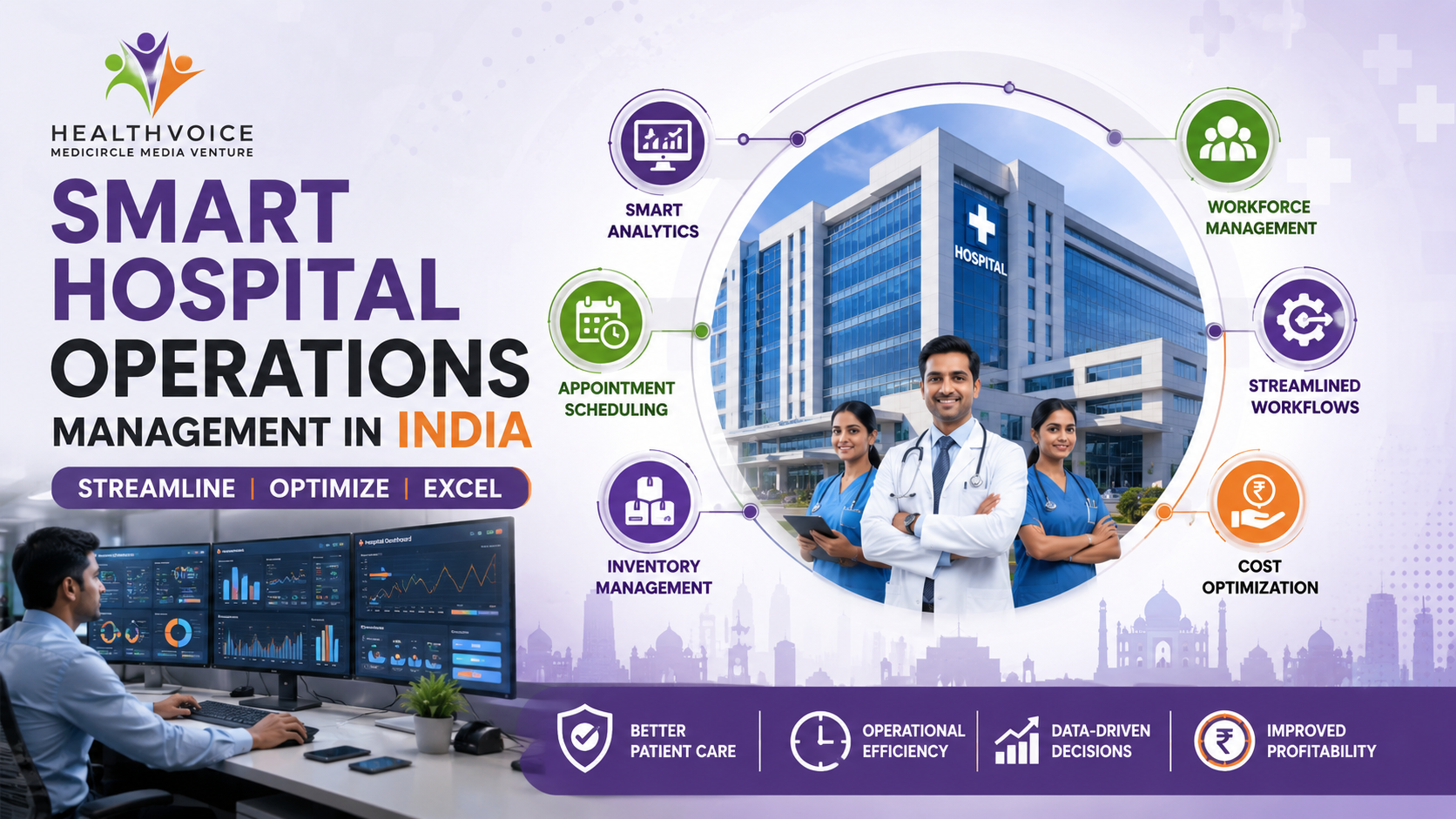
Introduction
Hospital operations management sits at the heart of every functioning healthcare institution. It is the discipline that ensures a hospital does not simply exist on paper as a collection of wards, equipment, and staff, but actually functions as a coordinated, efficient, and patient-centered system every single day. For a country like India, where the healthcare sector is growing at an unprecedented pace and the burden of disease remains substantial, the importance of sound hospital operations management cannot be overstated.
India is home to more than 70,000 hospitals and over a million hospital beds, according to data from the Ministry of Health and Family Welfare. Yet access to quality care, efficient service delivery, and consistent clinical outcomes continue to be major challenges across both public and private facilities. These challenges are not purely clinical in nature. They are deeply operational. When a hospital struggles with long patient waiting times, poor resource utilization, staff attrition, budget overruns, or compliance failures, the root cause is almost always a gap in operations management.
Understanding hospital operations management is therefore essential not just for administrators and managers, but also for doctors, nurses, healthcare leaders, and policymakers who seek to build and sustain high-quality institutions. Platforms like HealthVoice play a meaningful role in fostering this knowledge within the medical community, creating spaces where healthcare professionals can engage with leadership thinking, share operational insights, and strengthen institutional capabilities.
What Is Hospital Operations Management
Hospital operations management refers to the systematic planning, coordination, and control of all administrative, clinical support, and service delivery functions within a hospital. It encompasses everything that happens behind the scenes to ensure that patients receive timely, safe, and high-quality care.
At its core, hospital operations management addresses three fundamental questions: Are the right resources available at the right time? Are processes designed efficiently enough to deliver consistent outcomes? And are quality and compliance standards being consistently met? When all three questions can be answered affirmatively, the hospital operates well. When any one of them breaks down, the consequences can ripple across departments, directly affecting patient safety and care quality.
Operations management in hospitals is distinct from clinical management. While physicians and clinical staff focus on diagnosing and treating patients, operations managers focus on creating the environment and systems within which clinical care can happen effectively. The two functions are deeply interdependent. A brilliant surgeon operating in a hospital with poor supply chain management, inadequate staffing systems, or broken documentation processes will inevitably face barriers to delivering optimal care.
Core Domains of Hospital Operations Management
Capacity and Resource Management
One of the most critical functions of hospital operations management is managing capacity. In Indian hospitals, particularly in government-run facilities and large private hospital chains in Tier 1 and Tier 2 cities, bed occupancy rates, outpatient department (OPD) throughput, and emergency department load are constant operational challenges.
Effective capacity management involves forecasting patient demand, optimizing bed allocation, scheduling operating theatres efficiently, and ensuring that diagnostic services such as radiology and pathology can meet clinical requirements without creating bottlenecks. When capacity management fails, patients face excessive waiting times, clinicians face burnout, and hospitals face poor performance metrics.
Human Resources and Workforce Management
The workforce is the most important and most expensive resource in any hospital. Human resources management in hospitals goes far beyond recruitment and payroll. It encompasses workforce planning, training and competency development, scheduling, performance evaluation, grievance management, and retention strategies.
India faces a significant healthcare workforce shortage. The World Health Organization recommends a doctor-to-patient ratio of 1:1000, and while India has made progress in recent years, many rural and semi-urban areas still fall far short of this benchmark. Within hospitals, poor workforce management contributes to staff burnout, high attrition rates, and ultimately to compromised patient care. Strong operations management addresses this by creating structured HR systems that attract, develop, and retain skilled healthcare professionals.
Financial Management and Budgeting
Hospital financial management is a complex discipline that involves budgeting, cost analysis, revenue cycle management, procurement, and financial reporting. In India, hospitals operating under the Ayushman Bharat Pradhan Mantri Jan Arogya Yojana (AB-PMJAY) scheme or empanelled under state insurance schemes must also manage the additional complexity of package-based reimbursements, claim submissions, and audit compliance.
Effective financial operations management ensures that hospitals remain financially viable while continuing to invest in infrastructure, technology, and human capital. It also helps hospital leadership identify areas where costs can be reduced without compromising care quality, and where revenue opportunities may be underutilized.
Quality Assurance and Accreditation Compliance
Quality management is inseparable from hospital operations. In India, the National Accreditation Board for Hospitals and Healthcare Providers (NABH) sets the benchmark for hospital quality standards. Achieving and maintaining NABH accreditation requires hospitals to embed quality management systems across every operational domain, from infection control and medication management to patient rights and documentation protocols.
Operations managers play a central role in building and sustaining quality systems. They design standard operating procedures, conduct internal audits, monitor key performance indicators, investigate adverse events, and implement corrective actions. This ongoing quality management function is what separates high-performing hospitals from those that struggle with inconsistent outcomes.
Supply Chain and Procurement Management
Hospitals consume an enormous variety of supplies, from medications and surgical consumables to linen, food, and biomedical equipment. Supply chain management ensures that all these supplies are available when needed, procured at competitive prices, stored appropriately, and used without wastage.
In many Indian hospitals, supply chain inefficiencies represent a significant source of financial leakage. Overstocking, expiry of medications, informal procurement practices, and lack of vendor management systems all contribute to unnecessary costs. Operations managers who build robust supply chain frameworks can significantly improve both financial performance and clinical safety.
Information Systems and Digital Health Integration
The adoption of Hospital Management Information Systems (HMIS) and Electronic Health Records (EHR) has been accelerating across India, driven in part by the Ayushman Bharat Digital Mission (ABDM). Operations management in modern hospitals must now include the governance of digital systems, including data quality management, system integration, cybersecurity protocols, and staff training for technology adoption.
The ABDM framework envisions a unified digital health ecosystem where patient records are accessible across facilities through a unique Health ID. For hospitals, integrating into this ecosystem requires coordinated operational planning that touches IT, clinical departments, administration, and patient services simultaneously.
Hospital Operations Management Careers in India
The growth of India's healthcare sector has created significant demand for trained hospital operations management professionals. Major hospital chains such as Apollo Hospitals, Fortis Healthcare, Manipal Hospitals, and Narayana Health operate complex multi-specialty institutions that require dedicated management talent at every level.
Career pathways in hospital operations management typically include:
- Hospital Administrator or CEO: Senior leadership role responsible for overall hospital strategy, governance, and performance. Requires extensive experience and often a postgraduate qualification in hospital administration or healthcare management.
- Operations Manager: Mid-level role focused on the day-to-day coordination of hospital departments, process efficiency, and compliance monitoring.
- Quality Manager: Specialist role focused on accreditation compliance, clinical audit, infection control, and patient safety systems.
- Human Resources Manager: Responsible for workforce planning, recruitment, training, and employee relations within the hospital.
- Finance Manager or CFO: Oversees budgets, financial reporting, revenue cycle management, and cost optimization strategies.
- Health Information Manager: Manages patient data systems, EHR governance, data quality, and compliance with digital health regulations.
In India, the primary academic pathway into hospital administration is a postgraduate qualification such as a Master of Hospital Administration (MHA) or a Master of Business Administration with a specialization in Hospital and Healthcare Management. Leading institutions offering these programs include AIIMS New Delhi, Tata Institute of Social Sciences (TISS), Manipal Academy of Higher Education, and several state-level public health institutes.
Why Hospital Operations Management Matters for Patient Outcomes
The connection between operational excellence and patient outcomes is well established in healthcare research. A hospital that manages its operations well is one where:
Patients receive timely care because bed management and scheduling systems function efficiently. Medication errors are reduced because pharmacy management and dispensing protocols are standardized. Infection rates are controlled because housekeeping, sterilization, and infection control systems follow defined protocols. Staff are engaged and competent because HR management systems support their professional development and well-being.
In India, where a large proportion of patients pay out of pocket for hospital care, operational efficiency also has direct implications for affordability. When hospitals eliminate waste, reduce turnaround times, and improve resource utilization, the financial benefits can be passed on to patients or reinvested into care quality. This is particularly significant in the context of government schemes like AB-PMJAY, where hospitals must deliver care within fixed package rates while maintaining quality standards.
Emerging Trends in Hospital Operations Management in India
Several important trends are reshaping hospital operations management in the Indian context.
The adoption of Lean management principles, originally developed in manufacturing, has gained traction in Indian hospitals seeking to reduce waste and improve process efficiency. Facilities in cities like Hyderabad, Bengaluru, and Mumbai have successfully applied Lean methodologies to OPD workflows, emergency department management, and surgical scheduling, achieving measurable improvements in patient satisfaction and throughput.
Artificial intelligence and data analytics are beginning to influence hospital operations, with early adopters using predictive analytics for patient demand forecasting, workforce scheduling, and supply chain optimization. While widespread adoption remains limited to larger private hospital chains, the trajectory is clear.
Telemedicine and virtual care integration, accelerated significantly during the COVID-19 pandemic and governed by the Telemedicine Practice Guidelines issued by the Ministry of Health and Family Welfare in 2020, have introduced new operational dimensions that hospitals must now manage, including digital patient registration, remote consultation platforms, and integrated billing systems.
Conclusion
Hospital operations management is not a back-office function. It is a strategic discipline that determines whether a hospital can fulfill its fundamental purpose of delivering safe, effective, and compassionate care to every patient who walks through its doors. In India's rapidly evolving healthcare landscape, the demand for skilled operations management professionals will only continue to grow as hospitals scale, regulatory expectations tighten, and patient expectations rise.
For healthcare leaders, administrators, and aspiring professionals, building a deep understanding of hospital operations management is an investment that pays dividends across every aspect of institutional performance. Platforms dedicated to advancing professional knowledge within the medical community, such as HealthVoice, serve an important role in this ecosystem by creating spaces for meaningful dialogue, learning, and collaboration among healthcare leaders who are committed to building stronger institutions for the communities they serve.
Frequently Asked Questions
Q1: What is the primary role of hospital operations management?
Hospital operations management involves overseeing all administrative and support functions of a hospital to ensure efficient, safe, and high-quality patient care delivery. It includes managing human resources, finances, quality systems, supply chains, and information systems.
Q2: What qualifications are needed to work in hospital operations management in India?
Most roles require a postgraduate degree such as a Master of Hospital Administration (MHA) or an MBA in Hospital and Healthcare Management. Institutions such as AIIMS, TISS, and Manipal University offer recognized programs. Senior roles also require several years of practical experience.
Q3: How does hospital operations management impact patient care quality?
Effective operations management directly improves patient outcomes by ensuring timely access to care, reducing medication errors, maintaining infection control standards, and enabling well-trained and adequately staffed clinical teams. Operational efficiency and clinical quality are deeply interdependent.
Q4: What is the significance of NABH accreditation in hospital operations management?
NABH accreditation, awarded by the National Accreditation Board for Hospitals and Healthcare Providers, signifies that a hospital meets defined national standards across all operational and clinical domains. Achieving and maintaining NABH accreditation requires strong operations management systems and continuous quality improvement processes.
Q5: How is digital health transformation affecting hospital operations management in India?
The Ayushman Bharat Digital Mission (ABDM) is driving hospitals to adopt integrated digital health systems including Electronic Health Records and Health IDs. This requires operations managers to lead technology adoption, manage data governance, ensure system interoperability, and train staff for new digital workflows.
Resources
- Ministry of Health and Family Welfare, Government of India: Official source for national health policies, hospital statistics, and healthcare scheme guidelines including AB-PMJAY.
- National Accreditation Board for Hospitals and Healthcare Providers (NABH): Standards, accreditation guidelines, and quality improvement frameworks for Indian hospitals.
- Ayushman Bharat Digital Mission (ABDM): Government portal for digital health ecosystem, Health ID implementation, and HMIS integration guidance.
- World Health Organization (WHO) India Country Office: Research and reports on healthcare workforce, quality standards, and health systems strengthening.
- Indian Council of Medical Research (ICMR): Evidence-based health research, clinical guidelines, and Indian healthcare burden of disease data.
Interlinking Keywords:
hospital administration, healthcare management India, NABH accreditation, Ayushman Bharat, hospital quality management, health information management, healthcare workforce India, hospital financial management, digital health India, healthcare leadership
Last medically reviewed by:
HealthVoice Medical Editorial Team on August 18, 2026
Disclaimer:
This article is intended for informational and professional awareness purposes only. It does not constitute medical, legal, or financial advice. Readers are advised to consult qualified professionals and refer to official regulatory bodies for specific guidance related to hospital management practices, accreditation standards, and healthcare compliance in India.
 Team Healthvoice
#HospitalManagement #HealthcareOperations
