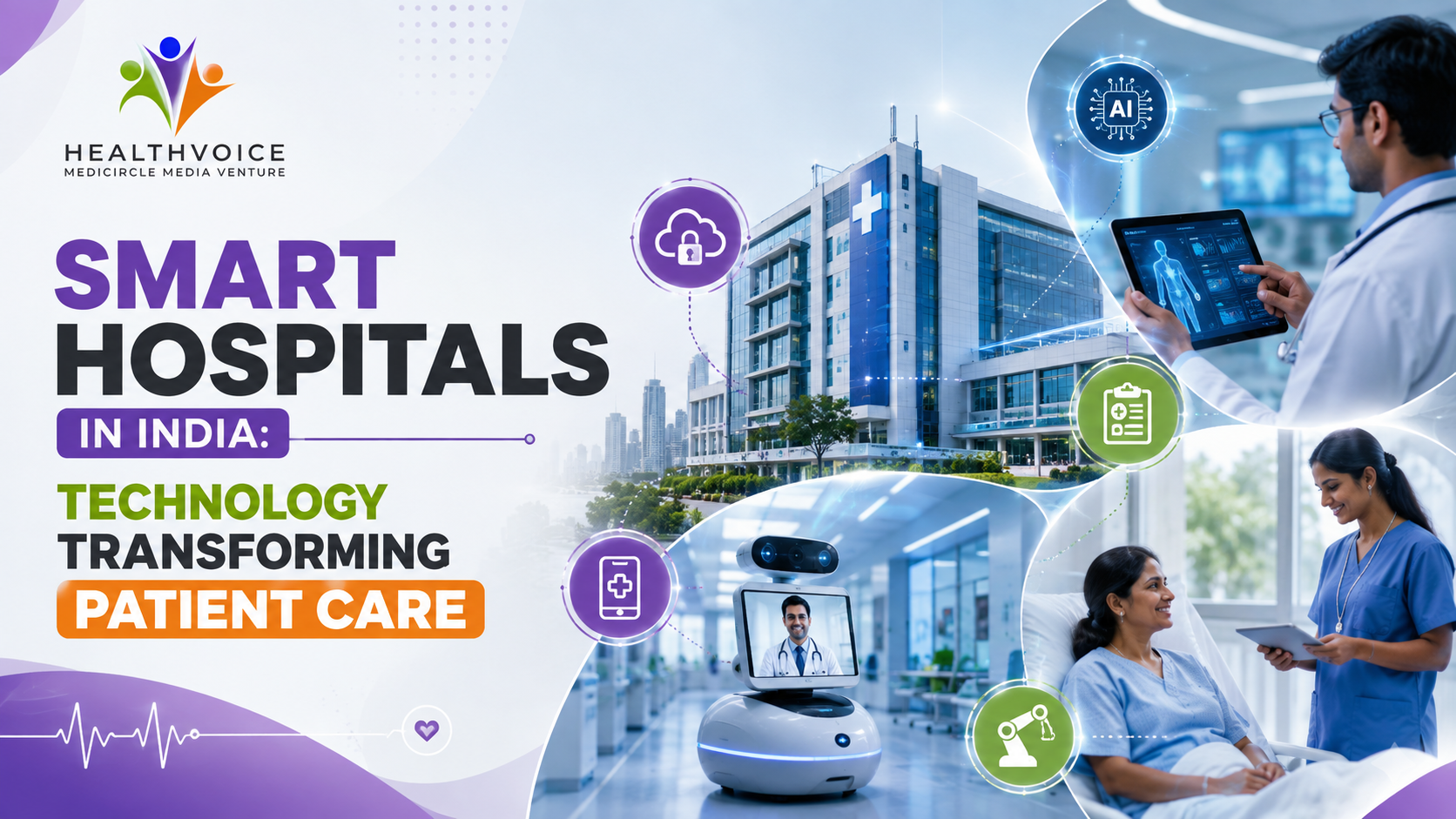
Smart Hospitals in India: How Technology Is Transforming Patient Care
Smart hospitals in India are transforming patient care through IoT, AI, and digital health integration, driven by ABDM, private investment, and growing clinical adoption nationwide.
Introduction
The Indian healthcare sector is undergoing one of the most significant transformations in its history, and at the center of this change is the concept of the smart hospital. Across the country, from metropolitan medical centers in Mumbai and Delhi to rapidly evolving healthcare hubs in Hyderabad and Pune, hospitals are no longer defined solely by the number of beds they offer or the specialists on their panel. They are increasingly defined by their digital intelligence, their ability to connect, monitor, predict, and respond in real time.
A smart hospital, in its most practical sense, is a healthcare facility that deploys interconnected digital technologies, particularly built on Internet of Things (IoT) frameworks, artificial intelligence, and advanced data systems, to optimize clinical processes, reduce errors, improve patient outcomes, and strengthen operational management. This transformation is not happening in isolation. It is being driven by national health policy shifts, rising patient expectations, a growing burden of chronic disease, and the urgent need to make quality care accessible to a larger segment of India's population.
For doctors, hospital administrators, and healthcare leaders, understanding what smart hospitals represent today and where they are headed is not merely a matter of professional interest. It is a strategic necessity.
Understanding What Makes a Hospital Truly Smart
The term "smart hospital" is sometimes used loosely, but there is a meaningful distinction between a hospital that has adopted some digital tools and one that is genuinely intelligent in its operations. A truly smart hospital integrates its clinical, administrative, and infrastructure systems into a unified digital ecosystem where data flows seamlessly between departments, devices, and decision-makers.
At its core, a smart hospital relies on several foundational elements:
- A robust electronic health record (EHR) system that captures and shares patient data in real time across departments
- IoT-enabled medical devices that monitor patients continuously and transmit data without manual intervention
- Artificial intelligence and machine learning tools that assist in diagnostics, predictive care, and resource planning
- Automated workflows that reduce the administrative burden on clinical staff
- Cybersecurity infrastructure that protects sensitive patient and institutional data
- Integrated command centers that allow hospital management to oversee all operations from a single digital interface
When these elements function together, the hospital is no longer reactive. It becomes predictive, personalized, and significantly more efficient. Errors that arise from manual data transfer, delayed diagnostics, or miscommunication between teams are substantially reduced. Patient outcomes improve not because clinicians become more skilled overnight, but because the systems supporting them become far more reliable and responsive.
The Current Landscape of Smart Hospitals in India
India's journey toward smart hospitals is still in progress, but the momentum is unmistakable. The Government of India has been a significant catalyst in this transformation. The Ayushman Bharat Digital Mission (ABDM), launched with the goal of creating a unified health identity for every citizen, has provided the foundational framework for digital healthcare. Under this mission, hospitals are being encouraged to adopt Health Management Information Systems (HMIS) and integrate with the national digital health ecosystem.
The National Health Policy, 2017, and subsequent policy documents have repeatedly emphasized the need for digital health infrastructure. NABH, the National Accreditation Board for Hospitals and Healthcare Providers, has also introduced standards that increasingly reflect the importance of digital processes in patient safety and quality of care.
In the private sector, leading hospital groups have been early movers. Apollo Hospitals has invested significantly in AI-powered diagnostics and telemedicine platforms. Fortis Healthcare has deployed smart ICU solutions that allow remote monitoring of critically ill patients. Manipal Hospitals and Narayana Health have integrated data analytics into their clinical decision-making processes. In the public sector, AIIMS New Delhi and several state government hospitals under various digital health initiatives are making steady progress toward connected care models.
Tier 1 cities continue to lead this transformation, but there is growing evidence that Tier 2 cities are no longer far behind. Hospitals in cities such as Coimbatore, Nagpur, Indore, and Bhubaneswar are investing in digital infrastructure, recognizing that smart technology is no longer a luxury but a competitive and clinical necessity.
Key Technologies Powering Smart Hospitals in India
IoT and Connected Medical Devices
The Internet of Things is arguably the most transformative technology in the smart hospital ecosystem. In a smart hospital, patient monitors, infusion pumps, ventilators, imaging equipment, and even hospital beds are connected to a central network. This connectivity ensures that clinical data is captured continuously, without the need for manual recording, and is instantly available to the care team regardless of their physical location within or outside the hospital.
Smart ICUs represent one of the most impactful applications of this technology. In a smart ICU, critically ill patients are placed at the center of a fully connected monitoring environment. Physicians and intensivists can access vital parameters, laboratory results, imaging reports, and medication records from a central command station or even remotely. This capability is especially significant in India, where there is a persistent shortage of trained intensivists. A smart ICU setup allows a smaller number of specialists to oversee a larger number of critically ill patients without compromising the quality of care.
Artificial Intelligence in Diagnostics and Clinical Decision Support
Artificial intelligence is finding deep application in Indian hospitals, particularly in radiology, pathology, and predictive analytics. AI-powered tools can analyze medical imaging with a speed and precision that supports radiologists in detecting conditions such as pneumonia, tuberculosis, diabetic retinopathy, and certain cancers at earlier stages. In a country where tuberculosis continues to be a major public health challenge and cancer is detected late in a significant proportion of cases, the clinical impact of these tools is substantial.
AI-driven clinical decision support systems are also being used to flag deteriorating patients before a crisis occurs. By analyzing trends in vital signs, laboratory values, and medication responses, these systems alert care teams to potential complications such as sepsis, allowing for earlier intervention and better outcomes.
Electronic Health Records and Health Data Interoperability
The shift from paper-based records to comprehensive electronic health records has been one of the most visible and impactful changes in Indian hospitals over the last decade. A well-implemented EHR system does far more than digitize paper. It creates a continuous, accessible, and accurate record of a patient's clinical history, treatment journey, and outcomes. In a smart hospital, EHRs are integrated with diagnostic systems, pharmacy management, billing, and even insurance processing, creating a seamless patient experience.
The ABDM framework is now pushing for interoperability, which means that a patient's health records created in one hospital can, with appropriate consent, be accessed by another facility. This development has profound implications for continuity of care, especially for patients managing chronic conditions who interact with multiple providers across different healthcare settings.
Automation and Smart Facility Management
Smart hospitals also apply automation to non-clinical functions. Automated pharmacy dispensing systems reduce medication errors. Intelligent scheduling systems optimize the use of operation theaters and consultation rooms. Smart building management systems monitor and regulate energy consumption, air quality, and infection control protocols, including real-time tracking of hand hygiene compliance and air purification in high-risk areas.
Challenges India Must Address on the Path to Smart Hospitals
The ambition for smart hospitals in India is clear, but the path is not without significant obstacles. Infrastructure disparity between urban and rural healthcare facilities remains the single largest challenge. While top-tier private hospitals in metropolitan cities have the capital and technical expertise to invest in smart technologies, district hospitals and community health centers in rural India continue to struggle with basic infrastructure.
Digital literacy and change management within healthcare institutions present another important challenge. Technology adoption requires not just investment in hardware and software but sustained training, support, and cultural change among clinical and administrative staff. Many healthcare professionals, particularly those trained in earlier decades, require structured programs to integrate new digital tools confidently into their practice.
Data privacy and cybersecurity are concerns that cannot be underestimated. As hospitals become more connected, they also become more vulnerable to cyberattacks and data breaches. India's Digital Personal Data Protection Act, 2023, places legal obligations on healthcare organizations to handle patient data with the highest levels of care, and hospitals must invest appropriately in cybersecurity infrastructure and governance.
The cost of smart hospital implementation also remains a barrier for mid-size and smaller private hospitals. While the cost of technology is declining, the initial capital investment required for comprehensive smart hospital systems, including server infrastructure, IoT devices, software licensing, integration services, and staff training, can be substantial.
The Role of Medical Professionals and Associations in the Smart Hospital Ecosystem
Doctors and medical associations have a unique and central role to play in India's smart hospital evolution. Technology, however sophisticated, is only as effective as the clinical professionals who use it and trust it. Physicians who understand the capabilities and limitations of AI tools, who engage with EHR systems actively, and who advocate for evidence-based technology adoption within their institutions become powerful drivers of positive change.
Medical associations have an equally important responsibility. By developing clinical guidelines for the use of AI in diagnostics, by engaging with policymakers on digital health standards, and by creating educational programs that help doctors navigate the evolving technology landscape, associations can ensure that smart hospital adoption is both safe and clinically sound.
Platforms such as HealthVoice, which are dedicated to amplifying the voices of doctors and medical associations, serve as essential spaces for these conversations. When healthcare professionals share their experiences with smart technologies, debate their merits, and collectively shape best practices, the entire ecosystem benefits. Professional credibility and community-driven knowledge sharing are the foundations on which responsible digital health adoption must be built.
The Future of Smart Hospitals in India
Looking ahead, the smart hospital of the future in India will be one where care extends beyond the hospital walls. Wearable health devices will continuously monitor patients with chronic conditions at home, transmitting data to their care teams in real time. Predictive analytics will allow hospitals to anticipate surges in patient demand and allocate resources accordingly. Robotic-assisted surgery will become more accessible as technology costs decline. And the integration of genomic data into clinical practice will enable truly personalized medicine.
The Government of India's push toward a digital health ecosystem, combined with growing private sector investment and a young, digitally native workforce entering healthcare, creates genuinely favorable conditions for this future. What is needed now is sustained commitment, equitable implementation across Tier 1 and Tier 2 cities, and a healthcare community that leads this transformation with both enthusiasm and thoughtful caution.
Conclusion
Smart hospitals represent more than a technological upgrade. They represent a fundamental rethinking of how healthcare is organized, delivered, and experienced in India. From connected ICUs that allow a single intensivist to monitor multiple critically ill patients simultaneously, to AI tools that help radiologists catch life-threatening conditions earlier, the benefits are tangible and significant. As India works toward a healthcare system that is accessible, affordable, and high in quality, the smart hospital is not a distant aspiration. It is an evolving reality, and one that demands the active engagement of every stakeholder in the healthcare ecosystem, especially the doctors and medical associations who stand at its center.
Frequently Asked Questions
Q1: What is a smart hospital and how is it different from a regular hospital?
A smart hospital uses interconnected digital technologies, including IoT-enabled devices, artificial intelligence, electronic health records, and automated workflows, to optimize clinical and administrative processes. Unlike a conventional hospital that relies on manual processes and siloed information systems, a smart hospital creates a unified digital environment where data flows in real time across all departments, enabling faster, safer, and more personalized patient care.
Q2: Which government initiatives in India are supporting the development of smart hospitals?
The Ayushman Bharat Digital Mission (ABDM) is the most comprehensive government initiative driving digital health in India. It supports the creation of a unified digital health identity for citizens and encourages hospitals to integrate with national digital health infrastructure. The National Health Policy, 2017, also emphasizes digital health as a strategic priority. NABH accreditation standards increasingly incorporate digital and quality benchmarks relevant to smart hospital operations.
Q3: What role does a Smart ICU play in improving patient outcomes?
A Smart ICU places the critically ill patient at the center of a fully connected digital monitoring system. It enables continuous, automated tracking of vital parameters, integrates data from multiple devices into a single platform, and allows intensivists to monitor patients remotely. In India, where the ratio of intensivists to ICU beds is historically low, Smart ICU technology allows specialists to cover more patients without reducing the quality of observation and intervention, directly contributing to better survival rates and shorter ICU stays.
Q4: What are the main challenges in implementing smart hospitals in smaller Indian cities?
The primary challenges include high initial technology investment costs, limited digital infrastructure in smaller facilities, shortage of trained healthcare IT professionals, and the need for sustained change management among clinical staff. Data privacy compliance under the Digital Personal Data Protection Act, 2023, and cybersecurity risks are also significant concerns. Government support through subsidized technology programs and public-private partnerships can help address these barriers in Tier 2 and Tier 3 cities.
Q5: How can doctors and medical associations contribute to the smart hospital movement in India?
Doctors can contribute by actively learning and engaging with digital tools in their clinical practice, providing feedback on the usability and accuracy of AI-assisted diagnostic systems, and advocating for evidence-based technology adoption within their institutions. Medical associations can develop guidelines for safe and ethical use of health technology, engage with policymakers on digital health standards, and create continuing medical education programs that help members stay current with the rapidly evolving technology landscape.
Resources
- Ayushman Bharat Digital Mission (ABDM): Official framework and policy documents on India's digital health ecosystem and hospital integration standards.
- National Accreditation Board for Hospitals and Healthcare Providers (NABH): Accreditation standards and quality benchmarks for Indian hospitals, including digital health compliance requirements.
- Ministry of Health and Family Welfare, Government of India: National Health Policy documents and digital health program updates relevant to hospital transformation.
- Indian Council of Medical Research (ICMR): Evidence-based research publications on healthcare technology adoption, patient safety, and clinical outcomes in Indian settings.
- World Health Organization (WHO), India Country Office: Reports and guidance on digital health strategy, smart health systems, and global benchmarks applicable to Indian healthcare.
Interlinking Keywords
smart hospital technology India, digital health infrastructure, IoT in healthcare, Smart ICU India, Ayushman Bharat Digital Mission, NABH accreditation standards, AI in diagnostics, electronic health records India, hospital management systems, future of healthcare India
Medical Disclaimer
This article is intended for informational and educational purposes only. It does not constitute medical advice, clinical guidance, or a substitute for professional medical consultation. Healthcare professionals and institutions should refer to accredited clinical guidelines, regulatory frameworks, and qualified health technology experts before implementing any digital health systems or technologies. HealthVoice does not endorse any specific technology vendor, product, or service mentioned in the context of this article.
Last medically reviewed by:
HealthVoice Medical Editorial Team on August 18, 2026
 Team Healthvoice
#SmartHospitals #DigitalHealthcare