Professional Success Redefined for Indian Doctors Today
Indian doctors are redefining professional success beyond income and status, embracing clinical purpose, physician well-being, community impact, and meaningful peer engagement as essential career values.

The Changing Meaning of Professional Success for Indian Doctors
Introduction
For generations, the definition of professional success for a doctor in India was relatively straightforward. A good income, a respected standing in the community, a thriving private practice or a senior hospital position, and the ability to provide for one's family were considered the clearest markers of having made it in medicine. Parents who invested years of sacrifice in their children's medical education, and doctors themselves who endured the demanding journey from MBBS to specialization, measured the return on that investment in tangible and socially visible terms.
That definition is now changing, and changing in ways that are both significant and long overdue.
Across India, a growing number of doctors, particularly those in the younger generation and mid-career phase, are beginning to ask deeper questions about what their professional lives actually mean. They are not rejecting ambition or financial security, but they are expanding the frame through which they measure success. The conversation around physician wellbeing, purpose-driven medicine, work-life balance, community contribution, and professional identity is gaining momentum in medical circles, medical associations, and healthcare communities across the country.
Understanding this shift is essential, not just for doctors navigating their own careers, but for medical institutions, healthcare leaders, and platforms that support the medical community. The story of how Indian doctors are redefining success is also the story of a healthcare system growing more conscious of its own sustainability.
The Traditional Framework and Why It Is Being Questioned
The traditional markers of success in Indian medicine were built on a foundation of scarcity, sacrifice, and social expectation. Medicine was, and in many ways still is, one of the most aspirationally pursued careers in India. The years of preparation for NEET, the competitive pressure of medical college admissions, the financial burden of medical education, and the long postgraduate training pathways created a culture where success was defined by what could be visibly achieved after all that effort.
Social recognition was central to this framework. A doctor was expected to command respect in family gatherings, to be the go-to advisor for health matters among relatives and neighbors, and to build a reputation that reflected not just clinical skill but social standing. Financial success was equally important, particularly for doctors from middle-class and lower-middle-class families who carried the economic expectations of parents who had made significant sacrifices.
However, this framework is now being challenged by several converging realities.
Physician burnout has emerged as a serious and widely acknowledged problem. Studies and surveys conducted among Indian doctors, particularly during and after the COVID-19 pandemic, revealed alarming levels of stress, emotional exhaustion, and moral distress within the medical community. Doctors who had spent years working toward the traditional markers of success found that those markers did not necessarily translate into satisfaction, fulfillment, or health.
A generational shift in values is also playing a significant role. Younger Indian doctors who entered the profession in the last decade have grown up in a more connected, globally aware, and psychologically literate environment. They are less willing to accept burnout as a badge of honor. They are more vocal about their mental health. They look at international models of physician wellbeing, humane work hours, and structured career development with admiration and expectation.
A New Definition Taking Shape
What is replacing the old framework is not a rejection of achievement but a broadening of what achievement can mean. The new definition of professional success for Indian doctors is multidimensional, and it includes several dimensions that were previously undervalued or entirely absent from the conversation.
Clinical excellence remains central, but it is now being understood in a more holistic way. Success is not just about how many patients a doctor sees in a day, but about the quality of care delivered, the depth of the doctor-patient relationship, and the accuracy and compassion with which complex cases are handled. For many doctors, being genuinely good at their craft, staying current with evidence-based medicine, and earning the trust of patients and colleagues is itself a profound form of success.
Purpose and meaning have entered the conversation in a meaningful way. A growing number of Indian doctors are drawn to work that connects them to something larger than individual clinical practice. This may take the form of contributing to public health programs, working in underserved rural communities, conducting research that advances medical knowledge, or teaching and mentoring the next generation of doctors. These forms of contribution are increasingly recognized as markers of a distinguished and successful medical career.
Professional visibility and voice are also becoming part of how doctors define success. In an era where healthcare communication matters enormously, doctors who are able to articulate their expertise, share their knowledge with the public, and contribute to important medical conversations are building a form of professional capital that goes beyond their immediate clinical environment. Platforms that support this kind of visibility are increasingly relevant to doctors who want to be more than quiet practitioners working behind closed doors.
Work-life balance and personal wellbeing have moved from being private concerns to being openly discussed professional values. The idea that a good doctor must be perpetually available, must sacrifice personal health for professional duty, and must accept exhaustion as a condition of the profession is being actively challenged. Doctors who maintain healthy boundaries, who invest in their physical and mental health, and who nurture personal relationships alongside their professional responsibilities are now seen as making wise, not weak, choices.
The Role of Medical Associations and Professional Communities
One of the most important enablers of this shift is the growing strength and engagement of medical associations and professional communities in India. Organizations that bring doctors together, facilitate peer learning, advocate for physician rights, and create spaces for professional dialogue are playing a critical role in reshaping what success looks like from the inside of the profession.
Medical associations that actively support their members through continuing medical education, mentorship programs, advocacy on working conditions, and platforms for recognition are helping doctors access a richer and more sustainable form of professional life. When a doctor is recognized by their peers for clinical leadership, public health contribution, or research work, that recognition carries a depth that external social validation alone cannot provide.
The digital transformation of medical communities is also accelerating this shift. Online platforms and healthcare community networks are creating opportunities for doctors to build professional presence, connect with specialists across geographies, engage with medical thought leadership, and participate in conversations that shape the future of Indian healthcare. For many doctors, particularly those in Tier 2 and Tier 3 cities who have historically felt isolated from the larger professional conversation, these platforms represent access to a wider world of professional engagement and growth.
HealthVoice, as a doctor-focused healthcare community platform, reflects this understanding. By providing doctors and medical associations with a credible, structured, and community-driven digital presence, it supports the kind of professional visibility, peer connection, and meaningful engagement that form the backbone of a modern and fulfilling medical career.
Challenges That Still Need to Be Addressed
The shift in how Indian doctors define success is real and meaningful, but it is happening against a backdrop of structural challenges that cannot be ignored.
The Indian healthcare system continues to operate under significant pressure. Doctor-to-population ratios remain below global recommended levels in many states. Workloads in public hospitals are often unsustainable. Private practice comes with its own pressures around patient volume, infrastructure costs, and competitive dynamics. For many doctors, the aspiration toward a more balanced and purpose-driven professional life remains difficult to achieve within the systems they work in.
There is also the matter of financial reality. Medical education in India, particularly in private medical colleges, involves substantial fees and often long loan repayment periods. The financial pressure on young doctors is real and cannot be dismissed. Any honest conversation about redefining success must acknowledge that financial stability is a legitimate and important professional goal, particularly for doctors who carry significant debt from their education.
What the new framework offers is not a replacement of financial security as a goal, but a more complete picture alongside it. Doctors are increasingly recognizing that financial success pursued at the cost of health, relationships, and meaning is a poor bargain. The goal is a career that provides financial sustainability alongside clinical fulfillment, professional respect, community contribution, and personal wellbeing.
What the Future Looks Like
The Indian medical profession is at an important inflection point. The doctors shaping their careers today are doing so in a healthcare landscape that is simultaneously more demanding and more open to change than any previous generation experienced.
Several positive trends support the evolution of this new success framework:
- Growing institutional awareness of physician burnout and mental health, with some hospitals and medical institutions beginning to implement support systems
- Increasing recognition of doctor wellbeing as a patient safety issue, since exhausted and demoralized physicians are less able to deliver high-quality care
- A stronger culture of peer support and open conversation within medical communities, particularly online
- Policy-level attention to improving working conditions, infrastructure, and career pathways in both public and private healthcare settings
- The emergence of healthcare community platforms that give doctors a credible voice, professional visibility, and meaningful connection beyond their immediate clinical environment
For individual doctors, the most important step is a conscious reflection on what success genuinely means to them, beyond what they were told it should mean. That reflection, honest and personal, is the beginning of a career built on sustainable fulfillment rather than external validation alone.
Conclusion
The changing meaning of professional success for Indian doctors is not a passing trend. It is a thoughtful, necessary, and long-overdue evolution in how one of India's most important professional communities understands itself and its purpose. The doctors who are asking deeper questions about their careers, their contributions, and their well-being are not stepping away from excellence. They are demanding a richer version of it.
As the healthcare landscape in India continues to evolve, the profession will be better served by doctors who are fulfilled, healthy, connected, and purposeful than by those who are simply high-earning or high-achieving by conventional measures. Supporting that evolution is a collective responsibility, shared by medical institutions, associations, healthcare platforms, and the profession itself.
Frequently Asked Questions
Q1: What does professional success mean for Indian doctors today?
Professional success for Indian doctors today goes well beyond income and social status. It increasingly includes clinical excellence, the depth of patient impact, work-life balance, continuous learning, community contribution, and personal well-being. Doctors are defining success as a combination of meaningful work, financial sustainability, peer recognition, and professional fulfillment.
Q2: Why are Indian doctors redefining their idea of success?
Several converging factors are driving this shift. Physician burnout, heightened after the COVID-19 pandemic, revealed the limits of a success model built entirely on volume and external achievement. Changing generational values, greater psychological awareness, and exposure to global conversations about physician well-being are encouraging doctors to seek deeper meaning and sustainable satisfaction in their careers.
Q3: How does work-life balance affect career satisfaction among Indian doctors?
Poor work-life balance is among the leading contributors to physician burnout and attrition in India. Doctors who maintain boundaries and invest in their own health report higher clinical performance, stronger patient relationships, and greater professional longevity. Work-life balance is no longer seen as a luxury but as a professional and ethical necessity.
Q4: What role does community impact play in a doctor's professional success?
A growing number of Indian doctors, particularly those working in rural areas, public health programs, and underserved communities, measure success by the difference they make beyond the walls of their clinic or hospital. Community contribution, health awareness work, and advocacy for equitable healthcare access are increasingly seen as essential dimensions of a distinguished medical career.
Q5: How can platforms like HealthVoice support Indian doctors in their professional growth?
HealthVoice provides doctors with a credible, structured digital platform to share their expertise, build professional visibility, connect with peers and associations, and participate in meaningful healthcare conversations. By amplifying the voice of doctors and medical associations, it supports a broader and more sustainable sense of professional success that extends beyond individual clinical practice.
Resources
- National Medical Commission (NMC): The regulatory body for medical education and practice in India, offering guidelines on professional standards and career development for Indian doctors.
- Indian Medical Association (IMA): The largest professional body representing Indian doctors, providing resources on physician advocacy, continuing education, and community engagement.
- World Health Organization, India Country Office: WHO India publications and reports on healthcare workforce wellbeing, physician burnout, and health system strengthening relevant to the Indian context.
- Indian Council of Medical Research (ICMR): India's apex body for biomedical research, offering evidence-based resources and publications that support clinical excellence and research engagement for medical professionals.
- Ministry of Health and Family Welfare, Government of India: Official government source for healthcare policy, physician workforce data, and national health programs including Ayushman Bharat and the Ayushman Bharat Digital Mission.
Interlinking Keywords
physician burnout India, doctor career satisfaction, medical professional wellbeing, work-life balance for doctors, Indian healthcare community, doctor professional growth, medical associations India, clinical excellence Indian doctors, purpose-driven medicine, healthcare digital platforms India, doctor mental health India, NMC guidelines doctors, continuing medical education India
Last reviewed by:
Dr. Manthan Tripathi, HealthVoice Editorial and Medical Advisory Team, November 26, 2026.
Disclaimer
The content published on HealthVoice is intended for informational and professional engagement purposes only. It does not constitute medical advice, clinical guidance, or a recommendation for any specific career decision. Doctors and healthcare professionals seeking personalized career guidance, mental health support, or clinical advisory input are encouraged to consult qualified professionals and their respective institutional or association resources. HealthVoice is committed to providing credible, ethical, and doctor-first content that respects the dignity and professionalism of the medical community.
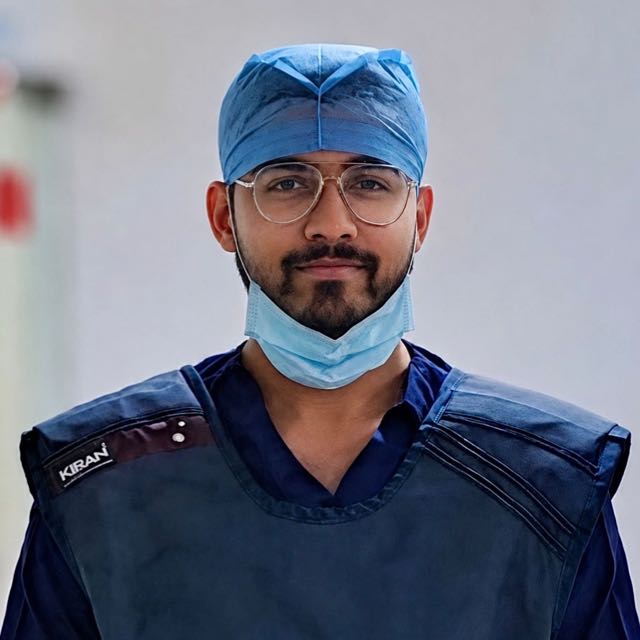 Dr. Manthan Tripathi
#IndianDoctors #MedicalCareers