Professional Communities and Isolated Doctors in India
Professional communities reduce isolation among Indian doctors by providing peer support, clinical knowledge sharing, mental health resources, CME access, and digital visibility essential for sustained professional growth.
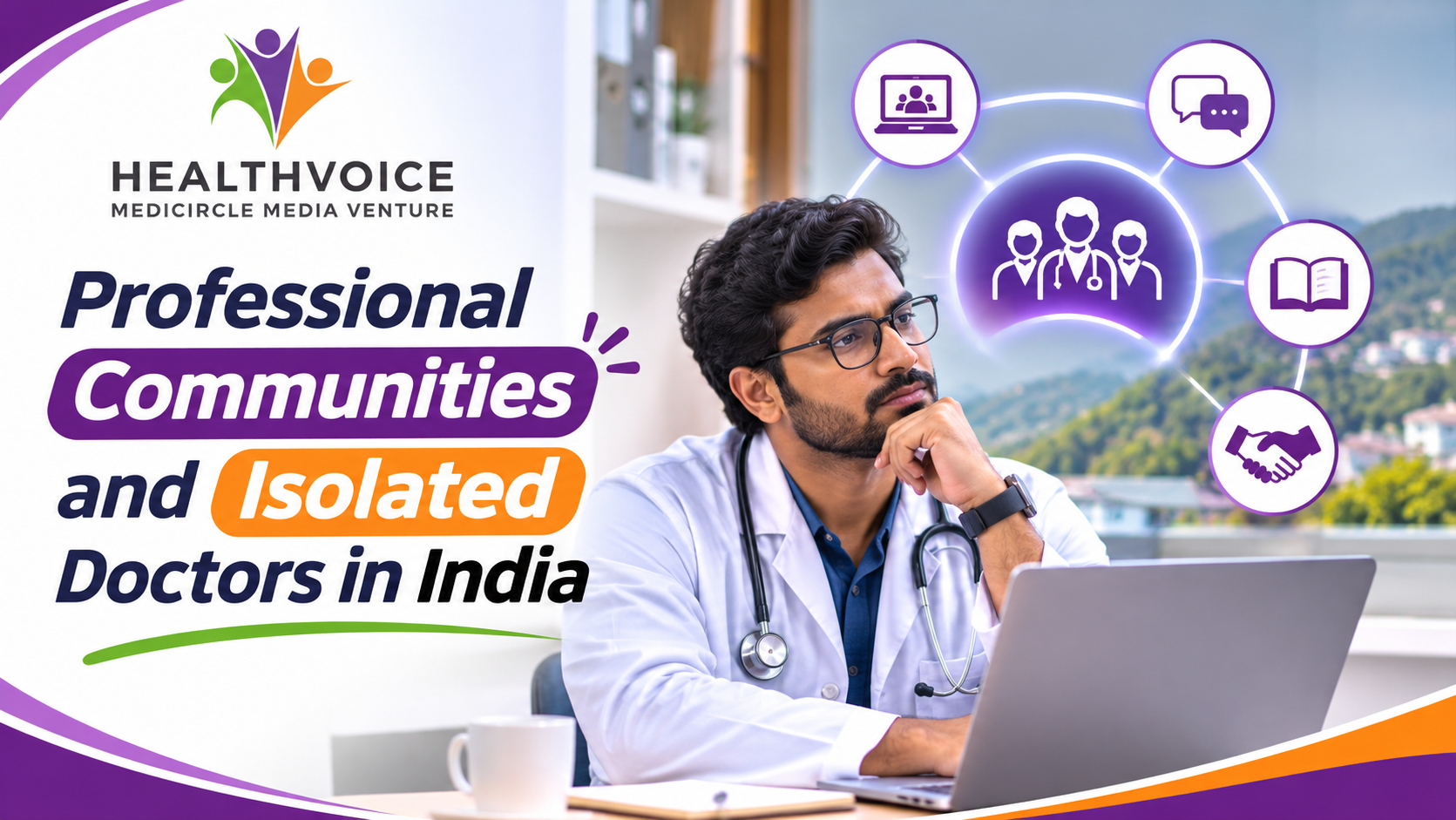
The Role of Professional Communities in Supporting Isolated Doctors
Introduction
Medicine is one of the most demanding professions in the world, and in India, that demand is amplified by an enormous patient load, infrastructure gaps, and a healthcare system still finding its structural footing. For thousands of doctors practicing across the country, especially those working in remote towns, rural districts, or as solo practitioners in urban settings, professional isolation is not an abstract concept. It is a lived reality that affects their clinical performance, personal well-being, and long-term career trajectory.
Professional isolation among doctors refers to the state of working without regular, meaningful engagement with peers, mentors, or professional communities. It is not simply about geography. A doctor in a bustling Tier 1 city can feel equally disconnected if the daily environment offers no structured professional exchange, no peer feedback, and no sense of belonging to a larger medical community. When doctors work in silos for extended periods, the consequences extend beyond personal discomfort. Clinical decision-making suffers, burnout deepens, and the broader quality of healthcare delivery is affected.
This is where professional communities play a transformative role. Medical associations, peer networks, digital platforms, and collaborative forums are not supplementary luxuries for a doctor's career. They are essential scaffolding that supports professional growth, emotional resilience, and clinical excellence. For doctors in India, finding the right professional community could be one of the most significant investments in their career and their health.
Understanding Professional Isolation Among Doctors in India
Before exploring solutions, it is important to understand the scale and shape of professional isolation in the Indian healthcare context. India has approximately one doctor for every 834 people, according to data from the National Medical Commission and Ministry of Health and Family Welfare. A significant proportion of these doctors operate in settings where specialist consultation, peer review, or even casual professional conversation is not easily available.
Doctors in rural and semi-urban areas often manage entire community health centres with minimal medical staff around them. Even in private practice, general practitioners frequently work without formal institutional affiliations after leaving their training hospitals. The transition from a residency programme, where peer interaction is constant, to solo practice can be jarring and disorienting.
Several factors contribute to professional isolation among Indian doctors:
- Geographical barriers, particularly in Tier 2 and Tier 3 cities and rural districts
- Heavy patient volumes that leave little time for professional development activities
- Weak institutional support after postgraduate training
- Limited access to continuing medical education in certain specialties
- Digital divides that prevent engagement with online professional networks
- The cultural tendency to treat emotional vulnerability as incompatible with professional identity
The consequences are well-documented globally and are increasingly being acknowledged within Indian medical circles. Studies published in journals indexed on PubMed consistently link professional isolation to higher rates of physician burnout, diagnostic errors, decreased job satisfaction, and mental health challenges including depression and anxiety.
How Professional Communities Address Isolation
Professional communities function as an organised ecosystem of support, knowledge exchange, and collective advocacy. For isolated doctors, joining a credible professional community can fundamentally change their experience of practice.
Peer Support and Shared Clinical Knowledge
One of the most immediate benefits of a professional community is access to peer knowledge. When a doctor in a remote setting encounters a clinically complex case, having access to a network of specialists and experienced practitioners can be lifesaving for the patient and deeply reassuring for the doctor. Medical associations in India, including the Indian Medical Association, various specialty boards, and state-level bodies, have historically served this role through conferences and workshops. However, the digital transformation of professional engagement has made this support continuous rather than episodic.
Online communities and platforms dedicated to medical professionals now allow real-time case discussions, clinical query resolution, and peer-to-peer knowledge sharing that was previously impossible without physical proximity. For doctors in isolated settings, this kind of instant professional access replaces the corridor conversations and informal consultations that hospital-based doctors take for granted.
Mental Health and Emotional Resilience
The mental health of doctors has emerged as one of the most urgent concerns in Indian healthcare discourse. Research from institutions including AIIMS and various state medical councils indicates that physician burnout, compassion fatigue, and work-related stress are significantly more prevalent than reported. Social stigma around mental health, combined with the professional culture of stoicism among doctors, means that many practitioners suffer in silence.
Professional communities that explicitly create spaces for emotional support, peer counselling, and open conversation about mental well-being are breaking this silence in meaningful ways. When doctors feel that they belong to a community that recognises their humanity alongside their clinical role, the threshold for seeking support lowers considerably. Group discussions about work-life balance, mentorship from senior practitioners who have navigated similar challenges, and institutional acknowledgment of burnout as a systemic issue rather than a personal failure are all features of well-designed professional communities.
Continuing Medical Education and Professional Development
Medicine is a discipline that requires lifelong learning. New research, updated treatment protocols, emerging drug interactions, and evolving diagnostic technologies make continuing medical education not a preference but a necessity. Professional communities serve as the primary vehicle for structured CME delivery in India.
Medical associations, specialty academies, and healthcare platforms regularly organise webinars, workshops, certification programmes, and conferences. For an isolated doctor who may not have an institutional framework pushing them toward regular education, community membership provides both access and motivation. The National Medical Commission has also moved toward formalising CME requirements, making community-based learning channels increasingly relevant for every registered practitioner.
Professional Visibility and Career Growth
For doctors in solo or semi-structured practice, professional visibility is often overlooked but critically important. Without institutional affiliation, many skilled practitioners remain unknown beyond their immediate patient base. Professional communities offer a platform for doctors to share clinical insights, publish case perspectives, contribute to medical discourse, and build a reputation among peers.
Platforms like HealthVoice are specifically designed to amplify the voices of doctors and medical associations in India. By giving practitioners a structured digital presence, the platform enables them to contribute to national healthcare conversations, engage with medical associations, and demonstrate their expertise to a wider professional audience. This kind of visibility is not about self-promotion. It is about earning respect within a professional ecosystem and contributing to the collective advancement of medical knowledge.
The Role of Medical Associations in Combating Isolation
Medical associations in India carry a historic mandate to represent and support doctors. The Indian Medical Association, with its national reach and state chapter network, remains the largest organised body of medical professionals in the country. Specialty associations such as the Association of Physicians of India, the Indian Academy of Pediatrics, and the Cardiological Society of India provide focused communities for practitioners within their disciplines.
These associations reduce isolation through several mechanisms. They create structured forums for peer interaction, deliver CME opportunities, advocate for doctors' rights at policy levels, and provide grievance redressal mechanisms. Association membership also creates a sense of professional identity that extends beyond individual practice.
However, there are real gaps. Many associations have been slow to digitalise their engagement strategies, limiting their reach among younger doctors and those in geographically dispersed areas. The associations that are modernising their platforms, building active member communication channels, and integrating digital tools for community engagement are emerging as the most effective support structures for isolated doctors in contemporary India.
Digital Communities and Modern Networking for Doctors
The rise of digital professional communities has democratised access to peer support and knowledge networks. In a country as geographically vast and socioeconomically varied as India, digital platforms remove barriers that once made professional isolation almost inevitable for doctors outside metropolitan centres.
Dedicated medical community platforms, healthcare-focused social networks, and professional forums hosted by associations and media organisations have created new possibilities for connection. These digital spaces allow doctors to:
- Participate in clinical case discussions with specialists across the country
- Engage with medical news, policy updates, and research without institutional access
- Attend virtual CME events without the cost and time burden of physical travel
- Build professional relationships with colleagues they would never encounter in their immediate setting
- Contribute their own expertise to national healthcare conversations
For platforms operating in this space, the responsibility is significant. Trust, credibility, and the safety of clinical information are non-negotiable. Communities that maintain high editorial standards, verify professional credentials, and ensure that discussions remain grounded in evidence-based practice are the ones that earn and retain the trust of the medical community.
Building a Culture of Community in Indian Healthcare
The long-term solution to professional isolation among doctors is not just structural. It is cultural. Medical education in India, while rigorous, does not consistently model the importance of community, collaboration, and peer support as professional values. Training environments that reward individual performance and discourage vulnerability can inadvertently prepare doctors for isolation rather than connection.
Building a culture where reaching out to peers is seen as a sign of professional strength rather than weakness, where association membership is viewed as a responsibility rather than an obligation, and where digital engagement with professional communities is integrated into daily practice, will require sustained effort across educational institutions, associations, regulatory bodies, and digital platforms.
The National Medical Commission, state medical councils, hospital networks, and organisations like HealthVoice all have a role in shaping this culture. When the broader healthcare ecosystem recognises that a connected, supported, and professionally engaged doctor delivers better care than an isolated, overburdened one, investment in professional communities becomes an investment in public health itself.
Conclusion
Professional isolation among doctors in India is a serious challenge with consequences that ripple beyond individual practitioners into the broader quality of healthcare delivery. Medical associations, peer networks, CME platforms, and digital communities are not peripheral features of a doctor's professional life. They are essential infrastructure for clinical excellence, mental well-being, and career sustainability.
Doctors who invest in building and maintaining meaningful professional connections are better equipped to manage clinical complexity, navigate career challenges, and contribute to the advancement of their field. As India continues to strengthen its healthcare system, ensuring that every doctor, regardless of location or practice setting, has access to a credible and supportive professional community must be a priority. Platforms dedicated to this mission are not just digital services. They are a commitment to the well-being of the people who serve at the frontlines of Indian healthcare.
Frequently Asked Questions
Q1: What is professional isolation in the context of doctors?
Professional isolation for doctors refers to the state of practicing medicine without regular access to peer interaction, mentorship, or institutional support. It is not limited to rural or remote settings and can affect doctors in urban environments who lack structured professional engagement or community membership.
Q2: How do professional communities help doctors in rural India?
Professional communities, especially digital ones, give rural doctors access to specialist consultations, clinical knowledge networks, CME programmes, and peer support that physical distance would otherwise make inaccessible. These communities reduce the clinical and emotional burden of practicing in resource-limited settings.
Q3: Which medical associations in India support isolated doctors?
The Indian Medical Association, specialty associations like the Association of Physicians of India and the Indian Academy of Pediatrics, as well as state-level medical councils, offer support through member engagement, CME delivery, and professional advocacy. Digital platforms focused on the medical community supplement these associations with continuous engagement tools.
Q4: Can digital platforms replace physical medical conferences for professional networking?
Digital platforms cannot fully replace the depth of connection that in-person conferences offer, but they provide continuous, accessible, and cost-effective engagement that physical events cannot match in frequency. The most effective approach combines both formats to maintain a consistent professional community experience.
Q5: How does HealthVoice support professional communities and isolated doctors?
HealthVoice is a dedicated platform for doctors, medical associations, and healthcare communities in India. It provides structured digital visibility, peer engagement tools, and a credible space for medical discourse, helping isolated doctors build a professional presence and stay connected with the larger healthcare ecosystem.
Resources
- Indian Medical Association (IMA): The national representative body of doctors in India, providing community support, CME programmes, and advocacy resources for medical professionals.
- National Medical Commission (NMC): The regulatory authority for medical education and practice in India, with guidelines on continuing medical education and professional conduct.
- Indian Council of Medical Research (ICMR): The apex body for biomedical research in India, publishing evidence-based guidelines and health data relevant to clinical practitioners.
- World Health Organization India Country Office: Provides global and India-specific data on healthcare workforce challenges, physician well-being, and health system strengthening.
- PubMed (National Library of Medicine): An internationally recognised database of peer-reviewed medical research, including studies on physician burnout, professional isolation, and healthcare workforce resilience.
Interlinking Keywords
doctor professional isolation India, medical associations for doctors, physician burnout India, continuing medical education India, doctor peer networks, digital health communities India, NMC guidelines doctors, doctor mental health India, HealthVoice medical platform, medical community engagement
Last reviewed by:
Dr. Manthan Tripathi, HealthVoice Editorial and Medical Advisory Team, November 24, 2026.
Disclaimer
This article is intended for informational and professional awareness purposes only. It does not constitute medical advice, clinical guidance, or a substitute for personalised professional consultation. Views expressed are based on publicly available information and general healthcare knowledge. Doctors and healthcare professionals should refer to the National Medical Commission, relevant specialty associations, and institutional guidelines for decisions related to their practice, well-being programmes, and professional development activities. HealthVoice does not endorse any specific association, programme, or digital platform beyond its own stated editorial mission.
 Dr. Manthan Tripathi
#ProfessionalCommunities #DoctorsNetworking