How Hospitals Can Build Better Career Pathways for Physicians
Indian hospitals must build transparent, structured career pathways for physicians to improve retention, reduce burnout, support professional growth, and ultimately deliver better patient care outcomes.
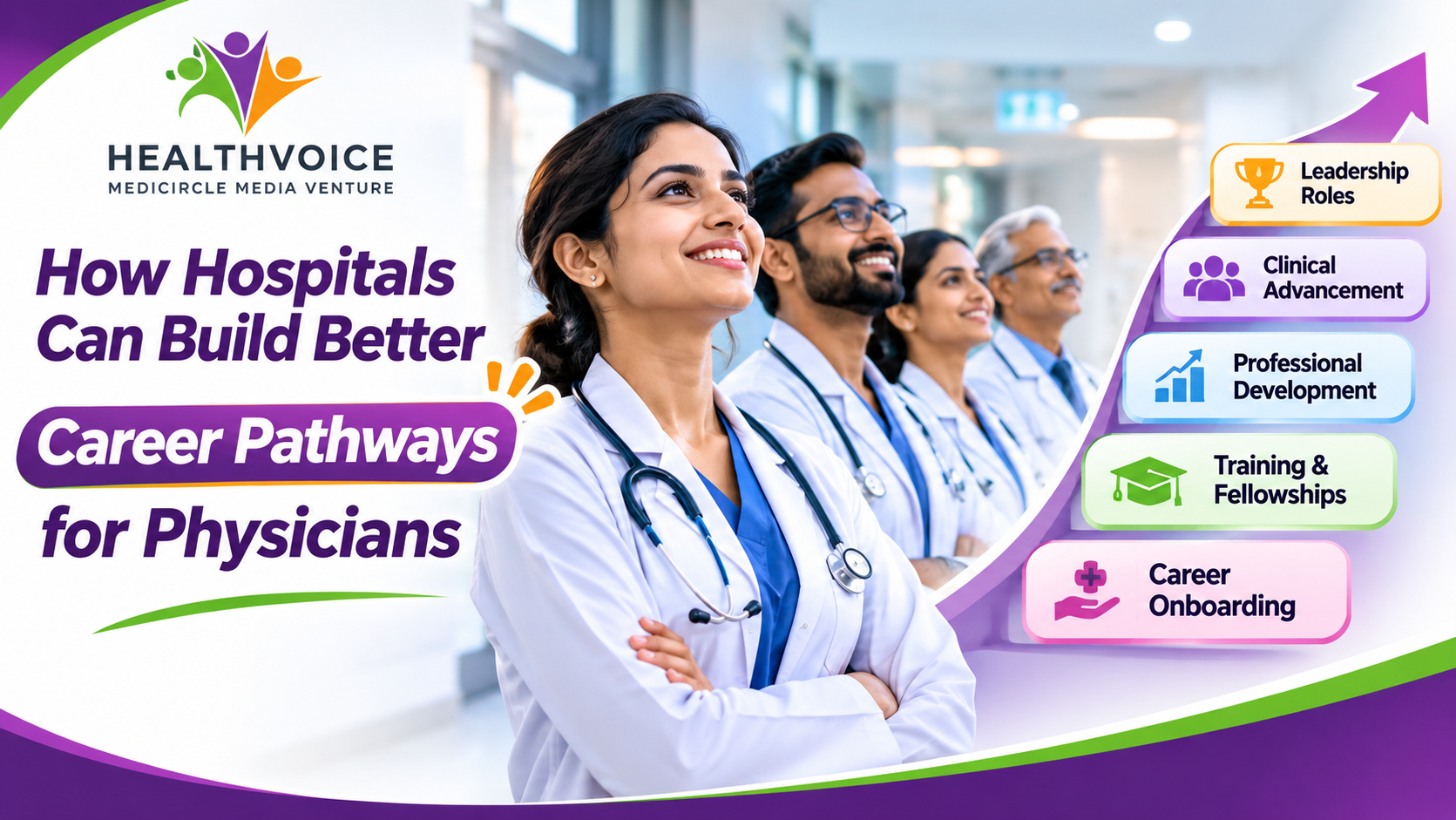
How Hospitals Can Create Better Career Pathways for Physicians
Introduction
The physician workforce in India is under growing pressure. Hospitals across the country face a persistent challenge that rarely makes it into policy discussions but directly affects patient care, institutional performance, and the well-being of doctors: the absence of clear, structured career pathways for physicians.
Many doctors in India enter hospital employment with significant aspirations but encounter a system that offers little beyond clinical duty assignments and occasional pay revisions. There is no structured roadmap for professional growth, no defined framework for leadership advancement, and no formal recognition of a physician's evolving expertise. Over time, this creates frustration, disengagement, and attrition, all of which ultimately harm the hospitals that invested in recruiting these professionals.
Building better career pathways for physicians is not simply a human resources concern. It is a strategic healthcare imperative. Hospitals that invest in the professional future of their doctors build stronger clinical teams, deliver better patient outcomes, and earn greater institutional credibility. For a country managing a critical doctor-to-patient ratio and an expanding burden of chronic disease, this issue deserves serious and urgent attention.
Understanding the Current State of Physician Career Development in Indian Hospitals
The majority of hospitals in India, including several well-known private healthcare chains, do not have a formally documented physician career development framework. Junior doctors and even senior consultants often operate under informal arrangements where growth is determined by seniority in years rather than competency, clinical impact, leadership contribution, or academic achievement.
This informal system creates several significant problems. Doctors who demonstrate exceptional skill, research productivity, or leadership potential are often passed over simply because a formal process for recognizing and rewarding those qualities does not exist. Meanwhile, hospitals lose talented physicians to international opportunities, competing institutions, or private practice precisely because there is no compelling reason to stay.
The National Medical Commission has increasingly emphasized standards for continuing medical education and professional development, yet hospital administration systems have been slow to integrate these standards into internal career frameworks. The gap between regulatory expectation and institutional practice remains wide.
In Tier 1 cities such as Mumbai, Delhi, Bengaluru, and Chennai, competition for experienced specialists is intense. Hospitals are beginning to recognize that salary alone is insufficient to attract and retain the best physicians. Career structure has become a differentiating factor. In Tier 2 cities, the challenge is different but equally urgent: hospitals often struggle to retain doctors who migrate toward metro opportunities because smaller institutions lack any formal growth framework at all.
Why Structured Career Pathways Matter for Physicians and Hospitals
A structured career pathway does far more than provide clarity on promotions. It communicates institutional respect for the physician as a professional, not merely as a service provider. When a hospital defines clear milestones, role progressions, and competency expectations, it signals to doctors that their long-term professional journey matters to the organization.
From the physician's perspective, the absence of a career framework contributes significantly to burnout. When doctors cannot see a future within their current institution, the daily workload feels purposeless beyond immediate patient care. Research from healthcare workforce studies consistently identifies lack of professional growth as one of the top three drivers of physician dissatisfaction globally, and Indian context studies reflect this pattern as well.
From the hospital's perspective, unplanned attrition is enormously expensive. Recruiting a replacement specialist involves high costs in terms of time, resources, and disruption to clinical continuity. Retaining a skilled physician through a thoughtful career framework is far more cost-effective and operationally beneficial.
Beyond retention, structured career development improves clinical quality. Physicians who are actively engaged in their professional growth, through academic contributions, research, subspecialty training, or leadership roles, tend to bring higher levels of expertise and motivation to patient care.
Key Elements of an Effective Physician Career Pathway Framework
Building a physician career pathway is not about creating rigid corporate hierarchies. It is about offering physicians meaningful choices, clear milestones, and institutional support at each stage of their professional journey. Hospitals that have done this successfully tend to organize their frameworks around a few core elements.
Defined Role Tiers and Progression Criteria
A hospital must clearly define the professional tiers within its physician workforce. These typically include junior consultant or registrar roles, senior consultant positions, lead or head of department designations, and medical leadership or advisory roles. Each tier must be associated with transparent criteria for progression, covering clinical performance, patient outcomes, years of experience, academic contributions, mentorship activity, and participation in hospital development initiatives.
Ambiguity in promotion criteria is one of the most common sources of physician dissatisfaction. When doctors do not understand what is expected of them to advance, they often assume the system is arbitrary or politically driven, which erodes trust in the institution.
Continuing Medical Education and Subspecialty Development Support
Hospitals must actively facilitate participation in continuing medical education programs recognized by the National Medical Commission and professional bodies such as the Indian Medical Association, relevant specialty associations, and international organizations. This means providing paid time off for conference attendance, funding for CME credits, and access to online learning platforms.
Additionally, hospitals should identify physicians with interest in subspecialty development early in their careers and create structured pathways for fellowship training, collaborative arrangements with academic medical centers, or in-house subspecialty mentorship programs.
Research and Academic Integration
A meaningful career pathway for physicians in India must include an academic dimension, particularly for hospitals affiliated with medical colleges or seeking NABH accreditation at higher levels. Encouraging doctors to contribute to clinical research, publish case reports or original studies, and present at national conferences strengthens both physician engagement and institutional reputation.
This requires hospitals to create a research-enabling environment. That means establishing an institutional review committee, dedicating protected research time, facilitating collaboration with Indian Council of Medical Research-funded initiatives, and recognizing research output formally in performance evaluations.
Leadership Development and Administrative Opportunities
Not every physician aspires to remain in a purely clinical role throughout their career. Many doctors have strong potential in medical administration, healthcare quality, policy advisory roles, or clinical governance. Hospitals must create visible and accessible pathways into these areas.
This includes identifying physicians early who demonstrate leadership capability, offering them structured exposure to hospital management functions, mentoring them through experienced medical directors, and eventually transitioning them into formal leadership positions. Medical leadership development programs, some now offered by Indian institutions and international bodies, should be part of the hospital's investment in its senior physician cohort.
Formal Mentorship Programs
A structured mentorship program within a hospital connects junior doctors with experienced senior physicians who can guide clinical decision-making, career planning, and professional development over time. Mentorship is a proven tool for improving physician retention and satisfaction. It also strengthens institutional knowledge transfer, ensuring that the expertise accumulated by senior physicians is passed on to the next generation rather than lost when those doctors retire or leave.
Challenges Hospitals Face in Implementing Career Frameworks
Building and sustaining a physician career pathway framework is not without challenges, and hospital leadership must approach implementation with realistic expectations.
One of the most common barriers is administrative inertia. Many hospitals have operated for decades without a formal physician HR structure, and changing that requires genuine commitment from medical directors, hospital CEOs, and board leadership. It cannot be delegated entirely to a human resources department that may lack the clinical understanding required to design meaningful frameworks.
Another challenge is the variation in physician expectations. Doctors trained at premier institutions such as AIIMS, PGI Chandigarh, or CMC Vellore often arrive with higher professional expectations than a hospital system unprepared to meet them. Bridging this gap requires hospitals to genuinely invest in infrastructure, not just documentation.
Resource constraints in smaller hospitals and those in Tier 2 and Tier 3 cities present a practical barrier. These hospitals may genuinely lack the financial capacity to fund CME, research time, or leadership programs. For such institutions, collaborative models such as shared training partnerships with larger hospitals, telemedicine-based learning, or government-facilitated professional development schemes under Ayushman Bharat or the National Health Policy offer potential solutions.
How HealthVoice Supports Physician Professional Visibility and Growth
Physician career development does not happen only within hospital walls. The broader medical community plays a significant role in shaping professional identity, recognition, and opportunity. Platforms such as HealthVoice serve an important function in this ecosystem by giving doctors a credible digital space to share their expertise, highlight their achievements, engage with peers, and build professional visibility.
When hospitals align their internal career development efforts with opportunities for external professional recognition, they create a more complete and compelling value proposition for their physicians. A doctor who is growing internally and also gaining recognition within the wider medical community is far more likely to remain engaged, motivated, and loyal to the institution that supports both dimensions of their professional journey.
Conclusion
The Indian healthcare system is at a critical juncture. With a growing patient population, an expanding scope of non-communicable diseases, and increasing expectations for quality care, hospitals cannot afford to treat physician career development as an afterthought. The quality of patient care delivered by any institution is inseparable from the professional engagement and long-term satisfaction of the doctors within it.
Building structured career pathways for physicians requires commitment, investment, and a genuine shift in how hospital leadership thinks about its medical workforce. It means moving beyond informal arrangements, creating transparent frameworks for growth, and treating physicians as professionals whose long-term development is central to the institution's mission. Hospitals that make this shift will find themselves better equipped to attract talent, reduce attrition, strengthen clinical quality, and build lasting reputations as institutions where doctors genuinely want to work and grow.
Frequently Asked Questions
Q1: Why do hospitals in India struggle to retain experienced physicians?
Many hospitals in India do not have structured career development frameworks, transparent promotion criteria, or formal recognition systems for physician contributions. Doctors who do not see a clear professional future within their institution often seek opportunities elsewhere, either at competing hospitals, in private practice, or abroad. Salary alone is increasingly insufficient to retain skilled specialists, particularly in competitive metro markets.
Q2: What is a physician career pathway and why does it matter?
A physician career pathway is a formally defined framework that outlines the professional tiers, advancement criteria, development opportunities, and leadership pathways available to doctors within a hospital. It matters because it provides physicians with clarity, purpose, and institutional support for their long-term professional growth, which directly improves satisfaction, reduces burnout, and strengthens retention.
Q3: How can smaller hospitals in Tier 2 cities create career frameworks with limited resources?
Smaller hospitals can begin by clearly documenting role tiers and advancement criteria, which requires no financial investment. They can explore collaborative CME arrangements with larger institutions, utilize NMC-recognized online learning programs, and apply for support under government health workforce development initiatives. Mentorship programs can be structured internally using existing senior physicians at minimal cost.
Q4: What role does continuing medical education play in physician career development?
Continuing medical education keeps physicians current with clinical advances, strengthens their competency, and builds professional credibility. Hospitals that actively support CME participation, including through funded attendance at conferences and access to recognized learning platforms, signal a genuine investment in their physicians' expertise. The National Medical Commission has established CME requirements that hospitals should integrate into their formal career frameworks.
Q5: How does physician career development connect to patient care quality?
Physicians who are professionally engaged, continuously learning, and growing within their institution bring higher levels of motivation, expertise, and clinical focus to patient care. Structured career development reduces burnout, which is a known contributor to medical errors and declining patient satisfaction. Institutions that invest in their doctors ultimately deliver better, safer, and more consistent care to their patients.
Resources
- National Medical Commission (NMC): Official regulatory body for medical education and physician standards in India, offering guidelines on CME and professional development.
- Indian Council of Medical Research (ICMR): Apex body for biomedical research in India, providing frameworks and funding for clinical research that hospitals can integrate into physician career development programs.
- National Accreditation Board for Hospitals and Healthcare Providers (NABH): Sets quality and accreditation standards for Indian hospitals, including criteria relevant to medical staff development and credentialing.
- World Health Organization (WHO) India Office: Publishes reports and frameworks on health workforce planning, physician well-being, and sustainable healthcare system development applicable to the Indian context.
- Ministry of Health and Family Welfare, Government of India: Issues national health policies, workforce guidelines, and program frameworks, including those under Ayushman Bharat, that influence hospital-level physician development strategies.
Interlinking Keywords
physician career development India, doctor retention hospital, medical leadership roles, continuing medical education NMC, hospital workforce planning, physician burnout prevention, NABH accreditation standards, healthcare HR policy India, doctor professional growth, medical mentorship programs
Last reviewed by:
Dr. Manthan Tripathi, HealthVoice Editorial and Medical Advisory Team, November 25, 2026.
Disclaimer
The information provided in this article is intended for general informational and professional awareness purposes only. It does not constitute legal, regulatory, or human resources advice. Hospital administrators and healthcare institutions should consult qualified healthcare HR professionals, legal advisors, and relevant regulatory bodies before implementing any changes to physician employment or career development frameworks. HealthVoice does not endorse any specific institution, program, or service mentioned in this article.
 Dr. Manthan Tripathi
#PhysicianCareerDevelopment #HealthcareLeadership