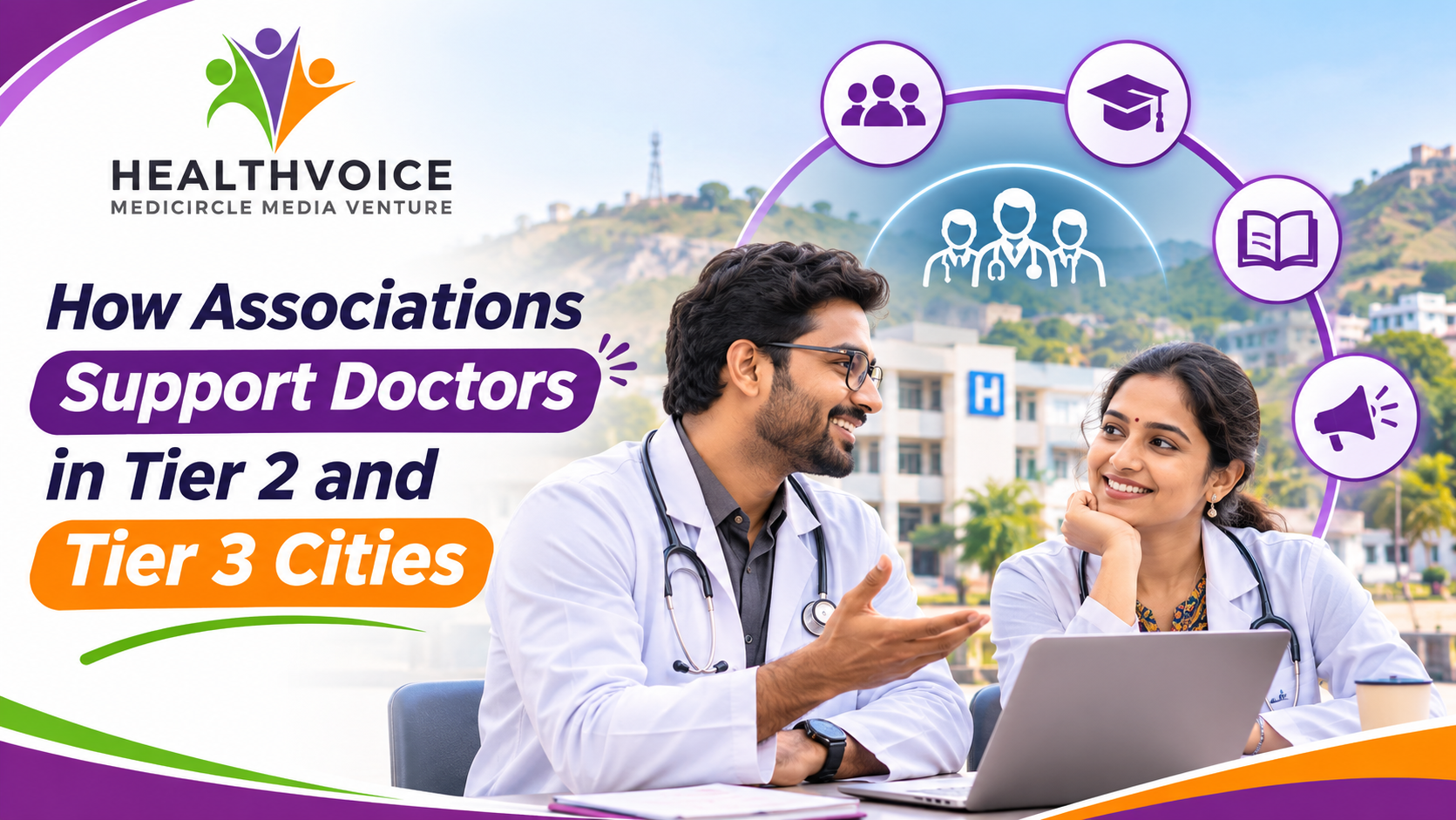
How Associations Support Doctors in Tier 2 and Tier 3 Cities
Medical associations can bridge the professional gap for doctors in Tier 2 and Tier 3 cities through CME, advocacy, digital visibility, peer networks, and technology support across India.
How Associations Can Support Doctors in Tier 2 and Tier 3 Cities
Introduction
India's healthcare system is vast, diverse, and deeply unequal. While metro cities like Mumbai, Delhi, Bengaluru, and Chennai are home to world-class hospitals, specialist networks, and cutting-edge medical infrastructure, doctors practicing in Tier 2 and Tier 3 cities often work in conditions that are significantly more challenging. These doctors carry a disproportionate share of India's healthcare burden, yet they receive far less institutional support, professional recognition, and access to resources than their counterparts in larger urban centers.
According to data from the National Medical Commission and various healthcare policy reports, nearly 70 percent of India's population still depends on healthcare services available outside the top metropolitan cities. Cities like Nashik, Coimbatore, Bhopal, Varanasi, Ludhiana, Rajkot, and hundreds of similar urban and semi-urban centers are home to lakhs of patients who rely on local doctors for their primary, secondary, and even some tertiary care needs.
The doctors serving these communities are skilled, committed, and highly capable. However, they often face professional isolation, limited access to continuing medical education, inadequate infrastructure, and minimal representation in national healthcare policy discussions. This is precisely where medical associations have an extraordinary opportunity, and arguably a responsibility, to step in and make a meaningful difference.
HealthVoice, as a platform dedicated to amplifying the voice of doctors and medical communities across India, recognizes the critical importance of this conversation. Supporting doctors in smaller cities is not just an internal association concern. It is a broader public health priority that shapes the quality, equity, and reach of healthcare delivery across the country.
Understanding the Professional Landscape for Doctors in Smaller Cities
Before exploring how associations can help, it is important to understand the specific professional environment that doctors in Tier 2 and Tier 3 cities navigate on a daily basis.
Doctors in these cities often run independent clinics or small nursing homes with limited staff, minimal administrative support, and constrained financial resources. Many of them function as the first and last point of care for patients who cannot afford to travel to larger cities. They handle everything from routine consultations and emergency management to complex chronic disease care, often without access to specialists for timely referrals or second opinions.
Professional isolation is one of the most significant challenges these doctors face. Without a strong local peer network, they may find it difficult to stay updated on emerging clinical guidelines, new treatment protocols, or evolving best practices. This is not a reflection of their capability or dedication. It is a structural gap in how professional support systems have been designed in India.
Additionally, doctors in smaller cities frequently face challenges related to regulatory compliance, medicolegal concerns, and patient rights awareness without adequate institutional guidance. They may also struggle to build digital visibility and professional credibility in an era where online reputation increasingly influences patient trust.
Key Areas Where Medical Associations Can Make a Difference
Medical associations at the national, state, and local levels are uniquely positioned to bridge the gap between metro-centric professional resources and the needs of doctors practicing in smaller cities. The following are the most impactful areas where associations can focus their efforts.
Continuing Medical Education and Skill Development
Continuing Medical Education (CME) programs are essential for every practicing doctor. However, attending national conferences or advanced training workshops is often impractical for doctors in Tier 2 and Tier 3 cities due to travel costs, clinic commitments, and time constraints.
Associations can address this by:
- Organizing regional CME workshops and certification programs in Tier 2 and Tier 3 cities rather than exclusively in metro centers
- Partnering with medical colleges, state health departments, and pharmaceutical companies to fund and facilitate skill development programs in smaller cities
- Developing high-quality online CME content, webinars, and digital learning modules accessible through association membership portals
- Offering CME credits through hybrid models that allow doctors to participate remotely without leaving their practice
The Indian Medical Association (IMA) and many specialty associations already conduct regional activities, but there is significant room to increase the frequency, quality, and relevance of these programs for smaller city doctors.
Advocacy and Policy Representation
Doctors practicing in smaller cities often feel their concerns are invisible to policymakers, healthcare regulators, and state health departments. Associations have both the platform and the credibility to advocate on their behalf.
This includes advocating for improved infrastructure support, better government hospital facilities, clearer medicolegal frameworks, timely payment under government health schemes like Ayushman Bharat and state-level health insurance programs, and fair resolution of doctor-patient disputes. Doctors in Tier 2 and Tier 3 cities are disproportionately affected by delayed payments from government insurance schemes and by the absence of clear institutional backing when they face patient complaints or legal challenges.
Associations that actively represent these doctors in discussions with the National Medical Commission, the Ministry of Health and Family Welfare, and state government bodies send a powerful message: that every doctor in India, regardless of where they practice, deserves institutional support and professional protection.
Building Peer Networks and Community Connection
One of the most underestimated benefits of association membership is the sense of professional community it creates. For doctors in smaller cities who may not have colleagues nearby with whom they can discuss difficult cases or share clinical insights, a well-organized association network can fill that void.
Associations can build structured peer networks by:
- Creating online discussion forums and WhatsApp or app-based community groups organized by specialty and region
- Facilitating virtual case discussions and second-opinion networks for complex clinical cases
- Organizing regional meetups, fellowship events, and local chapter activities that bring doctors within a city or district together
- Recognizing and celebrating the achievements of doctors in smaller cities through awards, feature articles, and social media visibility
HealthVoice is built on exactly this philosophy: giving every doctor, wherever they practice, a platform to share their voice, their expertise, and their professional identity.
Digital Visibility and Professional Profiling
In today's healthcare environment, a doctor's digital presence matters more than ever. Patients increasingly search online before choosing a doctor. Hospitals, pharmaceutical companies, and healthcare brands look for credible professionals to collaborate with. Medical journals and media platforms seek expert opinions. Doctors in Tier 2 and Tier 3 cities are often absent from this digital professional ecosystem, not because they lack expertise, but because they lack the tools and platforms to establish their online presence.
Associations can support this by:
- Creating verified digital profiles for member doctors through association websites and partner platforms
- Helping doctors publish case insights, clinical observations, and opinion pieces on association-linked healthcare publications
- Running social media campaigns that highlight the work and contributions of doctors in smaller cities
- Partnering with platforms like HealthVoice to give these doctors a credible, doctor-first digital space
This kind of visibility does not just benefit individual doctors. It builds the broader perception that high-quality medical care exists across India, not only in its largest cities.
Mental Health and Wellness Support
Doctor burnout is a growing crisis in India, and doctors in smaller cities are particularly vulnerable. They work long hours, manage high patient volumes, face financial pressures, and often lack access to the collegial support systems that metro-based doctors enjoy.
Associations have a responsibility to address the mental health and professional wellness of their members. This can include:
- Organizing peer support groups and wellness sessions specifically designed for doctors
- Providing access to confidential counseling services through the association membership
- Creating open conversations about burnout, work-life balance, and professional stress within the medical community
- Including wellness topics in CME programs and association events
The medical community in India is increasingly recognizing that a doctor who is mentally well and professionally supported will ultimately deliver better patient care.
Technology Adoption and Digital Health Literacy
India's Ayushman Bharat Digital Mission (ABDM) is transforming how healthcare is documented, delivered, and accessed. The National Health Stack, Health ID system, telemedicine guidelines, and electronic health records are becoming integral to modern medical practice. However, awareness and adoption of these systems remain uneven across smaller cities.
Associations are well-placed to run awareness and training programs on ABDM registration, telemedicine best practices under the Telemedicine Practice Guidelines issued by the Board of Governors under NMC, and the use of digital health tools in everyday clinical practice. Helping doctors in Tier 2 and Tier 3 cities integrate technology into their practice is not just about modernization. It is about ensuring they remain competitive, compliant, and connected.
The Role of Local Association Chapters
National associations have enormous influence, but the actual impact on doctors in smaller cities is most effectively delivered through strong local chapters. A well-functioning local chapter of an association acts as the immediate, trusted interface between the national body and the individual doctor.
Local chapters can organize city-level CME events, mediate local doctor-patient disputes, represent members before district health authorities, and create a sense of professional belonging that national programs alone cannot provide. Associations that invest in strengthening their local chapter networks, with dedicated leadership, funding support, and digital tools, will find their impact on doctors in smaller cities to be far more meaningful and sustainable.
How HealthVoice Supports This Vision
HealthVoice is designed to be a natural digital partner for medical associations and the doctors they represent. As a platform that bridges doctors, associations, and healthcare stakeholders through meaningful communication and professional visibility, HealthVoice offers associations a credible space to amplify their activities, share their advocacy work, and showcase the achievements of their members across all city types.
For doctors in Tier 2 and Tier 3 cities, HealthVoice offers a channel to build professional credibility, share clinical insights, stay informed about healthcare developments, and connect with a broader medical community. The platform's doctor-first philosophy ensures that every voice, from a specialist in Mumbai to a general practitioner in a small district town, is treated with equal professional respect.
Conclusion
India's healthcare ecosystem cannot achieve true equity unless the doctors who serve its smaller cities are adequately supported, recognized, and empowered. Medical associations hold a unique position of trust and influence in the medical community, and that position comes with the responsibility to ensure that no doctor feels professionally isolated, underrepresented, or undervalued simply because of where they practice.
From CME programs and policy advocacy to digital visibility and peer networks, the pathways for associations to support doctors in Tier 2 and Tier 3 cities are clear, practical, and achievable. What is needed now is deliberate intent, consistent action, and the right platforms to make it happen. The future of Indian healthcare depends not just on the hospitals being built in its metro cities, but on the strength and support given to the doctors quietly holding communities together across the rest of the country.
Frequently Asked Questions
Q1: How can medical associations support doctors in Tier 2 and Tier 3 cities?
Medical associations can support these doctors through regional CME programs, telemedicine guidance, digital visibility platforms, advocacy with state health authorities, and mental health and wellness support networks tailored to their unique challenges.
Q2: What challenges do doctors in Tier 2 and Tier 3 cities face in India?
Doctors in these cities commonly face professional isolation, limited access to continuing education, inadequate infrastructure, delayed payments under government health schemes, and minimal representation in national healthcare policy discussions.
Q3: Why is association membership important for doctors in smaller Indian cities?
Association membership gives doctors access to CME credits, peer networking opportunities, legal and ethical guidance, advocacy support, and digital platforms that enhance their professional visibility and long-term career development.
Q4: How does digital engagement help associations reach doctors in smaller cities?
Digital platforms allow associations to deliver webinars, online CME sessions, newsletters, and community forums to doctors who cannot travel regularly to metro cities for conferences or training programs.
Q5: What role do medical associations play in healthcare policy for Tier 2 and Tier 3 cities?
Medical associations advocate with state governments, the NMC, and health ministries to address infrastructure gaps, improve doctor-patient ratios, and ensure that smaller cities receive equitable attention in national healthcare policy frameworks.
Resources
- National Medical Commission (NMC): Official regulatory body for medical education and practice standards in India
- Indian Medical Association (IMA): National body representing doctors across India with chapters in Tier 2 and Tier 3 cities
- Ayushman Bharat Digital Mission (ABDM): Government initiative building India's national digital health infrastructure
- Ministry of Health and Family Welfare (MoHFW): Central government ministry governing healthcare policy and implementation in India
- World Health Organization India: WHO country office resources on health workforce development and equitable healthcare access
Interlinking Keywords
medical associations India, doctor support Tier 2 cities, CME programs for doctors, Ayushman Bharat Digital Mission, telemedicine guidelines India, doctor professional development, HealthVoice doctor community, NMC regulations India, healthcare policy advocacy India, rural urban healthcare gap India
Last reviewed by:
Dr. Manthan Tripathi, HealthVoice Editorial and Medical Advisory Team, November 24, 2026.
Disclaimer
The information presented in this article is intended for general professional awareness and informational purposes only. It does not constitute medical, legal, or regulatory advice. Readers are encouraged to consult relevant medical bodies, regulatory authorities, or qualified professionals for guidance specific to their practice or situation. HealthVoice is committed to providing accurate, credible, and responsible healthcare content for the medical community.
 Dr. Manthan Tripathi
#MedicalAssociations #DoctorsCommunity