Specialty Associations and Clinical Conversations in India
Specialty associations drive clinical conversations in India by developing guidelines, translating global evidence, and fostering structured knowledge exchange among doctors across specialties and geographies.
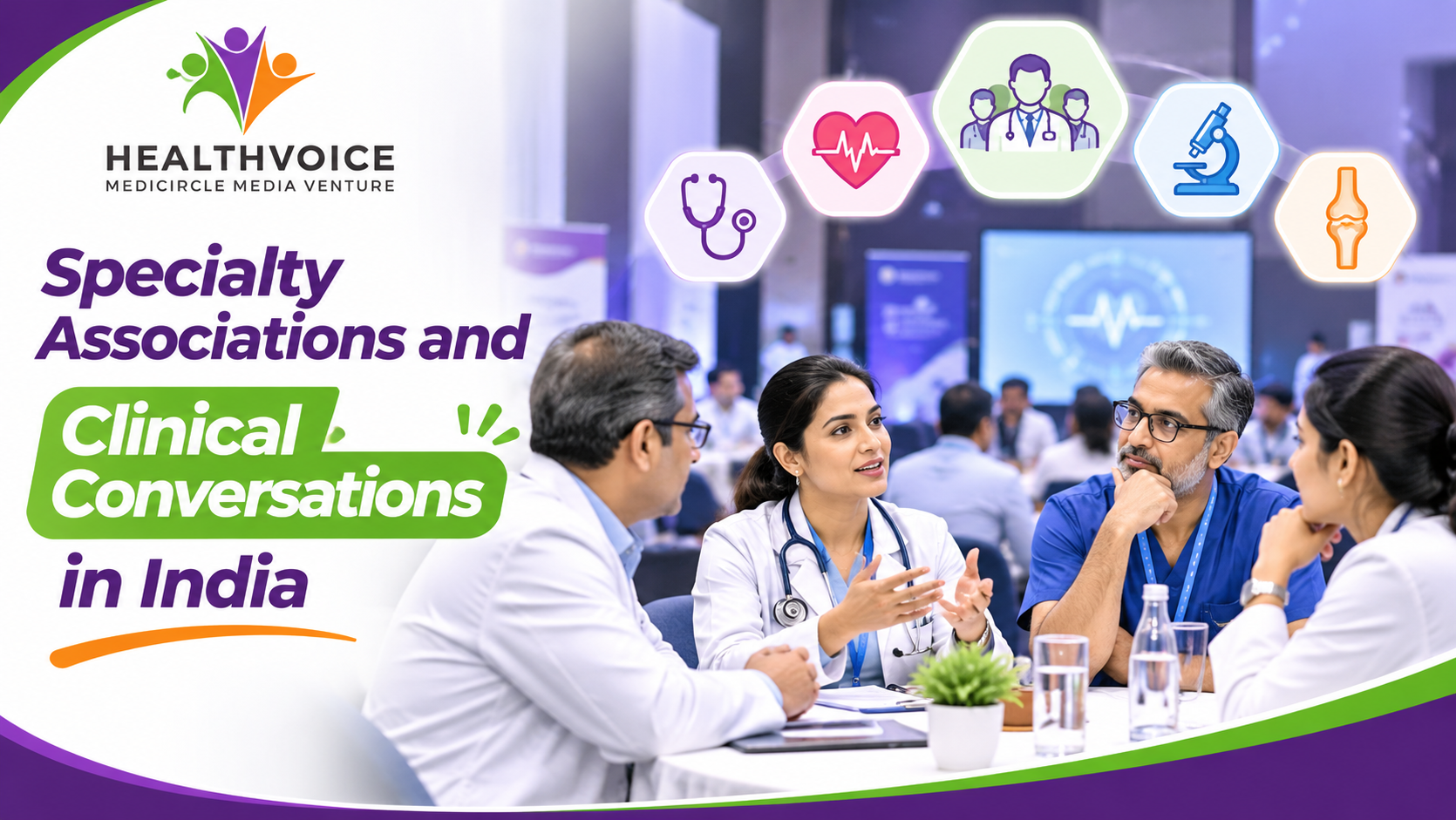
The Role of Specialty Associations in Shaping Clinical Conversations in India
Introduction
Clinical medicine does not advance in isolation. Behind every treatment guideline, every consensus statement, and every shift in standard care practice, there is a collective voice that has debated, reviewed, and refined the evidence before it reaches the bedside. In India, that collective voice belongs in large part to specialty medical associations.
From cardiology to endocrinology, from nephrology to oncology, specialty associations have long served as the professional backbone of India's clinical community. They are the institutions where doctors gather not just to network but to deliberate. They are the platforms through which research is translated into practice, and through which individual clinical experiences are transformed into shared professional knowledge.
As India's healthcare ecosystem grows more complex, the question is no longer whether specialty associations matter. The question is how deeply they are shaping clinical conversations, and whether the medical community is fully leveraging their potential to influence better patient outcomes across the country.
What Specialty Associations Actually Do in the Clinical Space
It is easy to think of medical associations primarily as event organizers or membership bodies. The reality is considerably more substantive. Specialty associations function as living knowledge ecosystems where clinical intelligence is constantly created, challenged, and updated.
Their most visible contribution is the development of clinical practice guidelines. Organizations such as the Cardiological Society of India, the Research Society for the Study of Diabetes in India, the Indian Society of Nephrology, and dozens of others regularly publish guidelines tailored to Indian patient populations, disease burden patterns, and healthcare infrastructure realities. These documents are not mere adaptations of international protocols. They incorporate data collected from Indian hospitals, factor in local drug availability, and account for the socioeconomic realities that shape patient behavior in this country.
Beyond guidelines, specialty associations facilitate what can be described as organized clinical dialogue. Through their annual conferences, regional conclaves, continuing medical education programs, and journal publications, they create structured opportunities for doctors to share what they are observing in their practice, compare outcomes, and debate the evidence. This kind of ongoing dialogue is essential to ensuring that clinical medicine in India does not stagnate or rely excessively on protocols developed for populations with different disease profiles and risk factors.
How Associations Influence Evidence-Based Practice
One of the most consequential functions of specialty associations is their role in bridging the gap between research and routine practice. In India, this gap has historically been significant. Landmark clinical trials may be published in international journals, but their implications do not automatically translate into changed behavior at district hospitals, tier-two city clinics, or rural health centers.
Specialty associations serve as the institutional translators of this research. When new evidence emerges around, for example, the management of type-2 diabetes in South Asian populations, it is bodies like the Research Society for the Study of Diabetes in India that interpret its relevance for Indian clinicians, adapt recommendations to local context, and disseminate that updated guidance through their member networks.
This process is not passive. Senior clinicians within these associations actively debate the applicability of global findings to Indian patients. They ask hard questions about whether a drug studied primarily in Western populations will perform similarly in a country where dietary patterns, comorbidity burden, and genetic profiles differ substantially. The answers to those questions, reached through deliberation within association committees and published through their platforms, directly shape how thousands of Indian doctors treat their patients.
Associations also contribute to pharmacovigilance conversations, raise alerts about emerging drug interactions observed in Indian clinical settings, and issue position statements on evolving treatment controversies. These activities collectively represent a form of distributed clinical intelligence that no single institution, hospital, or regulatory body could generate on its own.
The Role of Associations in Medical Education and Professional Development
Clinical conversations do not only happen at the moment of patient care. They happen continuously through the education and professional development of doctors. Specialty associations play a central role in shaping this dimension of the clinical environment.
Continuing medical education programs organized by specialty bodies ensure that practicing clinicians remain current with evolving standards. In a country as large and diverse as India, where doctors may be practicing in environments with limited access to international journals or academic hospitals, association-run CME programs often represent the most accessible route to updated clinical knowledge.
Several key contributions of associations in this space include:
- Organizing annual national conferences that bring together researchers, clinicians, and policymakers under one roof to deliberate on current priorities.
- Certifying subspecialty training programs and fellowship pathways that build advanced clinical expertise within defined specialty domains.
- Supporting young doctors through mentorship initiatives and research grants that encourage the development of India-specific clinical evidence.
- Publishing peer-reviewed journals and clinical bulletins that keep members informed of both global and domestic developments in their specialty.
For doctors in tier-two and tier-three cities who may not have regular access to academic medical centers, these association-driven educational resources represent a vital connection to the larger clinical community. They ensure that geography does not become a barrier to professional currency.
Associations as Forums for Difficult Clinical Conversations
Some of the most important clinical conversations in medicine are also the most contentious. Debates around rational drug use, the overuse of diagnostic tests, end-of-life care protocols, antimicrobial resistance management, and the appropriateness of certain surgical interventions are not easily resolved through individual clinical judgment. They require collective deliberation, transparent debate, and institutional accountability.
Specialty associations provide the organized space where these difficult conversations can happen with the credibility and structure they require. When the Indian Association of Palliative Care issues guidance on end-of-life care, it does so after extensive consultation with clinicians, ethicists, patient advocates, and legal experts. When surgical associations deliberate on appropriate indications for a contested procedure, the resulting consensus carries a weight of collective expert opinion that individual voices cannot replicate.
This deliberative function is especially important in an era where social media and unregulated digital health content can spread clinical misinformation rapidly. Specialty associations serve as institutional counterweights to this trend. Their consensus statements, guidelines, and position papers represent the organized, evidence-reviewed perspective of the medical profession, and they are essential to maintaining the integrity of clinical discourse in a noisy information environment.
The India-Specific Dimension of Association-Led Clinical Dialogue
India presents a healthcare challenge of extraordinary complexity. The country carries a disproportionately high burden of both communicable and non-communicable diseases. Cardiovascular disease, diabetes, tuberculosis, hypertension, cancer, and chronic kidney disease together affect hundreds of millions of Indians. The clinical challenges these conditions create are shaped by factors that are specific to this country, including nutritional patterns, genetic predispositions, healthcare access disparities, and the coexistence of modern and traditional medicine practices.
Specialty associations that are rooted in India's medical community are uniquely positioned to address this complexity. They collect data from Indian hospitals, conduct epidemiological studies in Indian populations, and develop clinical guidance that reflects the realities of practicing medicine in this country. The work of bodies like the Indian Council of Medical Research, while operating at a governmental level, often intersects with and is informed by the research and clinical observation generated through specialty association networks.
There is also an important regional dimension to consider. India's disease burden is not uniform across states. The prevalence of certain conditions varies significantly between, for example, the eastern and southern states, between urban and rural populations, and between high-income and low-income communities. Specialty associations that have strong regional chapter networks can capture this granularity and ensure that clinical conversations reflect the diversity of Indian healthcare realities rather than defaulting to generalized urban experiences.
Digital Transformation and the Evolving Role of Associations
The way clinical conversations happen is changing. Digital platforms, social media, and healthcare communication tools have created new channels through which doctors exchange ideas, share observations, and debate evidence. Specialty associations are navigating this transformation with varying degrees of readiness, but the most forward-looking among them recognize that digital engagement is now inseparable from their core mission.
Virtual conferences, online CME modules, digital journals, and member communication platforms have expanded the reach of specialty associations beyond what was possible through physical events alone. A cardiologist practicing in a small town in Odisha can now engage with the same clinical conversation that is happening at a major conference in Mumbai, in real time.
Platforms designed specifically for the medical community, such as HealthVoice, play an important role in this ecosystem. They provide associations with structured digital infrastructure to amplify their clinical communications, engage their member base more consistently, and extend the reach of their knowledge-sharing activities. When an association publishes a new position statement or guideline, a trusted healthcare communication platform ensures that this information reaches not just the association's immediate membership but the broader clinical community that could benefit from it.
Strengthening the Association-Doctor Relationship for Better Clinical Impact
For specialty associations to fulfil their potential as drivers of clinical conversation, the relationship between associations and their member doctors needs to be one of active, two-way engagement rather than passive membership. The most effective associations are those that consistently hear from their members, understand the clinical challenges they face in day-to-day practice, and use that ground-level insight to inform their policy positions, educational programs, and research priorities.
This requires deliberate effort. Associations must create mechanisms for member feedback that go beyond annual conference surveys. They must actively recruit younger clinicians into leadership pathways so that association governance reflects the evolving face of Indian medicine. And they must embrace transparent, credible communication practices that reinforce the trust of their membership and the broader healthcare community.
When this relationship works well, the results are tangible. Clinical guidelines that reflect the genuine diversity of Indian medical practice are developed and disseminated. Research agendas that address real gaps in Indian clinical evidence are funded and pursued. And the medical profession speaks with a more organized, credible, and impactful voice on matters of clinical and public health importance.
Conclusion
Specialty associations are not peripheral organizations in the Indian healthcare system. They are central to how clinical knowledge is created, validated, communicated, and applied across one of the world's most complex healthcare environments. Their ability to shape clinical conversations, translate research into practice, and represent the organized voice of India's medical profession makes them indispensable to the future of healthcare in this country.
As India's clinical community continues to grow in size, complexity, and global relevance, the associations that serve it must continue to evolve. Those that embrace digital communication, foster genuine two-way engagement with members, and maintain a commitment to evidence-based, ethically grounded clinical dialogue will be the ones that lead meaningful change.
For doctors, engaging actively with their specialty associations is not simply a professional obligation. It is an investment in a collective clinical voice that serves patients, shapes medicine, and strengthens the entire healthcare ecosystem.
Frequently Asked Questions
Q1: What is the primary role of specialty medical associations in India?
Specialty medical associations in India develop clinical practice guidelines, organize continuing medical education programs, publish peer-reviewed research, and facilitate structured clinical dialogue among doctors within their domain. They translate global evidence into India-specific guidance and represent the collective professional voice of their specialty to regulators, policymakers, and the public.
Q2: How do specialty associations contribute to evidence-based medicine in India?
Associations contribute by reviewing emerging clinical evidence, deliberating on its applicability to Indian patient populations, publishing updated guidelines and consensus statements, and disseminating this knowledge through conferences, journals, and member communication channels. This process ensures that evidence-based medicine is contextually relevant to India's disease burden and healthcare realities.
Q3: Why are specialty associations important for doctors in smaller Indian cities?
For doctors practicing in tier-two and tier-three cities with limited access to major academic centers, specialty associations provide a vital connection to updated clinical knowledge through CME programs, online journals, and regional chapter activities. They ensure that professional development and clinical currency are not restricted by geography.
Q4: How are specialty associations responding to digital transformation in healthcare communication?
Leading specialty associations are increasingly embracing virtual conferences, digital CME platforms, online journals, and social media to extend their reach and engagement. Healthcare communication platforms designed for the medical community are helping associations deliver their knowledge and guidelines to a broader doctor audience more consistently and efficiently.
Q5: What can individual doctors do to contribute to clinical conversations through their specialty associations?
Doctors can contribute by actively participating in association events and committees, submitting original research or case-based observations for publication, joining regional chapters, mentoring younger colleagues through association-run programs, and providing feedback on draft guidelines. Active participation ensures that association outputs reflect the breadth and diversity of real-world clinical practice in India.
Resources
- Indian Council of Medical Research (ICMR): Guidelines, research publications, and India-specific clinical evidence across multiple specialty domains.
- World Health Organization (WHO) India Country Office: International clinical standards, public health guidance, and health policy frameworks relevant to Indian practice.
- National Medical Commission (NMC): Regulatory framework for medical education, postgraduate training, and professional conduct in India.
- Ministry of Health and Family Welfare (MoHFW): National health programs, policy documents, and healthcare infrastructure updates relevant to clinical practice in India.
- PubMed (National Library of Medicine): Peer-reviewed global and India-specific clinical research accessible to practicing doctors for evidence-based decision-making.
Interlinking Keywords
specialty medical associations India, clinical practice guidelines India, medical association leadership, continuing medical education India, evidence-based medicine India, doctor community platform, healthcare knowledge sharing, medical association membership, India healthcare policy, NMC guidelines India
Last reviewed by:
Dr. Manthan Tripathi, HealthVoice Editorial and Medical Advisory Team, November 25, 2026.
Disclaimer
This article is intended for informational and educational purposes for medical professionals and healthcare stakeholders only. It does not constitute clinical advice, a medical diagnosis, or a treatment recommendation. Doctors and healthcare practitioners should refer to current specialty-specific clinical guidelines and exercise their own professional judgment in patient care decisions. HealthVoice does not endorse any specific association, drug, treatment protocol, or medical product. For patient-facing medical guidance, readers should consult a qualified and registered medical practitioner.
 Dr. Manthan Tripathi
#MedicalAssociations #ClinicalCollaboration