The Rising Burden of Chronic Kidney Disease in Agricultural Communities: Pesticide Exposure Links
Chronic Kidney Disease of Unknown Etiology (CKDu) increasingly affects agricultural workers exposed to pesticides, heat, dehydration, and contaminated water. Early screening, safer practices, hydration, and digital health surveillance can help prevent progression.
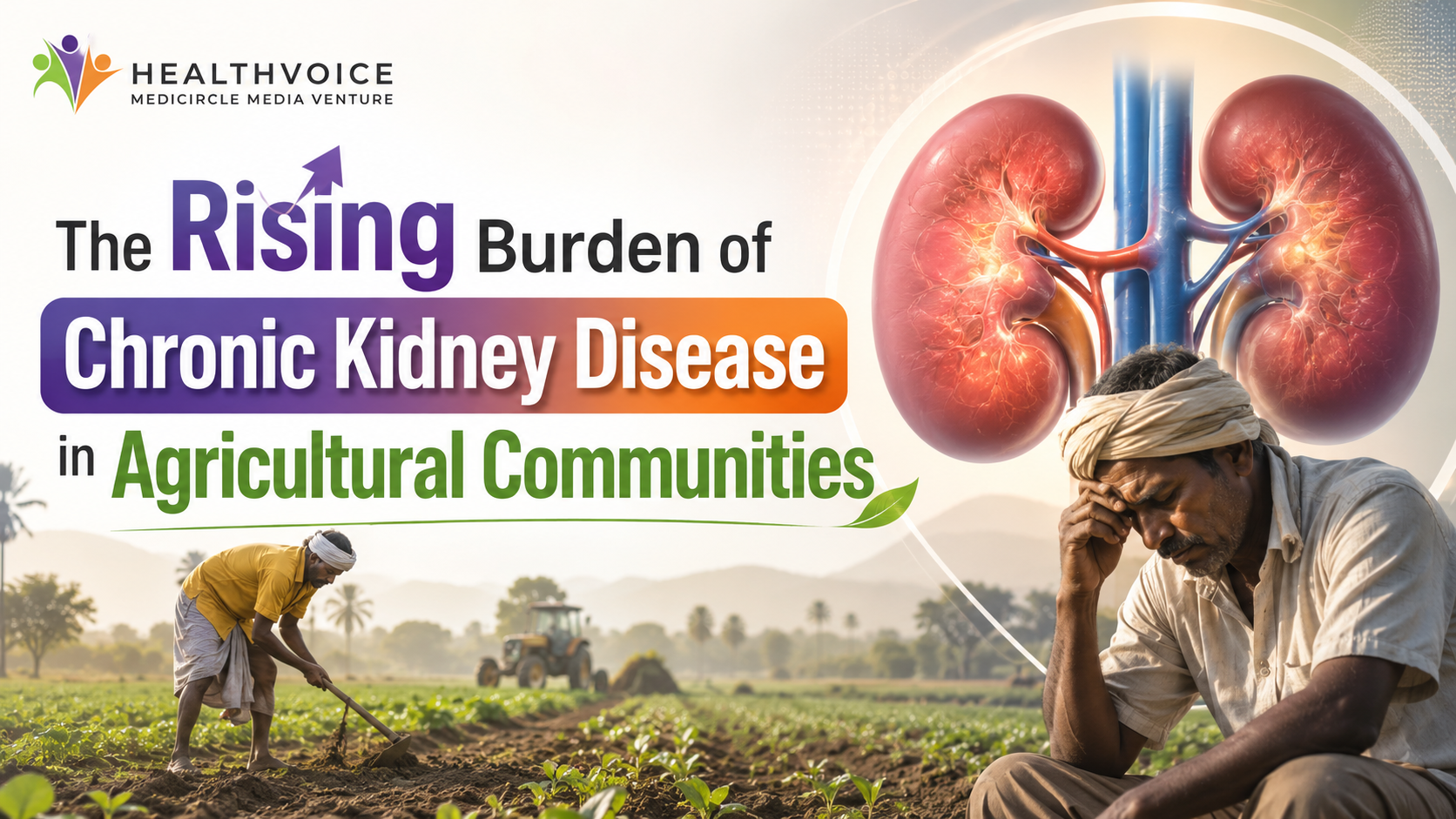
Across agricultural belts in Central America, South Asia, and regions of tropical Africa, a severe public health crisis has emerged: an escalating epidemic of kidney failure occurring in young, manual agricultural laborers. Unlike conventional Chronic Kidney Disease (CKD)—which is primarily driven by long-standing diabetes, hypertension, or vascular disease—this agricultural variant presents without traditional metabolic risk factors.
Clinically termed Chronic Kidney Disease of Unknown Etiology (CKDu) or Chronic Interstitial Nephritis in Agricultural Communities (CINAC), this condition is characterized by progressive, asymptomatic tubulointerstitial fibrosis leading to End-Stage Renal Disease (ESRD).
Epidemiological and toxicological investigations increasingly pinpoint chronic kidney disease agricultural communities pesticides interactions as central drivers. Prolonged occupational exposure to agrochemicals—compounded by recurrent dehydration, groundwater contamination, and heavy metal exposure—creates a multi-hit nephrotoxic cascade.
1. Pathophysiological Mechanisms: How Pesticides Damage the Kidneys
The kidneys receive approximately 20\text{--}25\% of cardiac output, filtering blood and concentrating metabolic byproducts within the renal tubules. This high vascularity makes the proximal tubular cells and renal interstitium uniquely vulnerable to concentrated chemical toxins:
- Mitochondrial Toxicity & Oxidative Stress: Common herbicides and insecticides—including glyphosate, paraquat, and organophosphates—induce reactive oxygen species (ROS) in proximal tubular epithelial cells. Excess ROS damages mitochondrial membranes, causing cellular apoptosis and tubular necrosis.
- Lysosomal Aggregation: Electron microscopy of renal biopsies from affected farmworkers reveals enlarged, dysmorphic lysosomes in proximal tubular cells containing electron-dense aggregates, a classic histological hallmark of chronic toxic nephropathy.
- Chelation and Heavy Metal Transport: Glyphosate and organophosphates can act as chelating agents, binding with trace heavy metals (arsenic, cadmium, lead) and hard water cations (calcium, magnesium) in groundwater. These complexes evade normal liver metabolism and deliver toxic heavy metals directly to the nephron.
- Synergistic Heat Stress & Renal Ischemia: Farmworkers laboring in extreme ambient temperatures experience recurrent episodes of subclinical Acute Kidney Injury (AKI) due to dehydration and reduced renal blood flow. When renal perfusion is low, baseline chemical concentrations in the tubular lumen spike dramatically, exacerbating direct chemical cytotoxicity.
2. High-Risk Agrochemical Classes Implicated in CKDu
Specific pesticide families and active formulations show consistent associations with renal impairment in agricultural cohorts:
- Bipyridylium Herbicides (Paraquat): Highly nephrotoxic; directly damages renal proximal tubules via redox-cycling mechanisms, generating severe oxidative cascades even at sub-lethal, repetitive low-dose exposures.
- Organophosphates & Carbamates (Chlorpyrifos, Dimethoate, Carbofuran): Disrupt cellular signaling, inhibit esterases, and induce severe oxidative stress in glomerular and tubular membranes.
- Broad-Spectrum Organophosphonates (Glyphosate): Widely sprayed without personal protective equipment (PPE); strongly associated with tubular dysfunction when combined with hard drinking water and heavy metal co-exposures.
- Legacy Organochlorines (Endosulfan, DDT): Bioaccumulate in adipose tissue and persist in agricultural soils and local aquifers, exerting long-term endocrine and renal parenchymal toxicity.
3. Structural Breakdown: Conventional CKD vs. Agricultural CKDu / CINAC
Evaluating traditional metabolic kidney disease against agricultural CINAC highlights profound differences across diagnostic parameters:
- Primary Etiology: Conventional CKD stems from diabetic nephropathy, essential hypertension, and glomerulonephritis. Agricultural CKDu/CINAC is driven by agrochemical toxicity, recurrent heat stress, chronic dehydration, and contaminated drinking water.
- Demographic Profile: Conventional CKD affects older demographics (>55 years) of all genders with metabolic syndrome. Agricultural CKDu concentrates among young and middle-aged agricultural field laborers (20\text{--}50 years).
- Primary Histological Site: Conventional CKD begins with glomerular basement membrane thickening and glomerulosclerosis. CINAC primarily targets the tubulointerstitial compartment, causing proximal tubular atrophy and interstitial fibrosis with secondary glomerular sclerosis only in late stages.
- Urinary Findings: Conventional CKD presents with marked, early-stage proteinuria and microalbuminuria. Agricultural CKDu typically presents with minimal or sub-nephrotic proteinuria, normal or low blood pressure in early stages, and rapid drops in estimated Glomerular Filtration Rate (eGFR).
4. Action Plan: 3-Phase Prevention & Intervention Protocol
To mitigate the surge of chronic kidney disease in agricultural communities exposed to pesticides, public health authorities and farm cooperatives must implement a structured tripartite safety framework:
- Enforce Chemical Safety and Closed-System PPE ProtocolsPhase 1: Chemical Handling & PPEMandate certified nitrile gloves, chemical-resistant overalls, vapor respirators, and eye protection during pesticide mixing and spraying. Prohibit manual backpack spraying without calibrated drift shields and wash facilities.
- Implement Structured Work-Rest & Electrolyte Hydration RegimensPhase 2: Hydration & Heat RestEnforce mandatory 15-minute shaded rest breaks every 60–90 minutes during high heat index conditions. Provide access to clean, potable, reverse-osmosis (RO) filtered water enriched with balanced electrolytes to prevent subclinical AKI.
- Establish Routine Biomarker Screening in Farming ClustersPhase 3: Early SurveillanceDeploy mobile clinical screening vans across agricultural zones every 6 months to measure serum creatinine, cystatin C, eGFR, and urinary neutrophil gelatinase-associated lipocalin (NGAL) for early, asymptomatic tubular injury detection.
Actionable Strategy: Digital Governance & Rural Health Alignment
- Maintain Rural Health Records via Universal Digital Registries: Ensure periodic renal screenings, eGFR tracking, and occupational health files of agricultural workers are linked to digital health profiles—such as the ABHA ID (Ayushman Bharat Health Account) network. This preserves longitudinal kidney function data and enables early nephrology referrals before irreversible renal failure occurs.
- Verify Occupational Health Clinicians via Academic Repositories: Ensure rural medical officers, public health researchers, and environmental toxicologists leading community CKDu interventions hold verified medical credentials logged through national education registries like the APAAR ID system within the Academic Bank of Credits (ABC) network.
- Deploy Safe Community Drinking Water Infrastructure: Establish community-level Reverse Osmosis (RO) and nanofiltration plants in agricultural villages to strip dissolved pesticide residues, fluoride, silica, and heavy metal complexes from groundwater wells.
Frequently Asked Questions (FAQs)
Q1. What is Chronic Kidney Disease of Unknown Etiology (CKDu)?
CKDu (or CINAC) is a progressive form of kidney disease that predominantly affects agricultural workers in tropical regions. It occurs in the absence of traditional CKD risk factors like diabetes, hypertension, or glomerulonephritis.
Q2. How do pesticides cause kidney damage?
Pesticides and herbicides enter the body through skin absorption, inhalation, or ingestion of contaminated water. They induce severe oxidative stress in renal tubular cells, damage mitochondria, cause lysosomal aggregation, and promote chronic interstitial fibrosis.
Q3. Why are agricultural workers in hot climates at higher risk?
Working in high temperatures causes chronic dehydration and reduced blood flow to the kidneys. This concentrates toxic agrochemicals inside renal tubules, multiplying their nephrotoxic effects and causing repetitive subclinical kidney injuries.
Q4. Does hard water increase the risk of pesticide-induced kidney damage?
Yes. In areas with hard groundwater containing calcium, magnesium, fluoride, and trace heavy metals, chemicals like glyphosate form stable complexes that resist breakdown and concentrate within renal tissue.
Q5. What are the early symptoms of CKDu?
In its early stages, CKDu is largely silent. Subtle signs include general fatigue, lower back/flank pain, mild nocturia, and muscle cramps. Advanced stages present with severe anemia, fluid retention, nausea, and uremia.
Q6. How does CKDu differ on routine urine tests compared to diabetic kidney disease?
Diabetic kidney disease typically presents with significant proteinuria (albumin in urine). CKDu primarily damages the renal tubules rather than the glomerulus, resulting in little to no protein in the urine during early stages despite declining eGFR.
Q7. What diagnostic tests detect early kidney damage in farmworkers?
Standard serum creatinine with estimated GFR (eGFR) and serum Cystatin C tests are foundational. Advanced tubular biomarkers, such as urinary Kidney Injury Molecule-1 (KIM-1) and NGAL, detect early nephrotoxic injury before blood creatinine rises.
Q8. Can pesticide-induced kidney damage be reversed?
If identified in early tubular stress stages, removing the worker from agrochemical exposure and ensuring proper hydration can stabilize or partially improve kidney function. However, once extensive interstitial fibrosis develops, progression to ESRD is common.
Q9. What PPE is essential when spraying agricultural chemicals?
Sprayers must wear certified chemical-resistant nitrile gloves, vapor-filtering respirators, eye goggles, long-sleeved chemical overalls, and rubber boots to prevent dermal absorption and inhalation.
Q10. What public health measures reduce CKDu in agricultural zones?
Key interventions include banning nephrotoxic agrochemicals, providing clean reverse-osmosis drinking water, enforcing mandatory shaded breaks and hydration in fields, and conducting biannual renal screenings for early detection.
 Team Healthvoice
#CKDu #KidneyHealth