AI-Driven Cyberattacks on Healthcare: Is India Ready?
AI-driven cyberattacks pose an escalating threat to Indian healthcare. Hospitals must adopt layered defences, staff training, and regulatory compliance to protect patient data and ensure uninterrupted care.
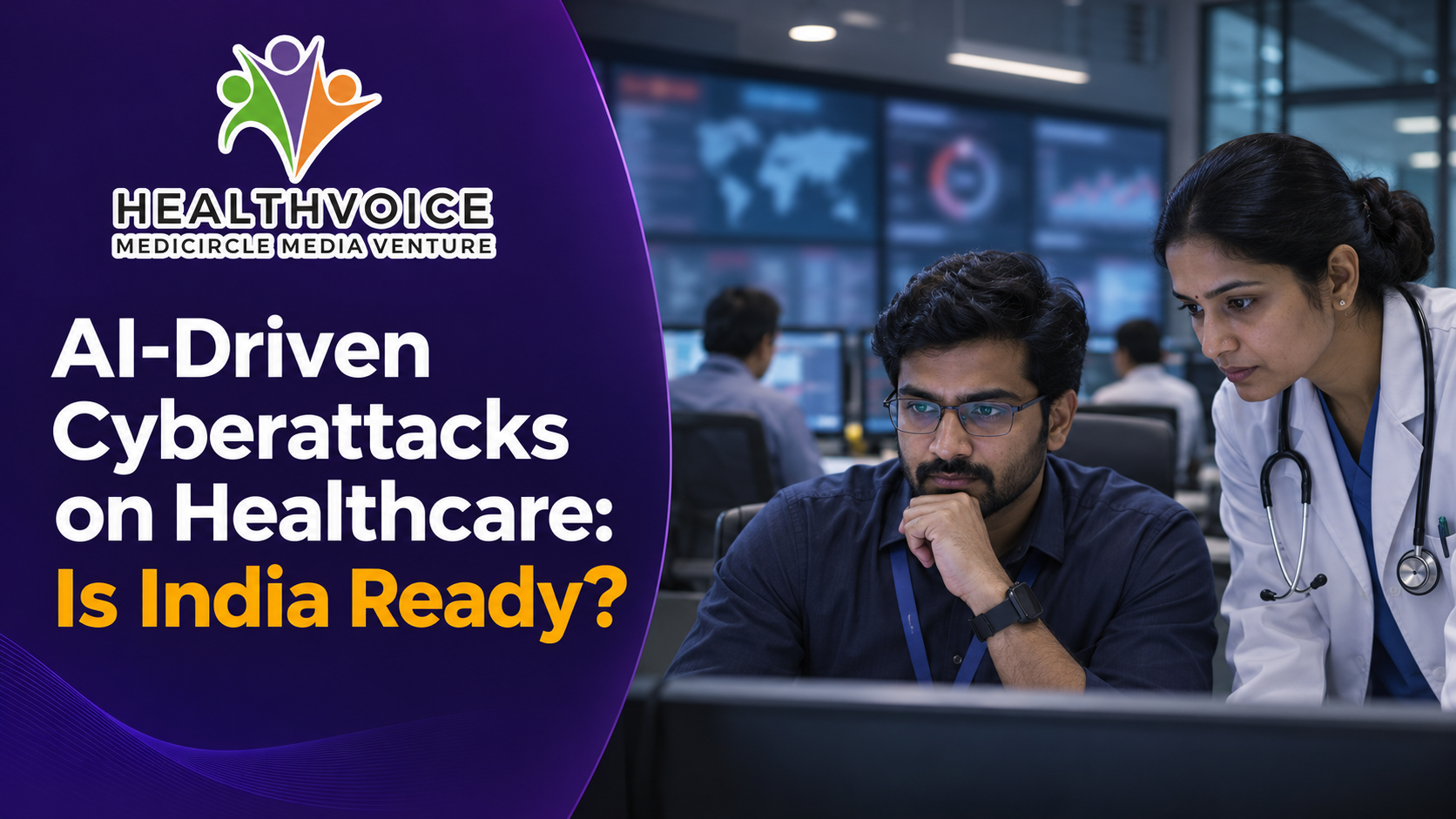
AI-Driven Cyberattacks on Healthcare: The Next Threat India Cannot Ignore
Introduction
Healthcare has always been built on trust. Patients share their most personal information with doctors and hospitals, expecting absolute confidentiality. But in an era where hospital records sit on networked servers and diagnostic systems connect to the internet, that trust is being tested in ways the medical community could not have anticipated even a decade ago.
Artificial intelligence is transforming medicine in genuinely exciting ways, from faster diagnostics to personalised treatment pathways. Yet the same technological capability that empowers clinicians is now being exploited by cybercriminals. AI-driven cyberattacks on healthcare institutions are no longer a futuristic concern debated in technology conferences. They are an active and escalating threat facing hospitals, clinics, insurance companies, and health data platforms across the world, and India is not insulated from this reality.
For the Indian healthcare ecosystem, which is undergoing rapid digital transformation through the Ayushman Bharat Digital Mission and expanding health-tech adoption, understanding this threat is not optional. It is an urgent professional and institutional responsibility.
Understanding AI-Driven Cyberattacks in Healthcare
A conventional cyberattack typically relies on a known method executed by a human operator or a simple automated script. AI-driven attacks are fundamentally different. These attacks use machine learning algorithms to study target environments, identify vulnerabilities, adapt to defensive responses, and execute intrusions with a speed and precision that overwhelm traditional security systems.
In healthcare, these attacks take several well-documented forms. Ransomware powered by AI can spread through hospital networks and encrypt critical patient data within minutes, far faster than any human-led attack. AI-enhanced phishing emails are now nearly indistinguishable from legitimate communications, tricking doctors and administrative staff into handing over login credentials. Deepfake audio and video generated by AI have been used in social engineering attacks where fraudsters impersonate hospital administrators or government officials to extract sensitive access information.
What makes this especially dangerous in healthcare is the nature of the data involved. Medical records contain a patient's complete personal, financial, and clinical history. On the dark web, a single medical record is reportedly worth significantly more than a stolen credit card, precisely because the information cannot be changed and can be used for insurance fraud, identity theft, and targeted extortion.
The Indian Healthcare Landscape and Its Vulnerabilities
India presents a unique and particularly complex challenge. The country is simultaneously operating advanced private hospitals equipped with sophisticated digital systems and thousands of smaller public facilities that still rely on paper records or rudimentary digital infrastructure. This uneven landscape creates a patchwork of vulnerabilities.
The 2022 ransomware attack on the All India Institute of Medical Sciences in New Delhi became one of the most discussed incidents in Indian healthcare history. For nearly two weeks, the hospital's server systems remained compromised, forcing staff to manage patient care manually. This single incident disrupted outpatient services, billing, laboratory reporting, and emergency documentation for one of the country's most critical referral hospitals.
This was not an isolated event. Reports from CERT-In, India's nodal cybersecurity agency, have consistently highlighted the healthcare sector as one of the most frequently targeted industries. As more hospitals adopt electronic health records under the ABDM framework and telemedicine platforms expand their patient databases, the attack surface available to cybercriminals grows correspondingly larger.
Several factors compound the risk in India:
- Many healthcare institutions lack dedicated IT security personnel or cybersecurity budgets.
- Legacy systems in government hospitals run outdated software that is no longer supported by security patches.
- The rapid onboarding of new digital tools often outpaces staff training on data hygiene and threat awareness.
- Third-party vendors and health-tech startups connecting to hospital systems may themselves be vulnerable entry points.
How Attackers Are Using AI Against Healthcare Systems
To understand the threat clearly, it helps to examine how AI is actually being weaponised in these attacks.
Automated vulnerability scanning tools now use machine learning to scan hospital networks continuously, identifying unpatched software, weak passwords, and misconfigured systems at a scale no human team could match manually. Once a vulnerability is found, AI-driven exploit tools can attempt entry without any human intervention.
Adversarial AI is also being used to defeat the very security tools hospitals rely on. Traditional antivirus and intrusion detection systems work by recognising known patterns of malicious behaviour. AI-driven malware can alter its own code dynamically to avoid matching these patterns, effectively rendering signature-based detection obsolete.
Generative AI has introduced another alarming capability: the creation of convincing fraudulent communications at scale. A cybercriminal can now produce thousands of personalised phishing emails or SMS messages targeting hospital staff, insurance officers, or patients, each one customised with realistic-sounding details pulled from publicly available information or previous data breaches. This dramatically increases the success rate of social engineering attacks.
Supply chain attacks represent a growing area of concern. Rather than targeting a large hospital directly, attackers compromise a smaller vendor, say a medical device manufacturer or a cloud storage provider, and use that access to infiltrate the larger network. AI makes it easier to identify these softer entry points and exploit them without triggering immediate alerts.
The Impact: Beyond Data Breaches
It is tempting to frame cybersecurity threats purely as data protection issues. The loss of patient records is serious, but the consequences of AI-driven attacks on healthcare go considerably further.
When hospital networks are compromised during ransomware attacks, medical equipment connected to those networks can become inaccessible or unreliable. This directly endangers patient safety. In countries where such attacks have been studied in depth, researchers have drawn connections between hospital cyberattacks and deteriorating patient outcomes during the period of disruption.
The financial impact on Indian healthcare institutions is also significant. Recovering from a ransomware attack requires not only paying potential ransom demands but also rebuilding systems, conducting forensic investigations, notifying affected patients, and absorbing the operational losses from downtime. For smaller hospitals operating on thin margins, such events can be existentially damaging.
Beyond individual institutions, coordinated attacks on healthcare infrastructure could potentially affect national health programs. The digital backbone of Ayushman Bharat or the ABHA health ID system, if compromised, could affect millions of beneficiaries and undermine public trust in digital health adoption.
Defence Strategies the Healthcare Sector Must Adopt
Addressing AI-driven cyberthreats requires a layered and proactive approach. No single solution is sufficient, and the medical community must treat cybersecurity as an integral part of institutional governance rather than a purely technical concern delegated to IT departments.
Healthcare institutions should consider the following foundational measures:
- Deploying AI-based cybersecurity tools that can detect anomalous behaviour within networks in real time, rather than relying solely on signature-based defences.
- Conducting regular and mandatory cybersecurity training for all hospital staff, including clinical teams, who are often unaware of the risks posed by phishing and social engineering.
- Implementing network segmentation so that a breach in one part of the hospital system does not automatically compromise the entire infrastructure.
- Establishing strict access controls based on the principle of least privilege, ensuring that staff can only access the data their roles genuinely require.
- Maintaining offline backups of all critical patient data to enable recovery without capitulating to ransom demands.
- Vetting third-party vendors rigorously and including cybersecurity requirements in procurement contracts.
At the regulatory level, the Digital Personal Data Protection Act of 2023 provides a framework for data accountability, and healthcare institutions must align their practices with its requirements. CERT-In directives on incident reporting timelines must be followed diligently. The Ministry of Health and Family Welfare and the National Health Authority have an important role to play in issuing sector-specific cybersecurity guidelines that move beyond general IT standards and address the particular realities of clinical environments.
The Role of Medical Professionals and Healthcare Communities
Doctors and healthcare leaders are not merely bystanders in this landscape. They are, in fact, central to any effective defence strategy. Clinical staff are frequently the first point of contact in a phishing attempt or a social engineering call. Their awareness, judgement, and reporting behaviour can make the difference between a contained incident and a full-scale breach.
Medical associations and professional bodies have a meaningful opportunity here. By incorporating cybersecurity literacy into continuing medical education programs, by raising awareness through member communications, and by advocating for stronger institutional security standards, they can serve as credible amplifiers of an urgent message.
Platforms like HealthVoice, which connect doctors, associations, and healthcare stakeholders, play a valuable role in ensuring that discussions about digital health risks reach the right professional audiences. When the medical community is informed and engaged, the collective resilience of the healthcare system improves significantly.
Frequently Asked Questions
Q1: What makes AI-driven cyberattacks more dangerous than traditional attacks?
AI-driven attacks can learn from the defences they encounter, adapt in real time, automate phishing at massive scale, and evade conventional detection systems. This makes them significantly faster and far harder to block than traditional cyberattacks, which typically rely on fixed methods that security teams can anticipate.
Q2: Which Indian hospitals or healthcare systems have faced major cyberattacks?
AIIMS New Delhi suffered a major ransomware attack in November 2022 that disrupted patient services for nearly two weeks. Several other government and private hospitals across India have also reported data breaches and ransomware incidents in recent years, with CERT-In regularly documenting the healthcare sector as a high-risk target.
Q3: How can Indian hospitals protect patient data from AI-powered threats?
Hospitals should invest in AI-based cybersecurity tools capable of real-time anomaly detection, conduct regular staff training, segment internal networks to contain potential breaches, enforce strict access controls, maintain offline data backups, and ensure compliance with DPDP Act guidelines and CERT-In directives.
Q4: Is there a government policy in India for healthcare cybersecurity?
India has the CERT-In framework, the Digital Personal Data Protection Act 2023, and the Ayushman Bharat Digital Mission guidelines that together provide a regulatory foundation for protecting health data. However, dedicated and comprehensive healthcare-specific cybersecurity legislation remains a developing area that the sector and policymakers must urgently address together.
Q5: Can small clinics and nursing homes also be targeted by AI cyberattacks?
Yes, and in fact smaller facilities are often deliberately targeted precisely because they have weaker security infrastructure. Cybercriminals may use them as entry points to access larger hospital networks, insurance systems, or shared health data platforms, making no healthcare institution too small to be of interest to a motivated attacker.
Resources
- Indian Computer Emergency Response Team (CERT-In): The nodal government body for cybersecurity incident reporting and advisories relevant to all sectors, including healthcare in India.
- Ministry of Health and Family Welfare, Government of India: Official policy, guidelines, and digital health initiatives including ABDM and health data governance frameworks.
- World Health Organization: Global cybersecurity in health reports and recommendations for protecting health information systems.
- National Health Authority, India: Governance and regulatory body for Ayushman Bharat Digital Mission and ABHA health ID, with resources on digital health data standards.
- PubMed, National Library of Medicine: Peer-reviewed research on healthcare cybersecurity, ransomware impacts on clinical outcomes, and AI threats to medical infrastructure.
Interlinking Keywords
Healthcare cybersecurity India, AI threats hospital systems, patient data protection, AIIMS ransomware attack, ABDM digital health security, medical data breach India, CERT-In healthcare, Digital Personal Data Protection Act healthcare, hospital network security, electronic health records safety
Last reviewed by:
Dr. Manthan Tripathi, HealthVoice Editorial and Medical Advisory Team, November 27, 2026.
Disclaimer
This article is intended for general informational and professional awareness purposes only. It does not constitute legal, clinical, or technical cybersecurity advice. Healthcare institutions should consult qualified cybersecurity professionals and legal advisors to assess their specific risk environment and regulatory obligations. HealthVoice does not endorse any specific technology vendor, security product, or regulatory interpretation. Readers are advised to refer to official government sources, including CERT-In, the Ministry of Health and Family Welfare, and the National Health Authority for authoritative guidance on healthcare data protection in India.
 Dr. Manthan Tripathi
#HealthcareCybersecurity #AIThreats