Why Peer Recognition Matters in a Doctor's Career
Peer recognition profoundly shapes a doctor's credibility, career trajectory, leadership opportunities, and professional wellbeing, making it an essential pillar of medical community culture in India.
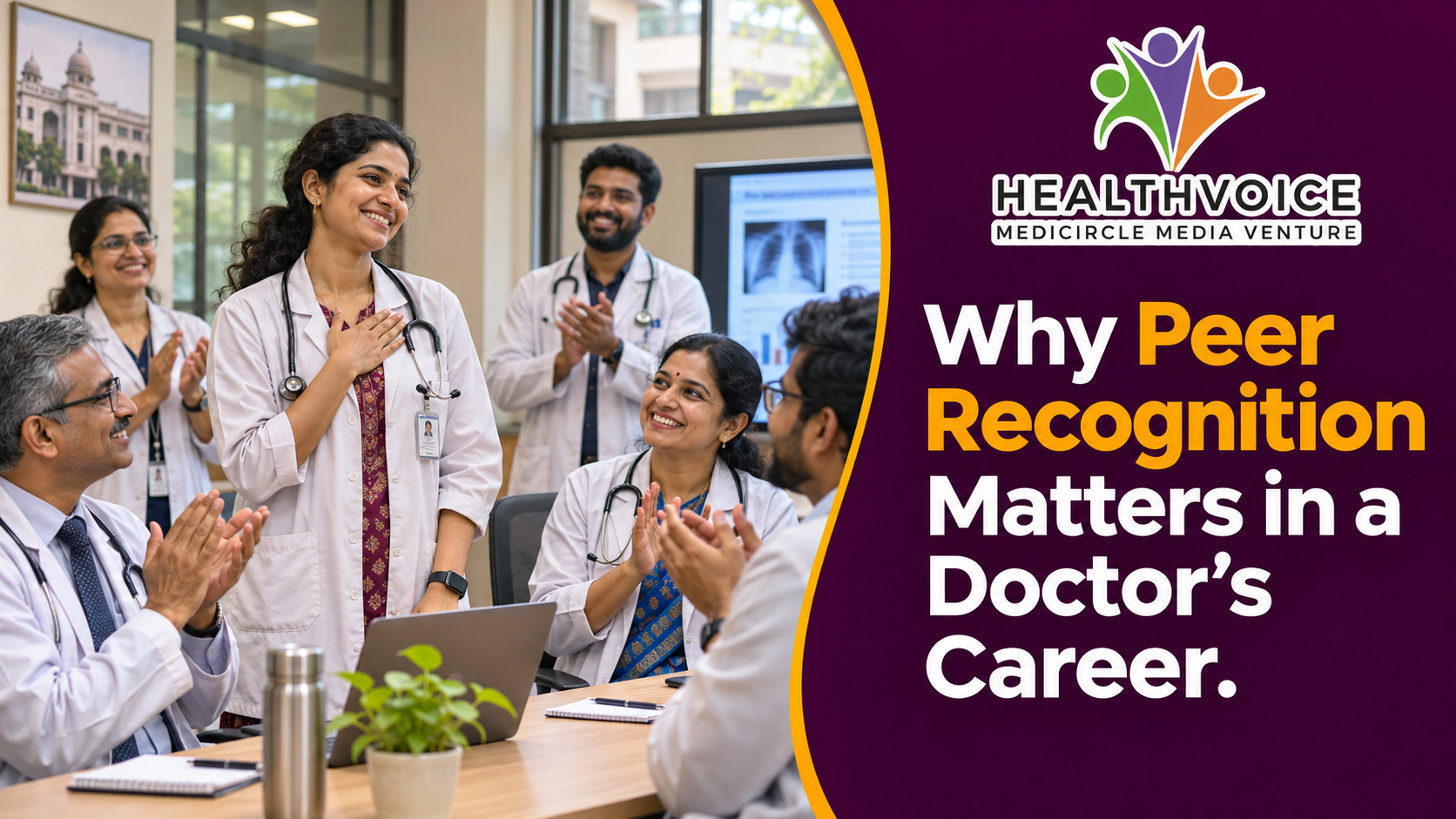
Why Peer Recognition Matters in a Doctor's Career
Introduction
A doctor's journey does not end with obtaining a medical degree or completing a residency. It continues through years of clinical practice, continuous learning, patient care, and professional engagement. Throughout this long journey, one element that profoundly shapes a doctor's sense of purpose, motivation, and professional standing is peer recognition.
Peer recognition refers to the acknowledgment that a doctor receives from fellow medical professionals, colleagues, senior specialists, medical associations, and the broader healthcare community. It is distinct from patient appreciation or public validation. It carries the weight of professional credibility because it comes from those who truly understand the demands, complexities, and standards of medical practice.
In India, where over 1.3 million registered allopathic doctors serve a population of more than 1.4 billion, standing out professionally requires more than clinical skill alone. The recognition of one's peers has emerged as a powerful driver of career growth, professional confidence, and long-term influence in the medical field.
Understanding Peer Recognition in the Medical Profession
Peer recognition in medicine takes many forms. It can be as formal as receiving an award from a national medical association, being invited to speak at a prestigious medical conference, or being cited in a journal publication by fellow researchers. It can also be more informal, such as a senior specialist acknowledging a junior doctor's clinical judgment, or a colleague recommending a physician for a leadership role within a hospital or association.
What makes peer recognition particularly significant in the medical world is its direct connection to professional trustworthiness. When a doctor is recognized by peers, it signals that the broader medical community has evaluated and validated that individual's knowledge, ethics, and contribution. This validation carries a credibility that no self-promotional activity can replicate.
In the Indian healthcare system, peer recognition also serves as a bridge between generations of doctors. Senior specialists who acknowledge younger practitioners play a critical role in mentoring the next generation, shaping medical culture, and ensuring that standards of care continue to evolve. Medical associations such as the Indian Medical Association (IMA), various specialty councils, and state-level bodies serve as formal structures through which peer recognition is organized and amplified.
How Peer Recognition Shapes a Doctor's Career Trajectory
Professional Credibility and Reputation Building
Reputation in medicine is built over years, but peer recognition can accelerate that process significantly. A doctor who is recognized by colleagues for a particular area of expertise quickly becomes the go-to specialist within their professional circle. This credibility does not just benefit the individual physician. It strengthens the trust that patients, hospitals, and institutions place in that doctor's clinical decisions.
In Tier 1 cities like Mumbai, Delhi, Bengaluru, and Chennai, where competition among specialists is high, peer-driven reputation often determines referral networks, hospital affiliations, and collaborative opportunities. In Tier 2 cities and smaller towns, a doctor recognized by peers within regional associations frequently becomes a community anchor, someone others look to for guidance on both clinical and professional matters.
Motivation and Professional Fulfilment
Medicine is one of the most emotionally demanding professions in the world. Doctors regularly deal with high-pressure situations, difficult diagnoses, patient grief, administrative burden, and long working hours. In such an environment, peer recognition serves as a meaningful source of professional motivation.
Research in occupational psychology consistently shows that acknowledgment from peers is one of the strongest predictors of job satisfaction and reduced burnout in high-stress professions. For doctors, knowing that fellow professionals respect their work, value their opinions, and acknowledge their achievements provides a sense of purpose that goes beyond financial reward.
This is particularly relevant in India, where many public sector doctors and rural healthcare workers operate with limited resources and significant personal sacrifice. Recognizing their contributions within the medical community reinforces their commitment and helps retain skilled professionals in underserved areas.
Leadership and Association Involvement
Peer recognition frequently opens the door to leadership roles within medical associations, hospital committees, academic institutions, and healthcare policy bodies. A doctor who has earned the respect of colleagues is often invited to take on responsibilities that extend beyond the consulting room.
In India, medical associations play a vital role in shaping healthcare policy, advocating for physician rights, and setting clinical standards. Doctors who are recognized within these associations often contribute to guideline development, public health initiatives, and continuing medical education programs. Their influence reaches far beyond individual patient care.
The National Medical Commission (NMC), specialty boards, and various professional bodies in India rely on experienced, peer-endorsed doctors to serve in advisory and regulatory capacities. This kind of systemic influence begins with peer recognition at the grassroots level.
Academic and Research Advancement
For doctors engaged in academic medicine or clinical research, peer recognition is foundational. Being acknowledged by fellow researchers, being invited to peer review publications, receiving grants based on the recommendation of professional networks, and being cited by colleagues in published research are all markers of academic standing.
India's medical research landscape is growing rapidly. Institutions such as AIIMS, PGI Chandigarh, CMC Vellore, and various ICMR-affiliated research centers are producing significant clinical research. Peer recognition within these academic ecosystems determines mentorship opportunities, research funding, and career advancement for clinicians engaged in evidence-based practice.
The Role of Digital Platforms in Enabling Peer Recognition
The way peer recognition happens has changed considerably with the rise of digital communication. Social media, professional networks, and healthcare-focused platforms have made it easier for doctors to share achievements, engage with peers across geographies, and build professional visibility beyond the walls of their hospital or clinic.
However, not all digital platforms are built equally. Many general social media platforms dilute professional engagement with noise, and they are not designed for the specific needs of the medical community. This is where purpose-built platforms for healthcare professionals make a meaningful difference.
HealthVoice is one such platform, designed specifically for doctors, medical associations, and the broader healthcare community in India. It provides a credible digital space where doctors can share their expert voice, receive recognition from peers, highlight professional achievements, and engage meaningfully with associations and healthcare stakeholders. For a profession where reputation and trust are everything, having a platform that reflects the dignity and seriousness of medical practice matters enormously.
Platforms like HealthVoice ensure that peer recognition is not limited to those who attend the right conferences or belong to the right hospital networks. It democratizes professional visibility, allowing a skilled specialist in Lucknow, Bhopal, or Coimbatore to receive the same quality of peer acknowledgment as a physician practicing in a metropolitan academic center.
Peer Recognition and Mental Wellbeing in the Medical Profession
The connection between peer recognition and physician wellbeing deserves dedicated attention. Physician burnout has been a growing concern in India, particularly following the pressures of the COVID-19 pandemic. Studies published in Indian medical journals have highlighted elevated rates of emotional exhaustion, depersonalization, and reduced sense of personal accomplishment among practicing physicians.
Peer recognition acts as a protective factor in this landscape. When doctors feel seen, valued, and respected by their professional community, it counterbalances the emotional toll of clinical work. This is not about superficial praise. It is about meaningful, merit-based acknowledgment that affirms a doctor's professional identity and contribution.
Medical associations, hospital leadership, and healthcare institutions in India have a responsibility to build cultures of peer recognition. Simple practices such as acknowledging a junior colleague's clinical insight, nominating deserving doctors for association awards, or amplifying a peer's published work within professional networks can have significant positive effects on morale and professional engagement.
Building a Culture of Peer Recognition in Indian Healthcare
Creating a culture where peer recognition is consistent, merit-based, and inclusive requires intentional effort. Some of the approaches that medical communities and institutions can adopt include the following:
- Establishing formal recognition programs within hospitals and medical associations that acknowledge clinical excellence, research contributions, community service, and leadership.
- Encouraging senior doctors to actively mentor and publicly acknowledge the contributions of junior colleagues.
- Using digital platforms to highlight achievements of association members, covering conference presentations, publications, and community health initiatives.
- Integrating peer feedback as part of continuing professional development frameworks so that recognition is tied to measurable professional growth.
- Ensuring that recognition reaches doctors practicing in rural areas, government health centers, and underserved communities, who often contribute significantly but receive limited visibility.
The Indian healthcare community is at a stage where scaling peer recognition practices can meaningfully improve physician engagement, reduce attrition from public health systems, and strengthen the overall culture of professional excellence.
Conclusion
Peer recognition is not an optional addition to a doctor's professional life. It is a foundational element that shapes credibility, sustains motivation, opens leadership pathways, and supports mental wellbeing. In a country like India, where the demands on the medical profession are immense and the healthcare system is rapidly evolving, building strong cultures of peer recognition within medical communities has never been more important.
For doctors, associations, and healthcare platforms, the message is clear. Recognizing and amplifying the professional voice of doctors is not just an act of goodwill. It is an investment in the quality and resilience of the entire healthcare ecosystem. Platforms like HealthVoice are designed with this purpose at their core, ensuring that every doctor who deserves to be heard has a trusted space to be recognized, respected, and connected with the broader medical community.
Frequently Asked Questions
Q1: What is peer recognition in the context of a doctor's career?
Peer recognition in a doctor's career refers to the acknowledgment that a physician receives from fellow medical professionals, colleagues, medical associations, and academic institutions for their clinical expertise, research contributions, leadership, or community service. It is considered one of the most credible forms of professional validation in medicine because it comes from those who understand the demands and standards of the profession.
Q2: How does peer recognition affect a doctor's professional growth in India?
Peer recognition directly influences a doctor's reputation, referral networks, leadership opportunities, and academic standing in India. Doctors who are recognized by peers within associations like the IMA or specialty bodies are often invited to advisory roles, conference presentations, and policy discussions, all of which accelerate professional growth and broaden their impact.
Q3: Can digital platforms help doctors receive peer recognition?
Yes, purpose-built digital platforms designed for healthcare professionals can significantly expand a doctor's professional visibility and facilitate peer recognition. Platforms that allow doctors to share achievements, engage with associations, and connect with peers across India help overcome geographical limitations and ensure that merit-based recognition reaches doctors regardless of location.
Q4: Is peer recognition important for doctors working in rural or Tier 2 cities in India?
Peer recognition is equally important and arguably more impactful for doctors serving in rural areas or Tier 2 cities. These physicians often work with fewer resources and limited professional networks. Recognition from peers and associations reinforces their commitment, supports their professional identity, and can connect them with mentoring opportunities and collaborative networks they might otherwise not access.
Q5: How does peer recognition help prevent physician burnout?
Peer recognition serves as a meaningful protective factor against physician burnout by affirming a doctor's professional identity and the value of their contributions. Research indicates that acknowledgment from colleagues is a strong predictor of job satisfaction in high-stress professions. For doctors, knowing that peers respect and value their work provides sustained motivation that helps counterbalance the emotional demands of clinical practice.
Resources
- Indian Medical Association (IMA): National professional body representing doctors in India, offering resources on professional development and medical ethics.
- National Medical Commission (NMC): Regulatory authority for medical education and professional standards in India, with guidelines relevant to physician practice and conduct.
- Indian Council of Medical Research (ICMR): Premier body for biomedical research in India, publishing evidence-based clinical guidelines and research relevant to medical professionals.
- World Health Organization (WHO) India Country Office: International health body providing data and frameworks on physician wellbeing, healthcare workforce development, and professional standards.
- PubMed (National Library of Medicine): Global database of peer-reviewed medical and clinical research, used by Indian doctors for academic referencing and evidence-based practice.
Interlinking Keywords
peer recognition in medicine, doctor career growth India, medical association membership, physician professional development, healthcare community platform India, doctor achievements visibility, medical peer acknowledgment, HealthVoice doctor platform, physician burnout India, continuing medical education India
Last reviewed by:
Dr. Manthan Tripathi, HealthVoice Editorial and Medical Advisory Team, November 27, 2026.
Disclaimer
The information presented in this article is intended for general professional awareness and informational purposes only. It does not constitute medical advice, clinical guidance, or formal career counseling. Doctors and healthcare professionals are encouraged to refer to the guidelines issued by recognized bodies such as the National Medical Commission (NMC), Indian Medical Association (IMA), and their respective specialty councils for decisions related to professional practice and career development. HealthVoice does not endorse any specific institution, award body, or recognition program mentioned in this article.
 Dr. Manthan Tripathi
#PeerRecognition #MedicalCareers