AI-Powered Workflow Optimization In Hospitals
AI-powered hospital management systems optimize workflows by connecting departments, automating processes, and adapting to real-time demands. By reducing manual coordination and errors, they enhance efficiency, improve patient care, and enable hospitals to operate as intelligent, responsive systems.
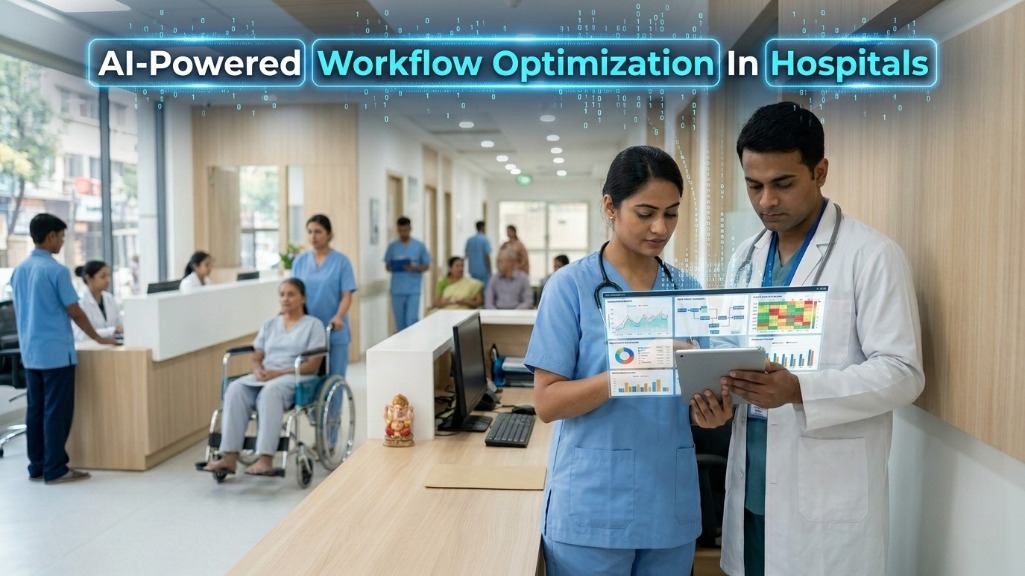
Hospitals rarely slow down. Every department moves at its own pace, yet everything must stay connected. When coordination breaks, even small delays can ripple across patient care, billing, and clinical decisions. This is where workflow optimization becomes essential, not as an upgrade, but as a necessity. The shift toward an AI powered hospital is not just about technology. It is about creating systems that think, adapt, and respond without constant manual effort.
What Hospital Management Systems Really Do
To understand optimization, it helps to first look at what is hospital management system in practical terms. It is not just a digital tool. It is the central system that connects patient records, appointments, billing, diagnostics, and internal communication.
When people ask what is hospital management software, they are often referring to the interface they see. But behind that interface is a structure that holds together multiple workflows. Without it, hospitals rely heavily on manual coordination, which increases the chances of delays and errors.
The purpose of hospital management system goes beyond record-keeping. It ensures that information moves smoothly across departments, allowing doctors, nurses, and administrative staff to work with clarity instead of confusion.
Why AI Is Changing Hospital Workflows
Traditional systems follow fixed rules. They process information but do not adapt. This is where understanding how ai used in hospitals becomes important. AI introduces a layer of intelligence that allows systems to learn patterns, predict needs, and automate decisions.
With an AI hospital management system, workflows are no longer static. They adjust based on patient flow, staff availability, and clinical priorities. This reduces dependency on manual tracking and constant supervision.
Hospitals that adopt ai based hospital management software begin to notice a shift in how work is handled. Instead of reacting to issues, systems anticipate them. This makes operations smoother and reduces pressure on staff.
The Real Impact Of AI-Powered Workflow Optimization
The difference becomes visible in everyday operations. Tasks that once required multiple steps and approvals start moving faster, with fewer interruptions.
Key improvements include:
- Faster patient registration and reduced waiting time
- Automated scheduling based on availability and urgency
- Real-time updates across departments
- Reduced manual errors in billing and records
- Better coordination between clinical and administrative teams
An AI powered hospital management system does not just speed up processes. It creates a structured environment where workflows remain consistent even during peak hours.
Types Of Hospital Management Systems And Where AI Fits
Hospitals have used different systems over time, each designed to handle specific functions. Understanding the Types of hospital management system helps explain where AI adds value.
Common categories include:
- Operational systems, which manage patient flow and scheduling
- Clinical systems, which handle medical records and diagnostics
- Administrative systems, focused on billing and compliance
While these systems work individually, integration is often limited. This is where types of hospital management system evolve into more connected platforms with AI integration.
An AI hospital management system brings these categories together. It allows data to move seamlessly and supports decision-making across departments instead of isolating functions.
How AI Optimizes Workflows Step By Step
The process of workflow optimization through AI is gradual but structured. It builds on existing systems rather than replacing them entirely.
Data Collection And Integration
Hospitals generate large volumes of data daily. AI systems gather and organize this data from multiple sources, creating a unified view of operations.
Pattern Recognition
AI identifies patterns in patient flow, resource usage, and staff workload. This helps predict peak times and potential bottlenecks.
Automated Task Handling
Routine tasks such as appointment scheduling, reminders, and billing updates are handled automatically through ai based hospital management software.
Decision Support
AI provides recommendations based on data analysis. Doctors and administrators can use these insights to make more informed decisions.
Continuous Improvement
The system learns over time, improving accuracy and efficiency as more data is processed.
Case Studies: Workflow Optimization In Action
Case Study 1: Managing Patient Flow More Efficiently
A multi-specialty hospital struggled with uneven patient flow. Some departments were overloaded while others remained underutilized. Staff had to manually coordinate schedules, often leading to delays.
After implementing an AI powered hospital management system, patient distribution became more balanced. The system analyzed appointment patterns and adjusted scheduling dynamically. Over time, waiting periods reduced, and staff workload became more evenly distributed.
Case Study 2: Reducing Administrative Burden
In another hospital, administrative teams spent hours managing billing and insurance processes. Errors and delays were common due to manual data handling.
With ai based hospital management software, billing workflows were automated. Claims were processed faster, and discrepancies were flagged early. Staff could focus on exceptions instead of routine processing.
Case Study 3: Improving Clinical Coordination
A hospital aiming to become an AI powered hospital introduced AI-driven coordination between departments. Lab results, patient updates, and treatment plans were shared automatically across systems.
This reduced the need for repeated follow-ups. Doctors received updates in real time, allowing quicker decisions and smoother care delivery.
Mistakes Hospitals Should Avoid
While AI offers clear benefits, implementation needs to be thoughtful.
- Adopting AI without aligning it with existing workflows
- Ignoring staff training and usability
- Choosing systems that are too complex to operate
- Failing to integrate clinical and administrative functions
- Treating AI as a one-time upgrade instead of a continuous process
Avoiding these mistakes ensures that workflow optimization delivers real value rather than adding complexity.
FAQs
1. What is hospital management system in simple terms?
What is hospital management system refers to a system that manages patient data, appointments, billing, and hospital operations in a connected way.
2. What is hospital management software used for?
What is hospital management software is used to streamline daily hospital activities such as scheduling, record management, and communication between departments.
3. What is the purpose of hospital management system?
The purpose of hospital management system is to improve efficiency, reduce errors, and ensure smooth coordination across hospital functions.
4. How ai used in hospitals for workflow optimization?
How ai used in hospitals includes automating tasks, predicting patient flow, and supporting decision-making through data analysis.
5. What are the types of hospital management system?
The Types of hospital management system include operational, clinical, and administrative systems that manage different aspects of hospital workflows.
6. What is an AI hospital management system?
An AI hospital management system uses artificial intelligence to automate processes and improve decision-making in hospitals.
7. What is ai based hospital management software?
ai based hospital management software integrates AI features to handle scheduling, billing, and data analysis more efficiently.
8. What is an AI powered hospital?
An AI powered hospital uses intelligent systems to optimize workflows, improve patient care, and reduce manual workload.
9. How does AI reduce hospital workload?
AI reduces workload by automating repetitive tasks and improving coordination between departments.
10. Why is workflow optimization important in hospitals?
Workflow optimization ensures faster processes, better patient experience, and efficient use of hospital resources.
Conclusion
AI-powered workflow optimization is not just about improving speed. It is about creating systems that support consistency, accuracy, and better decision-making. As hospitals move toward more connected environments, the role of an AI powered hospital management system will continue to grow, shaping how care is delivered and experienced.
 Team Healthvoice
#DigitalHealth #AIHealthcare
