Can Digital Health Bridge India's Rural-Urban Healthcare Gap?
Digital health tools including eSanjeevani, ABDM, and AI-driven diagnostics are progressively narrowing India's rural-urban healthcare divide, though infrastructure, literacy, and equitable deployment challenges persist.
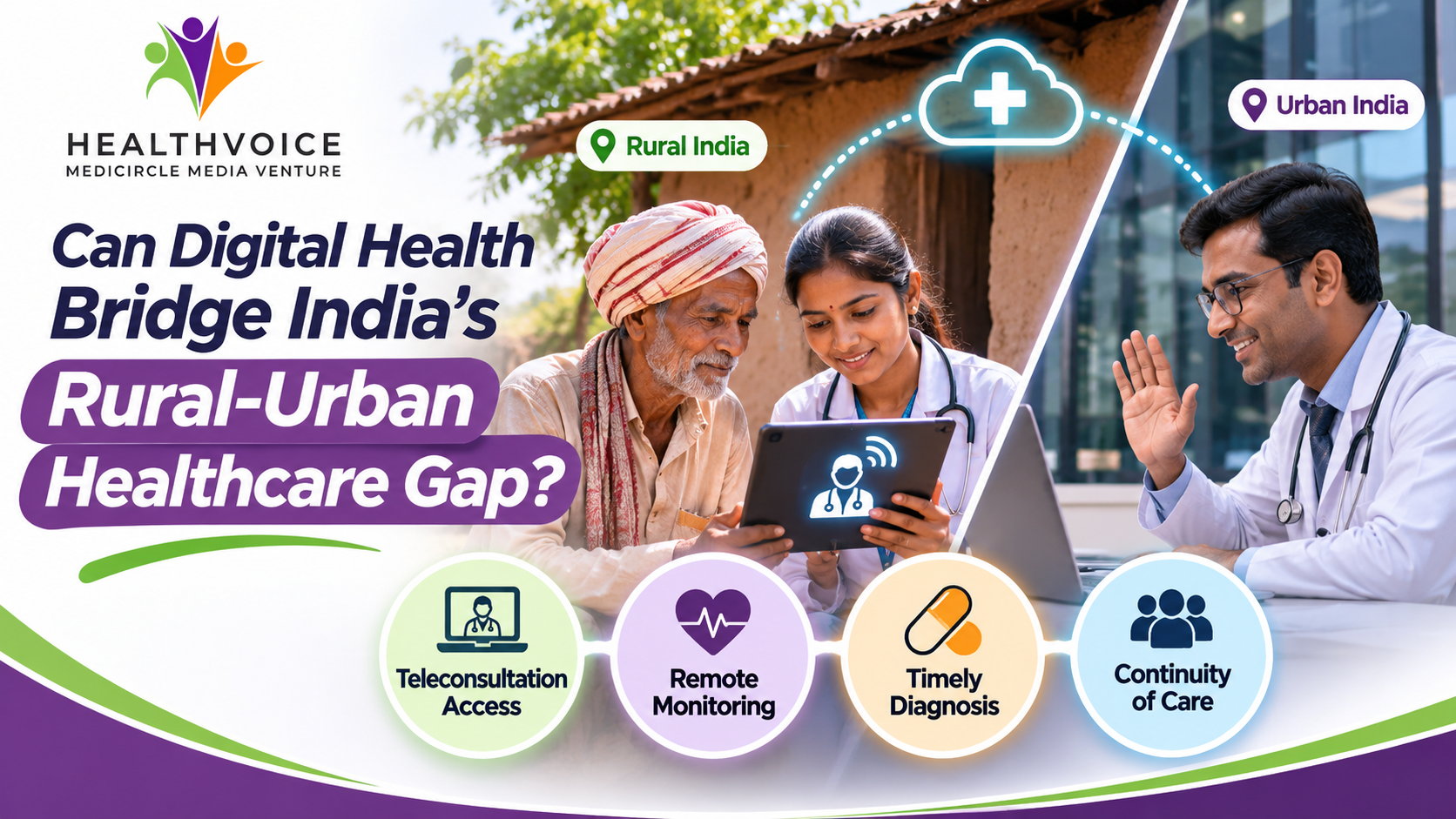
Can Digital Health Reduce the Rural-Urban Healthcare Divide in India?
Introduction
India's healthcare story has two very different chapters. In a major city like Mumbai, Bengaluru, or Delhi, a patient can book a specialist consultation within hours, access advanced diagnostics by afternoon, and receive a digitally linked prescription before evening. In a remote village in Chhattisgarh, Jharkhand, or the northeastern states, the same patient may have to travel several hours just to reach a primary health centre, only to find it understaffed or under-equipped.
This contrast is not incidental. It is structural. Despite rural areas housing approximately 65 percent of India's population, nearly 75 percent of healthcare infrastructure remains concentrated in urban centres. The gap in healthcare access between India's cities and its villages has persisted for decades, shaped by geography, economics, workforce distribution, and infrastructure deficits. The question that now commands urgent attention in policy circles, medical communities, and technology boardrooms is this: can digital health actually close this divide, or will it create a new layer of inequality by benefiting only those who already have connectivity and devices?
The answer, as evidence is beginning to show, is nuanced. Digital health holds genuine and powerful potential to transform access for India's underserved rural populations. But technology is not a standalone solution. It is a multiplier, and its impact depends heavily on the conditions in which it is deployed.
The Scale of India's Rural-Urban Healthcare Divide
Before discussing solutions, it is important to understand the depth of the problem. Approximately 70 percent of India's population lives in rural areas, but only 35 to 40 percent of healthcare infrastructure is located there. This maldistribution is not simply a matter of hospital buildings. It extends to doctors, nurses, diagnostics, pharmaceuticals, and emergency response systems.
Rural areas harbour the majority of the Indian population, and a lack of access to affordable care and public health makes health inequities disproportionately higher relative to urban settings. Rural women are particularly vulnerable, more susceptible to hospitalisation with complexity than their male counterparts.
The burden of disease tells the same story. Preventable and treatable conditions continue to claim lives in rural India at rates far higher than in cities. Maternal mortality, infant mortality, tuberculosis, and non-communicable diseases like hypertension and diabetes are managed poorly or not at all in areas where the nearest doctor may be a day's journey away. India's public health expenditure, at 1.9 percent of GDP, remains below the National Health Policy 2017 target of 2.5 percent by 2025, which limits the state's ability to build physical infrastructure at the pace the population needs.
This is the backdrop against which India's digital health revolution has arrived.
How Digital Health Is Reshaping Rural Access
Digital health, in the Indian context, encompasses a wide spectrum of tools and platforms. These include telemedicine, mobile health applications, electronic health records, AI-assisted diagnostics, remote patient monitoring, and the overarching digital infrastructure being built through government missions.
Telemedicine: Bringing the Doctor to the Patient
The most immediate and measurable impact of digital health on rural India has come through telemedicine. India's national telemedicine service, eSanjeevani, has facilitated over 43 crore free teleconsultations, operational across all 28 states and 8 Union Territories of India, as of November 2025. This is a scale that is globally unprecedented for a government-run telemedicine platform, and it represents millions of rural patients who accessed a doctor without leaving their village.
eSanjeevani operates on a hub-and-spoke model, connecting patients at rural health facilities to specialists at tertiary centres through video consultations. As of November 2024, eSanjeevani had facilitated over 276 million teleconsultations, making it the largest documented government-led telemedicine initiative globally. The service eliminates travel costs, time loss, and the anxiety of navigating an unfamiliar urban hospital for rural patients, particularly the elderly, women with young children, and daily wage workers who cannot afford to take a day off work.
ABDM: Building the Digital Health Backbone
Behind individual platforms like eSanjeevani lies a larger architectural ambition. The Ayushman Bharat Digital Mission (ABDM), launched on 27 September 2021, is the overarching digital health ecosystem creating the foundational infrastructure for India's digital health. Its centrepiece is the ABHA health account, a 14-digit unique health identifier that links a patient's medical records, consultation history, prescriptions, and diagnostics into a single portable digital profile.
As of July 28, 2025, 79.71 crore Ayushman Bharat Health Account (ABHA) accounts had been created, and approximately 65.09 crore health records had been linked. For rural patients, ABHA removes one of the most persistent barriers to continuity of care: the absence of medical history when visiting a new facility or doctor. A farmer in rural Maharashtra who visits a district hospital for the first time can now have his records instantly accessible, reducing duplication of tests, errors in prescribing, and delays in treatment.
eSanjeevani is aligned with the core components of ABDM, including the Healthcare Professionals Registry, Health Facility Registry, ABHA integration, and interoperable electronic health records. This integration is what transforms individual digital tools from isolated solutions into a coherent, connected health system.
mHealth and AI: Extending the Reach Further
Beyond eSanjeevani and ABDM, mobile health applications and artificial intelligence are expanding the possibilities further. AI-powered chatbots could provide real-time medical advice, helping patients in rural regions reach healthcare professionals without moving to urban areas. Diagnostic AI tools that analyse medical images, detect early signs of tuberculosis on chest X-rays, or flag diabetic retinopathy from fundus photographs are being piloted in several states, bringing specialist-level diagnostic precision to settings where no specialist exists.
India's government has also made significant investments in mental health through digital channels. As of 1 April 2025, 36 States and Union Territories have set up 53 Tele MANAS Cells to provide mental health support nationwide, addressing a form of healthcare that was almost completely inaccessible to rural populations before digital intervention.
Persistent Barriers That Digital Health Must Overcome
Acknowledging progress does not mean ignoring the obstacles that continue to limit digital health's impact in rural India.
One of the most persistent barriers to rural digital health adoption is limited digital capability among frontline healthcare workers and patients. A telemedicine platform is only useful if the health worker at the rural spoke can operate it confidently, and if the patient trusts the consultation happening through a screen. In many communities, this trust and familiarity are still being built.
Connectivity remains uneven. While mobile internet penetration has grown dramatically with the Jio revolution and subsequent competition, reliable broadband access in remote tribal areas, hilly terrains, and flood-prone districts is still inconsistent. A video consultation that drops mid-examination due to poor connectivity undermines both medical accuracy and patient confidence.
Language is another underappreciated barrier. India has hundreds of dialects and several major languages, and most digital health platforms have historically been built in English or Hindi. While ABDM and eSanjeevani have incorporated multilingual support, the depth of localisation needed to truly serve communities in their own language requires sustained investment.
There are also systemic concerns about data quality. Health workers have reportedly been logging into the eSanjeevani system in the complete absence of a patient, to meet referral targets assigned by authorities to boost eSanjeevani statistics. This kind of target-driven data inflation risks creating a misleading picture of real access and utilisation, undermining evidence-based policy adjustments.
What a Genuinely Inclusive Digital Health Strategy Requires
Bridging the digital healthcare gap between rural and urban areas requires a multi-pronged approach that moves beyond technology deployment to include capacity building, robust infrastructure, and sustainable partnerships. Healthcare leaders, policymakers, and digital health entrepreneurs are increasingly aligned on what this means in practice.
The key pillars of a genuinely inclusive digital health strategy include:
- Digital literacy for frontline workers: Structured, ongoing training programs for ANMs, ASHAs, and rural health staff to build genuine confidence in using digital tools, not just compliance with government mandates.
- Infrastructure investment alongside digital deployment: Every digital health platform deployed in a rural area needs reliable power, connectivity, and functional devices to operate. Policy must address these prerequisites simultaneously.
- Public-private partnerships: Public-private partnerships can significantly ensure affordable digital devices, increase telemedicine facilities, and increase digital literacy in rural areas.
- Community trust building: Local doctors, village-level entrepreneurs, and community health workers must become champions of digital health adoption, communicating in local languages and addressing fears about data privacy.
- Integration with physical healthcare delivery: Digital health must complement, not replace, the strengthening of rural health infrastructure. As of February 2025, over 1.7 lakh Ayushman Arogya Mandirs have been operationalised across India, aiming to serve the population in underserved rural areas. These facilities are the physical nodes through which digital services reach communities.
The Role of the Medical Community in Driving Digital Health Equity
One dimension of this conversation that deserves more attention is the role of doctors themselves. India's healthcare system does not lack patients. It lacks doctors who are present, trained, and supported in rural settings. Digital health can extend a doctor's reach, but it cannot replace a doctor's presence for complex diagnoses, emergencies, or surgical care.
Medical associations, healthcare leaders, and doctors who engage in platforms designed for professional dialogue have a unique opportunity here. When doctors advocate for telemedicine policy, share their experiences of rural teleconsultation, and mentor rural healthcare workers through digital channels, they become force multipliers for health equity. Platforms that enable this kind of knowledge-sharing and professional communication serve a function that goes well beyond individual careers. They shape the direction of healthcare in underserved India.
The HealthVoice community, which connects doctors, associations, and healthcare stakeholders through meaningful communication and professional engagement, represents the kind of ecosystem where these conversations need to happen more visibly and more often.
Conclusion
The way to equitable healthcare in India will require a multi-faceted strategy that bridges gaps in infrastructure, insurance, human resources, and digital health. Digital health is not a shortcut to solving a problem that is decades in the making. But it is, undeniably, one of the most powerful accelerants available.
India's progress with eSanjeevani, ABDM, Tele MANAS, and Ayushman Arogya Mandirs demonstrates that digital tools can reach communities that conventional health systems have consistently failed to serve. The challenge now is ensuring that this reach is real, not just reflected in dashboards. That means honest data, sustained investment in infrastructure, meaningful digital literacy, and a medical community that sees rural health equity as a professional and ethical priority.
For India to truly close its rural-urban healthcare divide, digital health must be deployed not as a technology project, but as a people project.
Frequently Asked Questions
Q1: What is the rural-urban healthcare divide in India?
The rural-urban healthcare divide in India refers to the significant disparity in healthcare infrastructure, medical professionals, and access to quality care between urban cities and rural areas. Despite over 65 percent of India's population living in rural regions, the majority of healthcare resources remain concentrated in urban centres, creating stark inequalities in health outcomes.
Q2: How does eSanjeevani help rural patients in India?
eSanjeevani is India's national telemedicine platform that connects rural patients to doctors through video consultations, eliminating the need to travel long distances for a consultation. As of November 2025, it has facilitated over 43 crore teleconsultations across all 28 states and 8 Union Territories, making it the largest government-run telemedicine service in the world.
Q3: What is ABDM and how does it benefit rural healthcare?
ABDM stands for Ayushman Bharat Digital Mission. It is India's national digital health infrastructure that creates a unified ecosystem linking patients, doctors, and facilities through ABHA health accounts and interoperable electronic health records. As of July 2025, over 79.71 crore ABHA accounts have been created, allowing rural patients to maintain a portable digital health record wherever they seek care.
Q4: What are the main barriers to digital health adoption in rural India?
The main barriers include limited internet connectivity and smartphone access, low digital literacy among patients and frontline health workers, power supply inconsistencies, language barriers, and a general lack of awareness about available digital health platforms. Addressing these requires investment in infrastructure alongside deployment of digital tools.
Q5: Can digital health alone solve the rural-urban healthcare divide in India?
No, digital health alone cannot solve the rural-urban divide. It requires a multi-pronged approach that combines digital tools with improved physical infrastructure, adequate healthcare workforce deployment in rural areas, digital literacy programs, and sustained policy support. Digital health accelerates progress, but it must complement and not replace investments in physical healthcare delivery.
Resources
- Ayushman Bharat Digital Mission (ABDM): Official government platform for India's national digital health infrastructure, including ABHA account data and health facility registries.
- Ministry of Health and Family Welfare (MoHFW): Source of official statistics on eSanjeevani teleconsultations, Ayushman Arogya Mandirs, and national health program updates.
- National Health Authority (NHA): The apex body implementing ABDM and PM-JAY, publishing dashboards and reports on digital health progress in India.
- World Health Organization (WHO) India: Reports and frameworks on telemedicine, digital health equity, and universal health coverage in the South-East Asia region.
- Indian Council of Medical Research (ICMR): Research publications on rural health outcomes, disease burden, and evidence-based digital health interventions in India.
Interlinking Keywords
digital health India, rural healthcare access, eSanjeevani telemedicine, ABDM health mission, Ayushman Bharat Digital Mission, ABHA health account, rural-urban health divide, telemedicine in India, mHealth India, healthcare infrastructure rural India, Tele MANAS mental health, digital literacy healthcare workers, public-private partnership healthcare, Ayushman Arogya Mandir, universal health coverage India
Last reviewed by:
Dr. Manthan Tripathi, HealthVoice Editorial and Medical Advisory Team, November 19, 2026.
Disclaimer
The information provided in this article is intended for general awareness and educational purposes only. It does not constitute medical advice, diagnosis, or treatment. Readers are advised to consult a qualified and registered medical professional for any health-related concerns. The statistics and data cited in this article are sourced from publicly available government reports, peer-reviewed research, and reputable healthcare publications. HealthVoice does not endorse any specific product, service, platform, or organisation mentioned in this article.
 Dr. Manthan Tripathi
#CanDigitalHealth #DigitalHealthcare